
Many car enthusiasts focus on obvious performance upgrades such as turbochargers, ECU tuning, or suspension mods, yet often neglect the vital role that coolant and thermal management play. Without proper thermal control, engines can overheat, lose efficiency, and suffer long-term damage. For anyone looking to extract reliable performance from their vehicle, investing in high-quality coolant and thermal upgrades is as important as upgrading the engine itself. In this article, we explore the most critical thermal enhancements that you may be overlooking and how they can improve your car’s reliability and performance.
Why Thermal Management Matters
Every combustion engine generates heat during operation, and managing that heat is crucial for maintaining performance and preventing damage. Excessive engine temperatures can cause reduced horsepower, premature wear on components, and even catastrophic failures such as head gasket blowouts or warped cylinder heads. Proper thermal management ensures that your engine runs efficiently while maintaining longevity, particularly under heavy loads, spirited driving, or hot weather conditions. Optimizing cooling systems and addressing heat-related limitations allows engines to perform at their peak without risk.
Upgrading Your Radiator
One of the most effective ways to enhance thermal management is by upgrading your radiator. While stock radiators are adequate for everyday driving, they often struggle to cope with aggressive driving, track use, or high-output builds. Performance radiators are typically constructed from aluminum, which dissipates heat faster than standard materials. They often feature larger cores and improved flow designs, allowing coolant to release heat more efficiently. Some aftermarket radiators employ dual-pass designs that circulate coolant more thoroughly, reducing hotspots and maintaining consistent temperatures under heavy stress. A high-performance radiator can make a noticeable difference in engine stability, particularly in vehicles with turbocharged or supercharged engines.
 Water Pumps and Coolant Circulation
 Water Pumps and Coolant Circulation
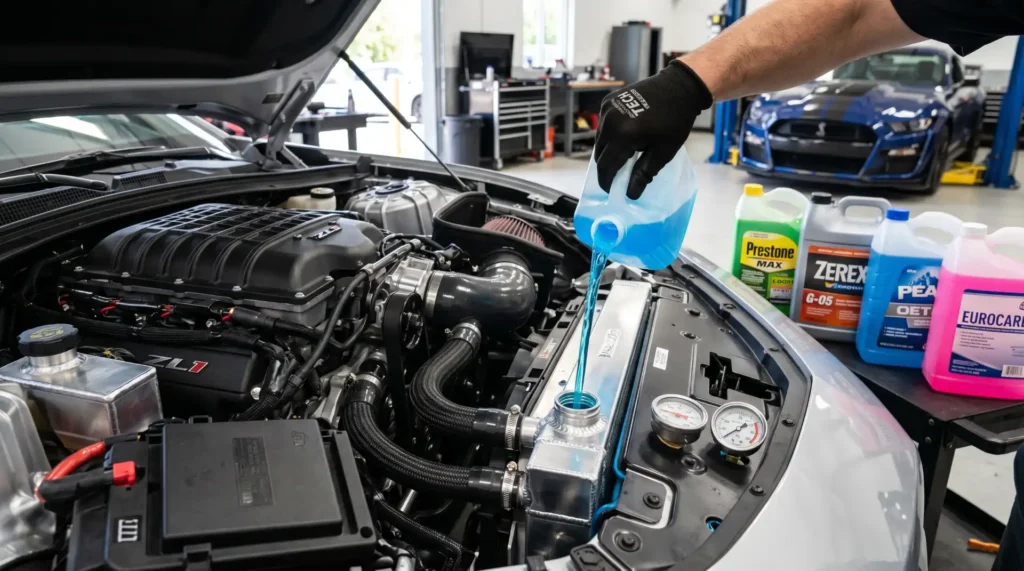
Alongside the radiator, the water pump is essential for circulating coolant through the engine and radiator. Stock pumps can be a limiting factor in high-performance applications, and upgrading to a high-flow or electric water pump can greatly improve thermal efficiency. Mechanical high-flow pumps maintain consistent circulation, while electric pumps provide variable flow, reducing parasitic engine loss and adapting to specific thermal needs. An upgraded pump ensures that coolant moves efficiently through every component, helping prevent localized overheating and maintaining engine performance during intense driving conditions.
Choosing the Right Coolant
While many people associate coolant with freeze protection, the type of coolant you use can also significantly affect heat transfer and engine stability. Standard OEM coolants provide basic protection, but performance-grade coolants often include additives that improve heat dissipation and prevent corrosion. Waterless coolants, for example, allow higher operating temperatures without boiling, minimizing cavitation and keeping engines cooler under extreme conditions. Switching to a high-quality coolant complements hardware upgrades like radiators and pumps, creating a fully optimized thermal system.
Electric Fans and Thermal Control
Cooling at low speeds or when idling can be a challenge, as airflow through the radiator is minimal. High-performance electric fans paired with adjustable fan controllers ensure that your engine receives adequate cooling at all times. Electric fans react faster than mechanical fans and allow for precise temperature regulation. They also reduce parasitic losses on the engine, improving both efficiency and performance. These upgrades are particularly valuable for turbocharged or supercharged engines that produce significant heat during low-speed operation or stop-and-go traffic.
Heat Management Beyond Coolant
Thermal management is not just about moving coolant efficiently. Controlling heat radiated from the engine and exhaust system is equally important. Installing heat shields or using exhaust wraps can lower under-hood temperatures, protecting sensitive components and improving intake efficiency. Even modest reductions in engine bay heat can translate to more consistent performance, less heat soak, and enhanced longevity for electronic components and fuel systems.
Upgraded Thermostats
The thermostat regulates when coolant begins to circulate through the radiator. Stock thermostats are often designed to keep the engine warm for efficiency and emissions reasons, but this may not be optimal for high-performance applications. High-performance thermostats open at lower temperatures, circulating coolant sooner and preventing overheating during aggressive driving. However, it is important to select a thermostat suited to your specific engine, as running an engine too cool can reduce efficiency and performance.
Hose and Clamp Considerations
 Hose and Clamp Considerations
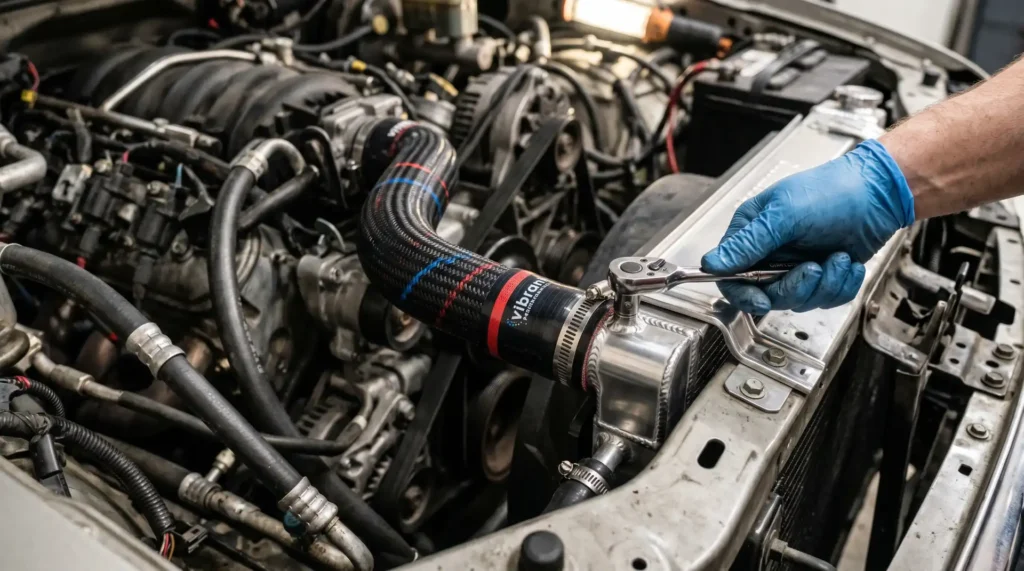
Even the best radiator and pump can underperform if hoses and clamps fail to maintain proper flow. Standard rubber hoses can expand under high temperatures, reducing coolant movement. Upgrading to reinforced silicone hoses preserves flow under heat and pressure, while high-quality clamps prevent leaks and maintain system integrity. Attention to these small details ensures that your entire cooling system functions reliably, particularly during track use or prolonged stress.
Oil Cooling for High-Output Engines
For engines subjected to high stress, oil is a vital component in thermal management. Upgrading to an external oil cooler reduces oil temperature, protecting engine internals and maintaining consistent viscosity. Cooler oil allows the engine to operate more efficiently, improves performance, and prevents damage during extended track sessions or towing. Combining oil cooling with radiator and water pump upgrades creates a comprehensive thermal management system that protects the engine in every scenario.
 Monitoring and Maintenance
 Monitoring and Maintenance
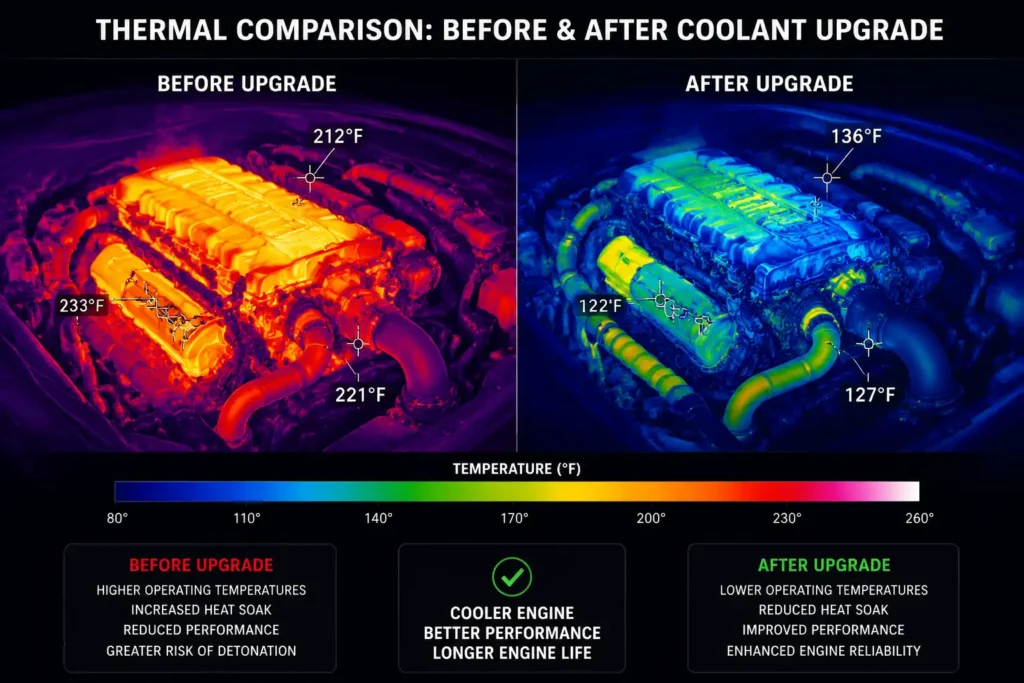
Thermal upgrades are only part of the equation; monitoring your system is equally critical. Installing temperature sensors for coolant, oil, and intake allows you to track engine conditions in real time. Digital gauges or data loggers provide valuable insight, enabling proactive adjustments before overheating or heat-related damage occurs. Monitoring also helps optimize upgrades by identifying areas that may require further improvements, ensuring your system remains reliable and efficient.
Signs You May Need Upgrades
Drivers should consider thermal upgrades if they notice overheating during normal driving or spirited sessions, reduced performance under load, or visible signs such as coolant leaks or swelling hoses. Engines that run hotter than intended consistently may benefit from a combination of radiator, pump, thermostat, coolant, and heat management upgrades. These enhancements provide both peace of mind and measurable improvements in engine performance.
Conclusion
While flashy performance mods often steal the spotlight, coolant and thermal upgrades are essential for maximizing engine longevity and performance. Upgrading radiators, pumps, coolant, thermostats, hoses, and fans, combined with effective heat management, can prevent overheating and improve the consistency of your engine’s output. High-output engines, daily drivers, and track vehicles all benefit from a properly optimized cooling system. Prioritizing thermal management ensures your car performs at its best, remains reliable, and avoids costly engine damage.