
Choosing the right transmission is one of the most important decisions when building a performance car. While engine power often receives the most attention, the transmission determines how effectively that power reaches the wheels.
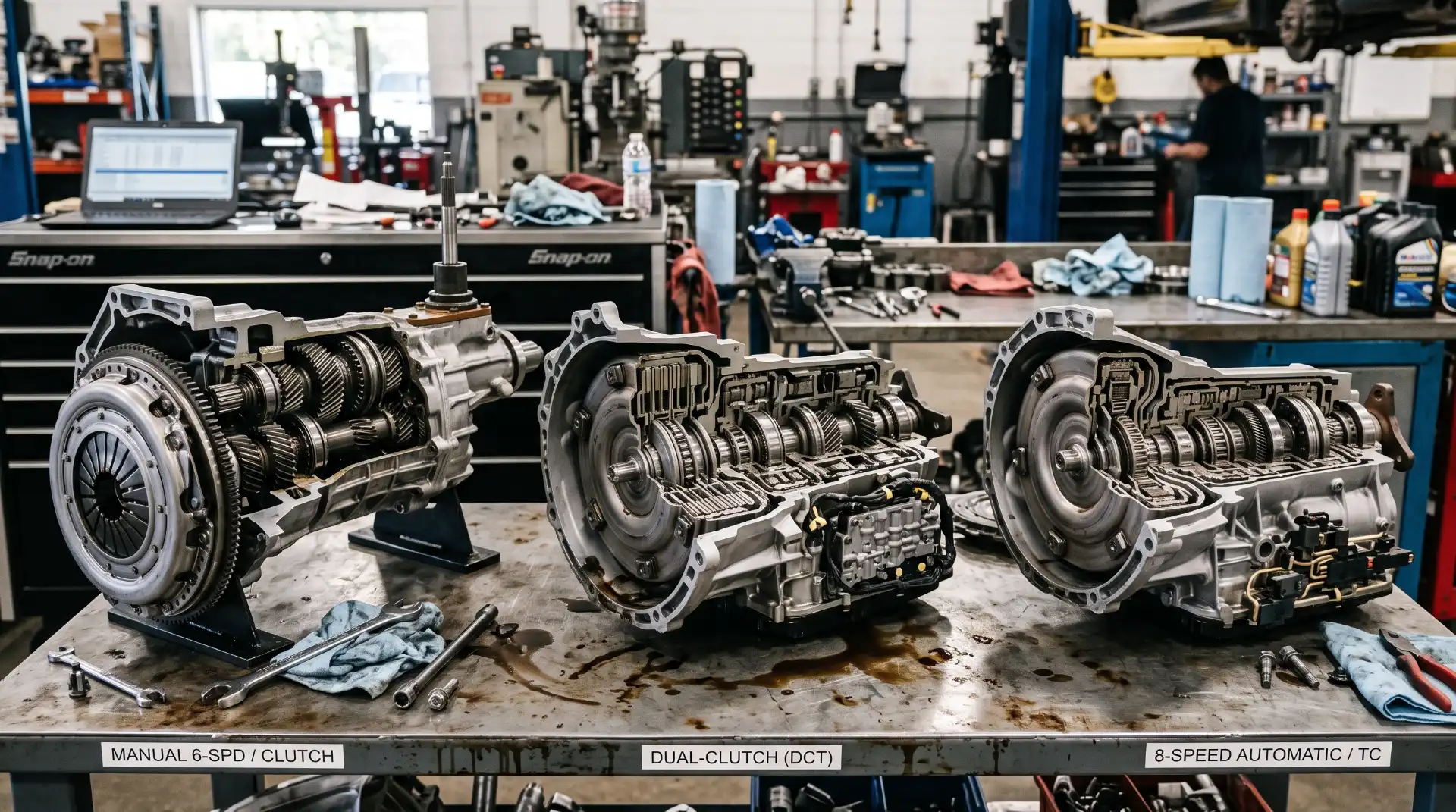
For decades, manual transmissions were considered the ultimate choice for driving enthusiasts because they provided complete control and a more engaging experience. However, modern performance technology has changed the conversation. Dual-clutch transmissions (DCTs) now deliver lightning-fast shifts, while advanced automatic transmissions have become faster and more efficient than many traditional manuals.
For performance enthusiasts in the United States, the best transmission depends on how the vehicle will be used. A weekend track build, daily-driven sports car, drag racing project, and canyon cruiser may all benefit from different transmission choices.
Understanding the strengths and weaknesses of manual, DCT, and automatic transmissions can help drivers choose the right setup for their goals.
Why Transmission Choice Matters in Performance Builds
A transmission does much more than change gears. It controls acceleration, engine efficiency, drivability, and how connected the driver feels with the vehicle.
A powerful engine is only effective when the transmission can properly manage torque and deliver consistent performance. Poor transmission choices can limit acceleration, reduce reliability, and create unnecessary maintenance costs.
Modern performance builds focus on several factors: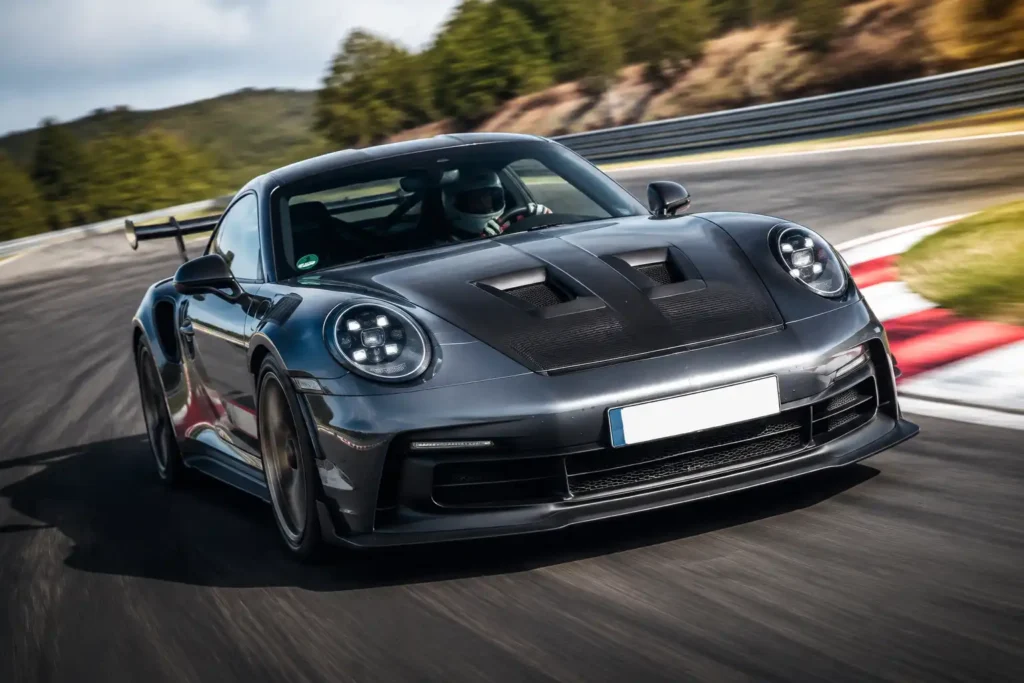
- Shift speed
- Power handling capability
- Driver engagement
- Reliability
- Track performance
- Daily usability
The right transmission balances these factors based on the owner’s priorities.
Manual Transmissions: Maximum Driver Engagement
Manual transmissions remain popular among automotive enthusiasts because they offer direct control over gear selection.
The driver controls when to shift using a clutch pedal and gear selector, creating a more involved driving experience. This connection between driver and machine is one of the biggest reasons manuals continue to survive despite advances in automatic technology.
Many iconic performance cars in the United States still offer manual options because enthusiasts value the involvement they provide.
Cars such as the Chevrolet Corvette, Ford Mustang, Honda Civic Type R, and Toyota GR models have maintained manual transmissions because of strong demand from drivers who enjoy traditional performance driving.
Advantages of Manual Transmissions
The biggest advantage of a manual transmission is driver involvement. Every shift requires timing, decision-making, and mechanical interaction.
For many enthusiasts, this creates a more rewarding experience, especially during spirited driving on winding roads or during weekend cruises.
Manual transmissions are also generally simpler mechanically compared to advanced automatic systems. This can make repairs less expensive in some situations.
Another advantage is weight. Many manual transmissions are lighter than modern automatic or dual-clutch systems, which can improve vehicle balance and responsiveness.
For drivers building a lightweight performance car, reducing weight can be a major advantage.
Disadvantages of Manual Transmissions
Despite their advantages, manual transmissions have limitations.
The biggest disadvantage is shift speed. Even experienced drivers cannot shift as quickly or consistently as modern automatic systems.
During competitive track driving or drag racing, milliseconds matter. A computer-controlled transmission can perform faster and more consistent shifts than a human driver.
Manual transmissions can also become tiring during daily driving, especially in heavy traffic. Constant clutch operation in stop-and-go conditions may reduce comfort.
Additionally, high-horsepower builds can place significant stress on manual transmissions and clutches. Extreme torque levels may require expensive upgrades.
 Dual-Clutch Transmissions (DCT): The Modern Performance Choice
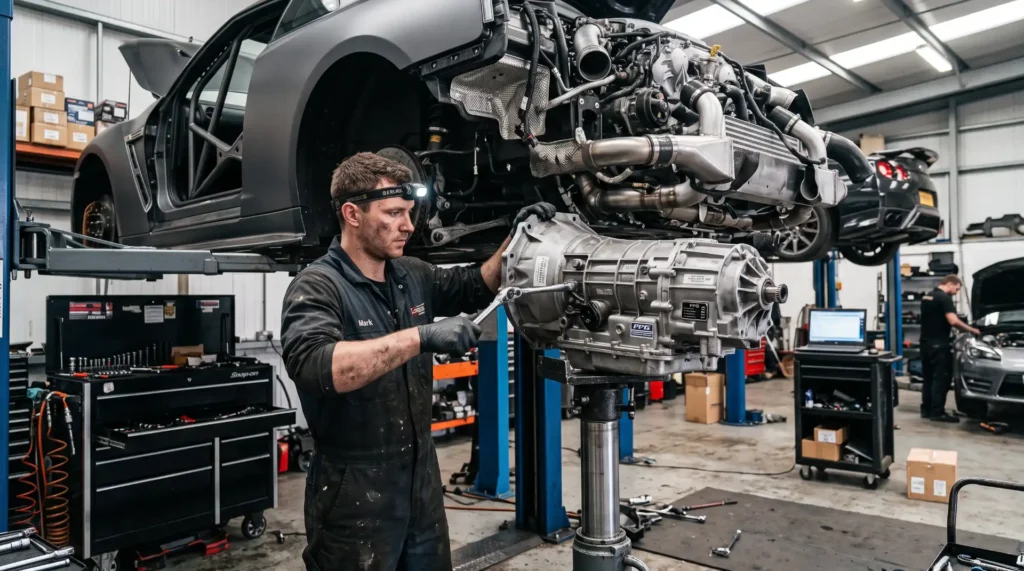 Dual-Clutch Transmissions (DCT): The Modern Performance Choice
Dual-clutch transmissions have become one of the most popular options for modern performance vehicles.
Unlike traditional automatic transmissions, DCT systems use two separate clutches. One clutch manages odd-numbered gears while the other controls even-numbered gears.
This allows the transmission to prepare the next gear before shifting, resulting in extremely fast gear changes.
Many high-performance vehicles from manufacturers such as Porsche, BMW, Volkswagen, and Mercedes-AMG use DCT technology because of its speed and efficiency.
Advantages of DCT Transmissions
The biggest benefit of a DCT is shift speed.
Because the next gear is already prepared, shifts can happen almost instantly. This improves acceleration and allows engines to remain closer to their ideal power range.
For track-focused vehicles, this provides a major advantage. Drivers can focus more on braking points, steering, and vehicle control rather than managing every shift.
DCT transmissions also provide excellent consistency. Unlike a manual transmission, performance does not depend on driver timing.
This makes them especially popular for:
- Track cars
- High-performance street builds
- Drag racing applications
- Turbocharged vehicles
Disadvantages of DCT Transmissions
DCT systems are highly advanced, but that complexity comes with disadvantages.
Maintenance costs can be higher compared to manual transmissions. Specialized fluids, electronics, and components require proper servicing.
Low-speed driving can also sometimes feel less smooth. Some DCT systems may experience hesitation or vibration during slow acceleration because of how the clutches engage.
For enthusiasts who prioritize mechanical simplicity and long-term ownership, a DCT may not always be the best choice.
Automatic Transmissions: Modern Performance Technology
Traditional automatic transmissions were once considered inferior for performance driving. However, modern automatic technology has completely changed that perception.
Today’s performance automatics use advanced electronic controls, multiple gears, and improved torque converter designs to deliver impressive acceleration.
Manufacturers such as BMW, Chevrolet, Ford, and Dodge have developed automatic transmissions capable of handling extremely high horsepower levels.
The eight-speed and ten-speed automatic transmissions found in many modern performance vehicles provide quick shifts while maintaining daily comfort.
Advantages of Automatic Transmissions
Modern automatics offer an excellent combination of performance and convenience.
They are easy to drive daily, especially in traffic, while still delivering impressive acceleration.
Many modern automatic transmissions can shift nearly as quickly as DCT systems while handling substantial torque.
For high-horsepower builds, automatic transmissions are often preferred because they can handle increased power more effectively.
They are especially common in:
- Muscle car builds
- Turbocharged street cars
- High-horsepower drag builds
- Daily performance vehicles
Disadvantages of Automatic Transmissions
The main disadvantage is reduced driver involvement.
Although paddle shifters and manual modes provide more control, they do not offer the same mechanical connection as a true manual transmission.
Automatic transmissions are also typically heavier, which can affect vehicle weight distribution.
Additionally, advanced automatic systems rely heavily on electronics, making repairs more complex.
Which Transmission Is Best for Track Performance?
For serious track performance, DCT and modern automatic transmissions usually have the advantage.
Their faster shifting allows drivers to maintain acceleration without losing momentum between gears.
A DCT provides excellent performance because it combines fast shifts with direct power delivery.
However, some drivers still prefer manuals because they provide a greater challenge and involvement.
The best choice depends on whether the goal is maximum lap times or maximum driving enjoyment.\
Which Transmission Is Best for Street Performance?
For a street performance build, the answer depends on personal preference.
A manual transmission is ideal for drivers who enjoy the experience of controlling every aspect of the vehicle.
A DCT works well for drivers who want supercar-level performance and fast shifting.
A modern automatic is often the best all-around option because it combines speed, reliability, and everyday comfort.
Which Transmission Is Best for High Horsepower Builds?
High horsepower changes the equation.
Many extreme builds favor automatic transmissions because they can handle large amounts of torque while delivering consistent performance.
Drag racing vehicles frequently use automatic transmissions because they allow drivers to launch harder and maintain acceleration without interruption.
However, upgraded manual and DCT systems can also support high-power applications when properly built.
Transmission Choice and Vehicle Tuning
Transmission selection should always match the rest of the build.
A turbocharged engine producing large amounts of torque requires a transmission capable of handling that power.
Suspension, tires, ECU tuning, and drivetrain upgrades should all work together.
A powerful engine with an unsuitable transmission can result in reliability problems and poor performance.
How Technology Is Changing Performance Transmissions
Transmission technology continues to evolve rapidly.
Manufacturers are developing smarter systems with improved electronics, faster shifting algorithms, and better efficiency.
Performance vehicles are increasingly using software-controlled transmissions that adjust shift behavior based on driving conditions.
As hybrid and electric performance vehicles become more common, transmission technology will continue changing.
Conclusion: Choosing the Right Transmission for Your Build
There is no single “best” performance transmission for every driver.
Manual transmissions deliver unmatched engagement and traditional driving enjoyment.
DCT transmissions provide incredible speed and track-focused performance.
Automatic transmissions offer a balance of speed, reliability, and everyday usability.
The right choice depends on your goals, driving style, and the type of performance build you want to create.
For many enthusiasts, the best transmission is not the one that shifts the fastest — it is the one that makes the car the most enjoyable to drive.