
Turbocharged engines have transformed modern performance vehicles. From factory hot hatches to heavily modified street cars capable of producing well over 700 horsepower, forced induction has become one of the most effective ways to generate substantial power without increasing engine displacement. However, every turbocharged engine eventually encounters the same challenge: heat.
As boost pressure rises, compressed air becomes significantly hotter. Hot intake air reduces air density, increases the likelihood of engine knock, and forces the engine management system to reduce ignition timing to protect internal components. The result is less power, lower efficiency, and inconsistent performance, especially during repeated hard acceleration or track driving.
This is where water-methanol injection has earned its reputation among enthusiasts and professional tuners alike.
Rather than replacing an intercooler or upgrading fuel injectors, a properly designed water-methanol injection system works alongside existing performance modifications to reduce intake temperatures, suppress detonation, and allow engines to safely produce more power under demanding conditions.
Whether you’re building a street-driven Subaru WRX, a turbocharged Mustang, a modified Volkswagen GTI, or a high-horsepower Supra, understanding how water-methanol injection works can help you determine whether it deserves a place in your build.
Understanding the Basics
Water-methanol injection is exactly what its name suggests. A controlled mixture of distilled water and methanol is sprayed into the intake tract before combustion.
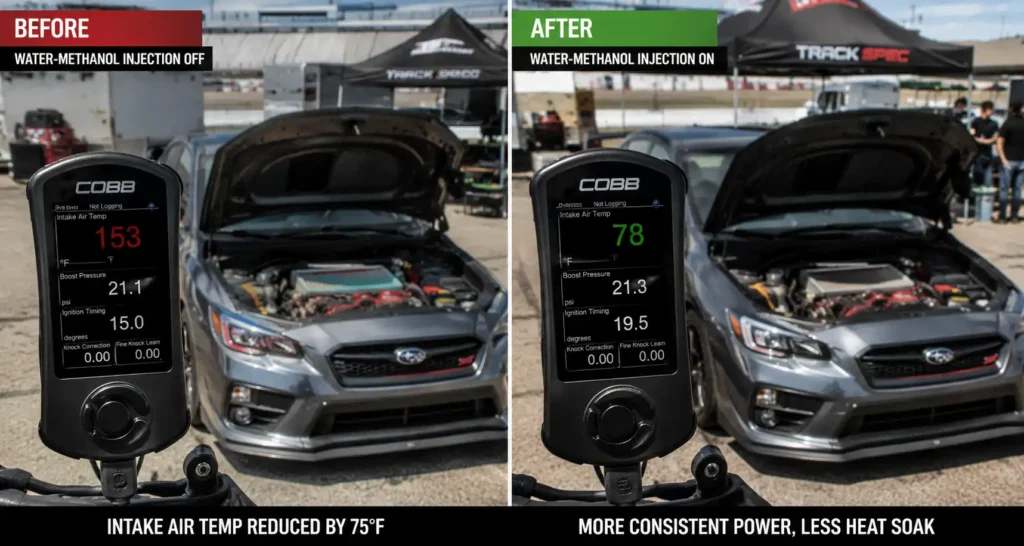
As this fine mist enters the intake charge, it rapidly evaporates due to the high temperatures created by turbocharging. That evaporation absorbs a tremendous amount of heat, significantly lowering intake air temperatures before the air reaches the combustion chamber.
The cooling effect provides multiple benefits simultaneously.
Cooler intake temperatures increase oxygen density, allowing the engine to burn fuel more efficiently. Lower combustion temperatures reduce the risk of detonation, commonly referred to as knock. Since knock is one of the primary limitations when tuning turbocharged engines, reducing it allows tuners to safely optimize ignition timing and boost pressure.
The methanol portion of the mixture also contributes energy because it is combustible and has an octane rating exceeding 110. This makes it an effective supplement for engines operating near the limits of premium pump gasoline.
Unlike nitrous oxide systems that provide short bursts of power, water-methanol injection continuously supports safer operation whenever boost conditions activate the system.
Why Turbocharged Engines Benefit the Most
Naturally aspirated engines produce relatively stable intake temperatures because they are not compressing incoming air.
Turbocharged engines operate differently.
A turbocharger compresses incoming air before it enters the engine. According to the laws of thermodynamics, compressing air dramatically increases its temperature.
Although intercoolers remove much of this heat, they have practical limitations.
During repeated acceleration, towing, spirited canyon driving, or road course sessions, intercoolers begin absorbing more heat than they can dissipate. This condition, known as heat soak, causes intake temperatures to climb steadily.
When temperatures increase, the ECU often responds by:
- Pulling ignition timing
- Reducing boost
- Richening the air-fuel mixture
- Limiting engine output
- Activating protective strategies
Drivers often notice that the first acceleration run feels significantly stronger than the third or fourth consecutive pull.
Water-methanol injection helps reduce this performance loss by continuously cooling the intake charge even after the intercooler becomes heat soaked.
 How a Water-Methanol Injection System Works
 How a Water-Methanol Injection System Works
A modern kit consists of several primary components working together.
The reservoir stores the water-methanol mixture.
An electric high-pressure pump sends the fluid toward the intake system.
A controller determines precisely when injection begins, usually based on boost pressure, manifold pressure, injector duty cycle, or engine load.
Specialized nozzles atomize the liquid into extremely fine droplets.
Check valves prevent unwanted flow when the system is inactive.
Some advanced kits also include flow sensors that verify proper operation and activate engine protection if the system stops functioning.
Most systems begin injecting gradually around 8–12 PSI of boost and increase flow proportionally as boost rises.
Rather than flooding the engine, the controller carefully meters the correct amount of mixture to maximize cooling while maintaining stable combustion.
Choosing the Right Water-to-Methanol Ratio
One of the most common questions enthusiasts ask concerns the proper mixture.
The most widely recommended solution is a 50/50 blend of distilled water and pure methanol.
This combination balances cooling performance with octane enhancement.
Higher water concentrations provide superior cooling because water absorbs more heat during evaporation.
Higher methanol concentrations contribute additional fuel energy and greater octane but slightly reduce cooling capacity.
Professional tuners may adjust ratios depending on vehicle goals.
Daily-driven vehicles often perform exceptionally well using the standard 50/50 mixture.
Dedicated race vehicles may use blends with greater methanol percentages to support aggressive ignition timing and elevated boost levels.
Regardless of the chosen ratio, distilled water should always be used to prevent mineral deposits inside pumps and nozzles.
 Performance Gains You Can Expect
 Performance Gains You Can Expect
One of the biggest misconceptions is that simply installing water-methanol injection automatically adds horsepower.
The system itself does not directly create power.
Instead, it creates conditions that allow the engine to safely produce more power through optimized tuning.
Typical benefits include:
- Lower intake air temperatures
- Reduced knock activity
- More consistent boost
- Improved ignition timing
- Higher effective octane
- Better resistance to heat soak
- Increased reliability during repeated hard driving
On properly tuned turbocharged engines, gains commonly range from 20 to over 70 horsepower depending on boost levels, fuel quality, engine modifications, and calibration.
Higher horsepower applications often experience even greater improvements because the cooling effect becomes increasingly valuable as boost rises.
Supporting High-Boost Builds
As enthusiasts pursue higher horsepower numbers, many eventually reach the limits of premium pump gasoline.
Even modern direct-injection engines have limits before knock begins occurring consistently.
This is where water-methanol injection becomes particularly valuable.
Rather than immediately switching to expensive race fuel or converting entirely to E85, many owners use water-methanol injection as an intermediate solution.
When properly tuned, the system helps maintain safer combustion while supporting elevated boost pressures.
For example, a turbocharged street car running 93-octane gasoline may safely operate with several additional pounds of boost once water-methanol injection is integrated into a professionally calibrated ECU tune.
This approach is especially popular among owners of turbocharged Subarus, Mitsubishi Evolutions, BMW M models, Ford EcoBoost vehicles, Audi S and RS models, Volkswagen GTIs, and Toyota Supra platforms.
Continue Internal Reading
For readers looking to maximize their turbocharged build, consider exploring related topics on AutoSportPerformance.com, including The Ultimate Guide to Turbocharging Your Vehicle, How to Check for Boost Leaks Like a Pro, and Dyno Tuning vs. Street Tuning. These resources provide valuable context on supporting modifications that work alongside water-methanol injection.
Installation Considerations
Installing a water-methanol injection system is more involved than simply mounting a reservoir and connecting a hose. Proper placement of each component, careful routing of lines, and correct ECU calibration all influence how well the system performs. While many aftermarket kits are designed for experienced DIY enthusiasts, professional installation is often recommended for high-performance or high-boost applications.
The reservoir should be mounted in a secure location that allows easy access for refilling while minimizing exposure to excessive engine heat. Many owners install the tank in the trunk, cargo area, or engine bay depending on available space and vehicle layout.
The pump should be mounted below the reservoir whenever possible to ensure a consistent fluid supply. High-pressure nylon or braided lines should be routed away from exhaust components, moving suspension parts, and sharp edges that could damage the tubing over time.
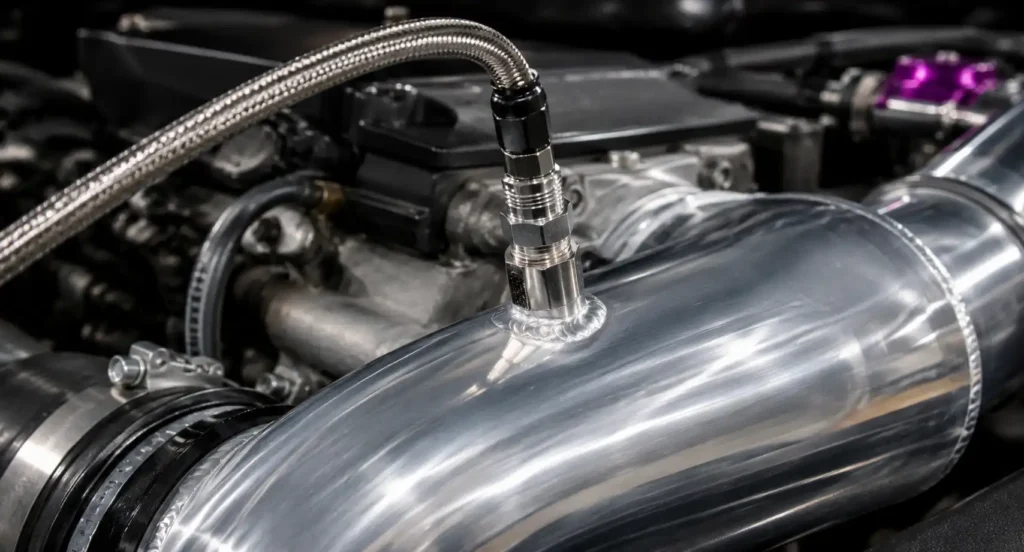
One of the most important installation decisions is nozzle placement. Most tuners install the nozzle in the charge pipe after the intercooler and before the throttle body. This location provides effective cooling while giving the mixture sufficient distance to atomize before entering the combustion chambers.
Some high-horsepower builds use multiple nozzles to improve distribution across larger intake systems. Others incorporate direct-port injection, where each intake runner receives its own nozzle for maximum consistency between cylinders.
Regardless of the configuration, nozzle sizing should always match the engine’s horsepower goals. Oversized nozzles can introduce excessive fluid, while undersized nozzles may not provide enough cooling under heavy boost.
Why Proper ECU Tuning Matters
One of the biggest mistakes enthusiasts make is installing a water-methanol kit without updating the engine calibration.
While some cooling benefits occur even without tuning, the greatest gains come when the ECU is specifically calibrated to account for the lower intake temperatures and increased knock resistance.
Professional tuners often adjust:
- Ignition timing
- Boost pressure
- Air-fuel ratio
- Boost control strategies
- Knock sensitivity
- Fuel delivery
- Torque management
These changes allow the engine to safely produce additional horsepower while maintaining a conservative safety margin.
Modern tuning software also allows fail-safe strategies. If the system detects low fluid flow, insufficient pressure, or an empty reservoir, the ECU can automatically reduce boost pressure, switch to a lower-power calibration, or trigger a warning before engine damage occurs.
These safety features are especially important on engines that rely heavily on water-methanol injection for their tuning strategy.
Daily Driving Versus Track Use
Water-methanol injection is not reserved exclusively for race cars.
Many enthusiasts successfully use these systems on daily-driven turbocharged vehicles. During normal commuting, the system rarely activates because boost levels remain relatively low. As a result, fluid consumption is minimal.
The real benefits appear during situations that generate sustained boost, including:
- Highway acceleration
- Mountain driving
- Track days
- Autocross events
- Drag racing
- Heavy towing
- Spirited backroad driving
Track enthusiasts often notice one of the greatest advantages: consistency.
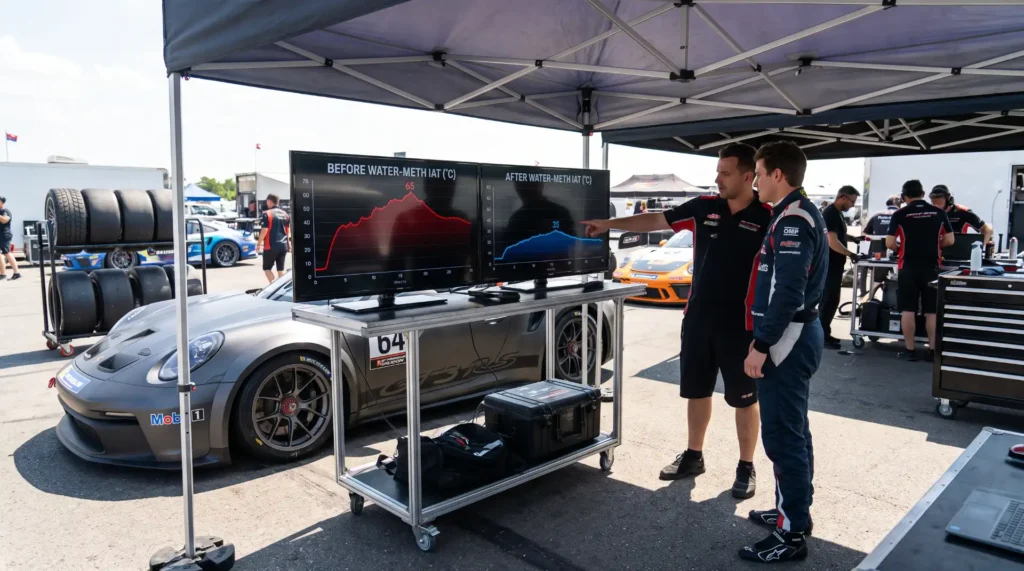
Without supplemental cooling, intake temperatures continue rising throughout each lap, forcing the ECU to reduce timing and lower engine output. With water-methanol injection, intake temperatures remain much more stable, allowing the vehicle to deliver consistent power over extended sessions.
This consistency often translates into improved lap times and a more predictable driving experience.
Common Myths About Water-Methanol Injection
Despite being used successfully for decades in aviation and motorsports, several misconceptions continue to circulate.
One common myth is that water damages engines.
In reality, properly atomized water evaporates before combustion and has been used safely in high-performance engines for many years. Problems generally arise only from improper installation or excessive fluid delivery.
Another misconception is that methanol replaces gasoline.
It does not.
While methanol contributes combustible energy, the primary fuel source remains gasoline or ethanol. Water-methanol injection should always be viewed as a supplemental system rather than a replacement fuel system.
Some enthusiasts also believe that every turbocharged car automatically gains massive horsepower after installation.
Actual gains depend on several variables, including:
- Existing modifications
- Turbo size
- Fuel quality
- Boost pressure
- Engine compression ratio
- ECU tuning
Vehicles already running conservative factory calibrations may experience modest improvements, while aggressively modified engines often benefit much more.
Maintenance Requirements
Like any performance modification, water-methanol injection requires regular maintenance.
Fortunately, maintenance is relatively straightforward.
Owners should periodically inspect:
- Fluid level
- Pump operation
- Injection nozzle
- Filters
- Electrical wiring
- Hoses
- Fittings
- Reservoir cap
Nozzles should be inspected for contamination, especially if non-distilled water has been used. Mineral deposits can restrict spray patterns and reduce cooling effectiveness.
The reservoir should also be cleaned occasionally to prevent debris accumulation.
Winter climates require additional attention because water-based mixtures can freeze if the methanol concentration is too low. Most commercially available 50/50 mixtures provide adequate freeze protection for many regions, but owners should verify the product specifications before cold-weather driving.
Common Installation Mistakes
Many system failures are not caused by defective components but by installation errors.
Using tap water instead of distilled water introduces minerals that eventually clog nozzles.
Installing the nozzle too close to the throttle body may reduce atomization.
Selecting an oversized nozzle can flood the intake under certain conditions.
Ignoring ECU tuning leaves significant performance potential untapped.
Perhaps the most serious mistake is operating a vehicle with an aggressive tune after the water-methanol system stops functioning. This is why modern fail-safe controllers are strongly recommended for high-performance applications.
 Is Water-Methanol Injection Better Than E85?
 Is Water-Methanol Injection Better Than E85?
This question frequently appears in performance forums, but the answer depends on the vehicle and the owner’s goals.
E85 fuel provides exceptional knock resistance and supports impressive horsepower gains. However, it requires approximately 30 percent more fuel volume than gasoline, meaning many vehicles need larger injectors, upgraded fuel pumps, and revised fuel system components.
Availability also varies across the United States.
Water-methanol injection offers a different solution.
Rather than replacing the fuel, it supplements combustion cooling while allowing many vehicles to continue operating on premium pump gasoline.
Some high-performance builds even combine E85 and water-methanol injection for maximum cooling and knock resistance.
Each approach has advantages, and experienced tuners often recommend the best solution based on horsepower goals, driving habits, and fuel availability.
Who Should Consider Installing a Water-Methanol Injection System?
Not every vehicle requires this modification.
Drivers with stock naturally aspirated vehicles are unlikely to see meaningful benefits.
However, water-methanol injection may be worthwhile if you own:
- A modified turbocharged street car
- A high-boost track vehicle
- A drag racing build
- A heavily tuned sports car
- A tow vehicle operating under sustained boost
- A performance car experiencing repeated heat soak
Owners planning future upgrades often install water-methanol injection as part of a comprehensive performance strategy that includes intercooler improvements, ECU tuning, upgraded turbochargers, and enhanced fuel delivery systems.
The Future of Water-Methanol Technology
Performance technology continues evolving, and water-methanol injection systems are becoming more sophisticated.
Modern controllers now integrate directly with aftermarket ECUs, allowing dynamic flow adjustments based on engine load, RPM, boost pressure, throttle position, intake temperature, and fuel system performance.
Wireless monitoring through smartphone apps is becoming increasingly common, enabling drivers to monitor reservoir levels, injection activity, and system diagnostics in real time.
Some manufacturers are also developing predictive control strategies that activate injection before intake temperatures become excessive rather than reacting after heat has already accumulated.
As turbocharged engines become even more common across performance vehicles, advanced cooling technologies are likely to remain an important part of aftermarket tuning.
Final Thoughts
Water-methanol injection has earned its place as one of the most effective supporting modifications for turbocharged performance vehicles. Rather than serving as a shortcut to instant horsepower, it creates the conditions necessary for safer, more consistent engine performance by reducing intake temperatures and minimizing the risk of knock.
When paired with a professionally calibrated ECU tune, quality components, and proper maintenance, a well-designed water-methanol injection system can improve power delivery, maintain performance during extended high-load driving, and help protect expensive engine components from excessive heat.
Whether you’re building a street-focused sports car, preparing for track days, or chasing higher horsepower numbers on premium pump fuel, understanding how this technology works allows you to make informed decisions about your next performance upgrade.