
Trucks and SUVs have become some of the most popular vehicles in the United States, combining everyday practicality with impressive capability. Whether used for commuting, towing, off-road adventures, hauling equipment, or weekend recreation, modern trucks and SUVs provide a strong platform for performance improvements.
Unlike traditional sports cars, truck and SUV upgrades are not always focused only on horsepower. Many owners want better towing performance, improved handling, stronger braking, increased durability, better off-road capability, and improved driving confidence. The right modifications can help a vehicle perform better while maintaining reliability and daily usability.
The best performance upgrades for trucks and SUVs depend on how the vehicle is used. A pickup used for towing a trailer requires different improvements than an SUV built for weekend off-road trips. A daily-driven truck may benefit more from suspension, tires, and cooling improvements than extreme engine modifications.
This guide explains the most effective performance upgrades for trucks and SUVs, including engine tuning, suspension improvements, tires, braking systems, cooling upgrades, exhaust systems, and technology-focused modifications for modern vehicles.
Understanding Truck and SUV Performance Goals
Before modifying a truck or SUV, owners should determine what they want to improve. Performance means different things depending on the vehicle’s purpose.
A truck owner who regularly pulls a boat, camper, or equipment trailer may prioritize torque, transmission performance, cooling capacity, braking power, and suspension strength. A driver who enjoys off-road trails may focus on ground clearance, tire traction, suspension travel, and underbody protection.
Some owners simply want a more enjoyable daily driving experience. Faster throttle response, improved handling, better steering feel, and reduced body movement can make a large vehicle feel more controlled and responsive.
Modern trucks and SUVs are already engineered with complex systems that manage engine output, fuel efficiency, stability control, emissions, and safety technology. Successful modifications should work with these systems instead of creating reliability problems.
For general information about vehicle modifications and aftermarket equipment, owners can review resources from the Specialty Equipment Market Association (SEMA), which represents the automotive aftermarket industry.
Engine Tuning for More Power and Better Response
One of the most common performance upgrades for trucks and SUVs is ECU tuning. Modern engines rely heavily on computer-controlled systems that adjust fuel delivery, ignition timing, boost pressure, throttle response, and transmission behavior.
A properly developed tune can improve horsepower, torque delivery, throttle response, and overall drivability. Turbocharged trucks and SUVs often respond particularly well because increasing boost efficiency and optimizing engine parameters can produce noticeable gains.
However, tuning should not be viewed as simply increasing power numbers. A quality calibration considers engine temperatures, fuel quality, drivetrain limitations, emissions requirements, and long-term reliability.
For example, a truck used for towing may benefit more from improved low-end torque and transmission management rather than maximum horsepower. Excessive power increases can place additional stress on transmissions, differentials, cooling systems, and drivetrain components.
Professional tuning and proper data monitoring are especially important for turbocharged and diesel-powered trucks. Monitoring air-fuel ratios, exhaust temperatures, boost levels, and other engine parameters helps ensure modifications operate safely.
Auto Sport Performance also covers engine optimization topics such as performance tuning strategies for drivers looking to improve vehicle response while maintaining reliability.
 Cold Air Intakes: Improving Airflow Efficiency
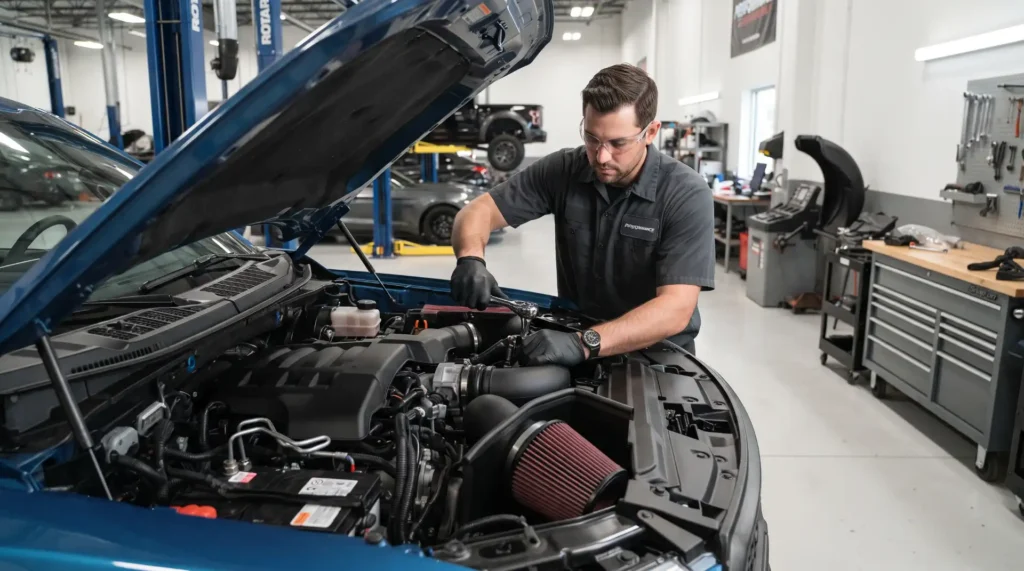 Cold Air Intakes: Improving Airflow Efficiency
Cold air intake systems are among the most popular modifications for trucks and SUVs because they are relatively simple upgrades that can improve airflow characteristics.
The engine requires a consistent supply of oxygen to create power. A well-designed intake system can reduce airflow restrictions and provide cooler, denser air to the engine under certain driving conditions.
However, not every intake system produces meaningful improvements. Some aftermarket designs prioritize appearance or sound rather than actual airflow improvements. The effectiveness depends on the engine design, filter quality, heat shielding, duct placement, and calibration compatibility.
For turbocharged engines, intake upgrades can also influence turbocharger efficiency. Reducing restrictions before the turbocharger may help improve response, although the final result depends on the entire intake and boost system.
Truck and SUV owners should also consider environmental conditions. Vehicles frequently driven through dusty trails, construction areas, or harsh environments require filtration systems that protect the engine rather than simply maximizing airflow.
Exhaust Upgrades for Trucks and SUVs
Exhaust modifications are another popular performance upgrade, especially among truck owners who want improved sound and appearance. A properly designed exhaust system may reduce restrictions and improve exhaust flow.
Turbocharged engines often benefit from reduced exhaust restrictions because the turbocharger relies on exhaust energy to operate efficiently. However, oversized exhaust systems can sometimes reduce low-speed response by changing exhaust velocity.
The best exhaust system depends on the vehicle’s engine, intended use, emissions requirements, and personal preferences. A daily-driven truck requires a different approach than a dedicated off-road or competition vehicle.
Owners should also consider exhaust drone. A system that sounds aggressive outside the vehicle may become uncomfortable during highway driving. Proper muffler selection, resonators, and system design can help maintain comfort.
Before installing exhaust components, owners should research local regulations. Emissions-related equipment must remain compliant with applicable federal and state requirements.
Suspension Upgrades for Better Handling and Capability
Suspension upgrades are among the most noticeable improvements for trucks and SUVs because they affect comfort, handling, towing stability, and off-road capability.
Factory suspension systems are designed to balance many requirements, including comfort, payload capacity, safety, and manufacturing cost. Aftermarket suspension allows owners to optimize the vehicle for specific purposes.
For off-road applications, upgraded shocks, springs, control arms, and increased ground clearance can improve performance over rough terrain. Better suspension travel allows tires to maintain contact with uneven surfaces, improving traction.
For street-driven trucks and SUVs, upgraded dampers can reduce excessive body movement during cornering, braking, and acceleration. This can make a large vehicle feel more controlled without sacrificing everyday comfort.
Lift kits are extremely popular among truck owners, but they should be selected carefully. Excessive lift heights can affect suspension geometry, steering behavior, drivetrain angles, and tire wear.
Proper installation may require additional components such as alignment correction parts, upgraded control arms, steering components, or brake-line extensions.
Performance Tires and Wheels
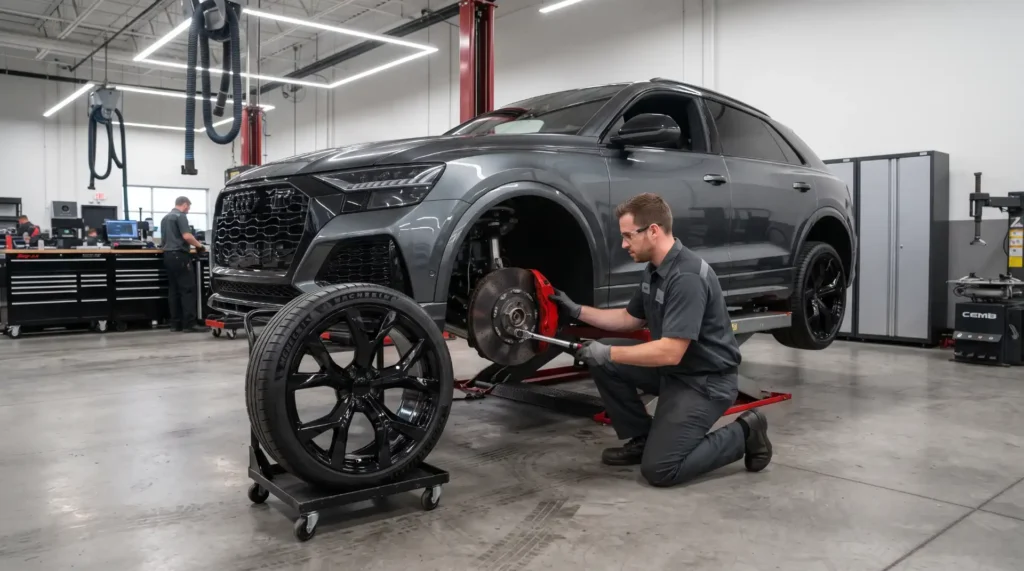 Performance Tires and Wheels
Tires are one of the most important performance upgrades for trucks and SUVs because they are the only components connecting the vehicle to the road.
A powerful engine cannot perform effectively without adequate traction. Upgrading to high-quality tires can improve acceleration, braking, cornering, towing stability, and off-road capability.
The correct tire depends on the vehicle’s purpose. Highway-focused tires may provide better comfort and fuel efficiency, while all-terrain tires offer a balance between pavement performance and off-road ability. Mud-terrain tires provide aggressive traction but may create more road noise and reduced highway comfort.
Wheel selection also affects performance. Heavier wheels increase unsprung weight and rotational mass, which can affect acceleration, braking, suspension response, and fuel economy.
Owners should avoid choosing wheels based only on appearance. Proper wheel width, offset, load rating, and tire compatibility are critical for safety and performance.
Brake Upgrades for Heavier Vehicles
Trucks and SUVs are heavier than many passenger cars, which makes braking performance especially important. Increased vehicle weight creates greater demands on brake components during towing, mountain driving, and emergency situations.
Performance brake pads, upgraded rotors, stainless steel brake lines, and improved brake fluid can enhance braking consistency. These upgrades are especially useful for vehicles that regularly carry heavy loads or tow trailers.
Larger brake kits may provide additional thermal capacity, but they should be matched to the vehicle’s wheel size and intended use.
Brake upgrades should always be considered alongside tire improvements. Better brakes require tires capable of converting braking force into road grip.
Cooling System Improvements for Towing and Heavy Use
Heat management is one of the most important areas for truck and SUV performance. Heavy towing, off-road driving, high temperatures, and increased engine output can create additional thermal demands.
Cooling upgrades may include improved radiators, transmission coolers, intercoolers, oil coolers, upgraded fans, and better airflow management.
Turbocharged trucks often require careful monitoring of intake temperatures and engine cooling because additional power can create additional heat.
Transmission cooling is particularly important for towing applications. Excessive transmission temperatures can accelerate fluid breakdown and contribute to component wear.
A performance build that ignores cooling may produce impressive short-term results but struggle during demanding real-world use.
Transmission and Drivetrain Improvements
The engine is only one part of the performance equation. Power must travel through the transmission, driveshaft, differential, and axles before reaching the wheels.
For trucks that tow or carry heavy loads, drivetrain reliability is often more important than peak horsepower numbers.
Transmission tuning can improve shift timing, responsiveness, and torque management. However, modifications should remain within the limits of the transmission design.
Differential upgrades, stronger axles, and improved driveshaft components may be necessary for vehicles producing significantly more power than stock.
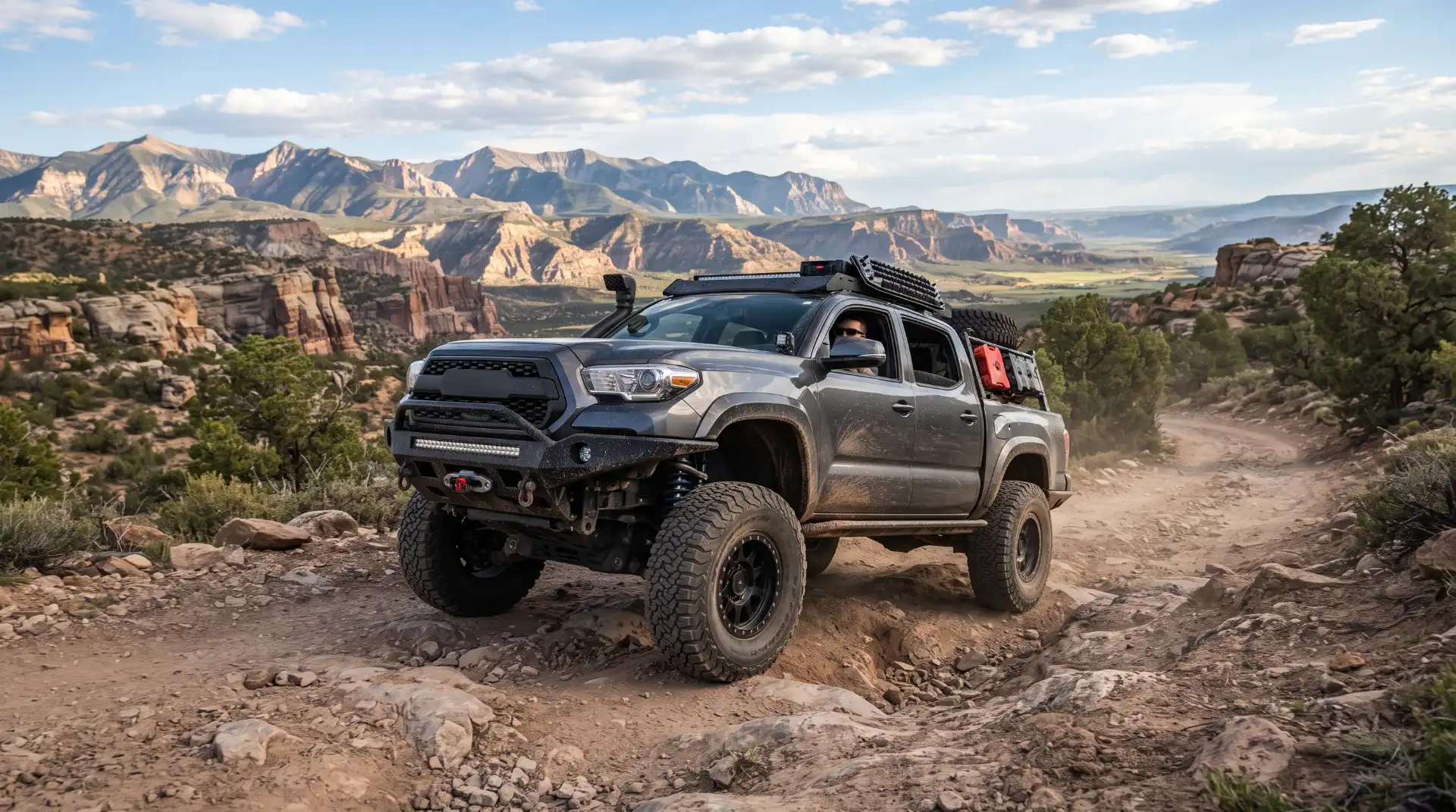
Off-Road Performance Upgrades
Many truck and SUV owners modify their vehicles for off-road adventures. These upgrades focus on durability, traction, and protection.
Common improvements include skid plates, recovery equipment, upgraded suspension, all-terrain tires, differential protection, lighting upgrades, and improved cooling systems.
Ground clearance is important, but capability also depends on approach angle, departure angle, articulation, traction control systems, and driver skill.
Off-road modifications should maintain reliability because remote environments create different challenges than normal street driving.
Technology Upgrades for Modern Trucks and SUVs
Modern vehicles rely heavily on electronic systems. Performance upgrades increasingly involve software, sensors, and vehicle data.
Drivers can benefit from monitoring systems that track temperatures, boost pressure, tire pressure, fuel economy, and towing information.
However, modifications must consider advanced safety systems. Changes to suspension height, wheels, tires, sensors, or vehicle geometry may affect systems such as adaptive cruise control, lane assistance, and stability control.
After major modifications, owners should confirm that all safety systems operate correctly.
Common Mistakes When Upgrading Trucks and SUVs
One of the biggest mistakes owners make is modifying only one part of the vehicle without considering the entire system.
Adding horsepower without improving cooling, brakes, tires, or drivetrain strength can create reliability problems. Installing oversized wheels without considering weight can reduce performance. Adding extreme lift without correcting geometry can create handling issues.
Another common mistake is choosing parts based only on marketing claims. Quality components designed specifically for the vehicle usually provide better long-term results than inexpensive parts that create additional problems.
Are Performance Upgrades Worth It?
Performance upgrades can significantly improve trucks and SUVs when they match the owner’s goals. A properly modified vehicle can tow more confidently, handle better, perform more effectively off-road, and provide a more enjoyable driving experience.
The most valuable upgrades are not always the most expensive. Tires, brakes, suspension improvements, and cooling upgrades often provide noticeable real-world benefits.
Owners should approach modifications as a complete build rather than a collection of unrelated parts. Every component should support the vehicle’s intended purpose.
Final Thoughts
The best performance upgrades for trucks and SUVs depend on how the vehicle is used. A towing-focused pickup, an off-road adventure vehicle, and a daily commuter SUV all require different solutions.
Engine tuning, suspension improvements, tires, brakes, cooling upgrades, and drivetrain enhancements can transform a vehicle when selected carefully and installed correctly.
The goal should not simply be creating the most modified truck or SUV. The goal should be building a vehicle that performs better, remains reliable, and fits the owner’s lifestyle.
Explore more Auto Sport Performance articles for additional information about vehicle performance upgrades, tuning, and automotive technology.