
Wheels are often among the first modifications enthusiasts make to a performance car, but changing them affects much more than appearance. Wheel weight, diameter, construction, width, offset, and tire choice can influence acceleration, braking, steering response, suspension movement, and ride quality.
For drivers looking for meaningful performance improvements, lightweight wheels can be particularly valuable because wheels are both rotating components and part of a vehicle’s unsprung mass. Reducing their weight changes the amount of energy required to accelerate and decelerate them while also reducing the mass the suspension must control.
The result can be a car that feels more responsive without adding horsepower.
There is an important qualification, however. A lightweight wheel is not automatically a better wheel. Strength, fitment, tire selection, load capacity, durability, manufacturing quality, and vehicle use all matter.
Understanding these factors can help U.S. enthusiasts choose lightweight wheels that complement their vehicles instead of selecting a wheel based only on the lowest advertised weight.
Why Wheel Weight Matters
Every part of a vehicle contributes to its overall mass, but wheels are different from many components because they rotate.
Removing ten pounds from a stationary component and removing ten pounds from the wheels do not affect the vehicle in exactly the same way.
The engine must accelerate the vehicle forward while also accelerating the rotating wheels and tires. When the driver brakes, the braking system has to reduce both the vehicle’s forward motion and the rotation of those assemblies.
This is why enthusiasts frequently discuss rotational mass when choosing performance wheels.
Reducing wheel weight can decrease rotational inertia, allowing the wheel to change rotational speed more easily. The exact performance improvement depends on wheel diameter, where the mass is concentrated, tire weight, vehicle weight, gearing, power, and other factors.
It is therefore misleading to claim that removing a certain number of pounds from the wheels always equals a specific horsepower increase.
The effect is more complicated than a simple conversion.
What drivers may notice instead is a collection of smaller improvements in responsiveness.
Lightweight Wheels Reduce Unsprung Mass
Wheels are also part of a vehicle’s unsprung mass.
Unsprung mass includes components that move with the wheel rather than remaining fully supported by the suspension. Depending on suspension design, this generally includes the wheels, tires, brake assemblies, hubs, and portions of certain suspension components.
When a tire encounters a bump, the wheel assembly must move upward and then return toward the road.
The suspension controls that movement.
A lighter wheel gives the springs and dampers less mass to manage. This can help the tire follow variations in the road surface more effectively, particularly when the suspension is already tuned for performance driving.
The effect can contribute to steering feedback, road-holding behavior, and suspension response.
Auto Sport Performance also discusses the importance of rotating and unsprung components in its guide to lightweight materials in car modifications. Forged aluminum wheels are highlighted as one of the common ways performance builds can reduce mass without changing the basic function of the vehicle.
Can Lightweight Wheels Improve Acceleration?
Yes, reducing wheel weight can potentially improve acceleration, although the real-world difference varies significantly between vehicles.
Acceleration requires energy.
A heavier wheel requires more energy to increase its rotational speed than a lighter wheel with similar dimensions and mass distribution.
This means reducing wheel mass can decrease some of the rotational work required when the car accelerates.
The improvement may be more noticeable on lightweight cars and lower-powered vehicles because wheel weight represents a larger percentage of the overall system.
A 15-pound reduction at each corner of a small sports car represents a substantial change. Removing several pounds from each wheel of a very heavy, high-powered luxury car may feel less dramatic.
Wheel diameter also matters because rotational inertia depends partly on how far the mass sits from the center of rotation.
A wheel with much of its mass concentrated near its outer edge can have greater rotational inertia than another wheel of similar total weight with more mass toward the center.
This is one reason comparing wheel weight alone cannot tell the complete story.
Lightweight Wheels and Braking Performance
The same physics that affect acceleration also apply when the vehicle slows down.
The brakes must reduce the rotational speed of the wheels and tires.
Lower rotational inertia means less energy must be removed from the rotating assembly during deceleration.
In practice, lightweight wheels do not suddenly transform ordinary brakes into racing brakes. Tire grip, brake pad compound, rotor size, brake temperature, road conditions, suspension geometry, and electronic brake systems remain major factors in stopping performance.
However, reducing wheel weight may contribute to a more responsive overall braking system.
The advantage becomes particularly relevant on performance vehicles repeatedly accelerating and braking, such as during autocross or track driving.
Repeated braking generates substantial heat. Every reduction in unnecessary mass can contribute to the efficiency of the overall performance package.
Steering Can Feel More Responsive
One of the most noticeable benefits of lightweight wheels can be steering response.
Drivers often describe lighter wheel-and-tire packages as making a car feel more eager to change direction.
This sensation comes from several factors.
The suspension has less unsprung mass to control, and the rotating wheel assembly may resist changes in motion less strongly. Tire construction and wheel width also influence steering response, so the improvement cannot always be attributed exclusively to wheel weight.
Tire Rack has performed comparative testing of wheel-and-tire packages with different weights. In one test using BMW 3 Series vehicles, its lighter wheel-and-tire combination was praised for steering feel, responsiveness, and a more nimble character compared with heavier alternatives.
This illustrates why lightweight wheels are popular among drivers who value handling rather than only straight-line acceleration.
 Ride Quality Can Also Change
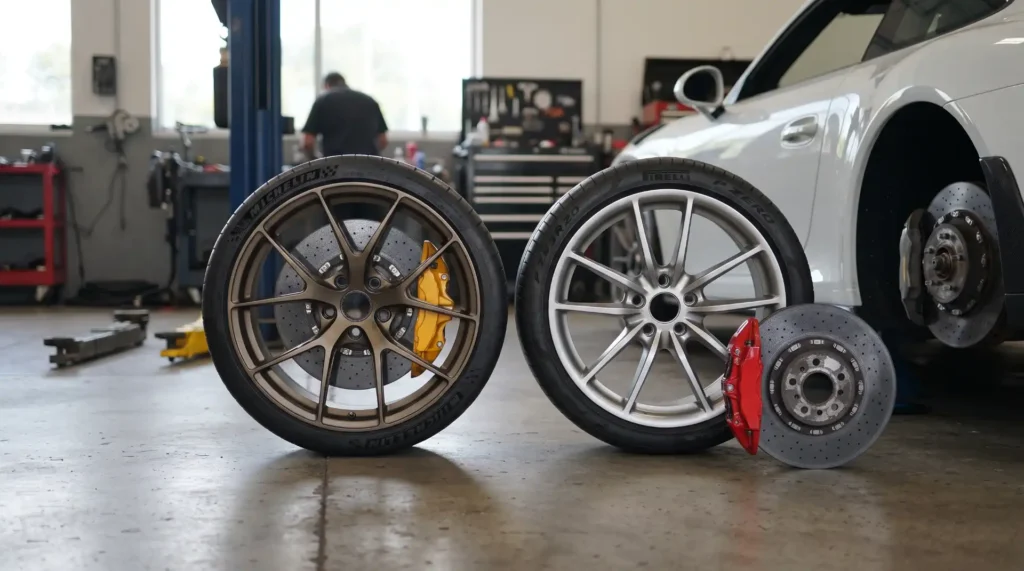 Ride Quality Can Also Change
It may seem surprising that a performance wheel could affect ride quality.
Because the wheel moves when the tire passes over bumps, reducing unsprung mass can make it easier for the suspension to control that movement.
Under the right circumstances, this may help the suspension react more quickly to irregular pavement.
However, wheel weight is only part of the equation.
Enthusiasts frequently install larger-diameter wheels while reducing weight. Larger wheels usually require lower-profile tires if the overall tire diameter needs to remain similar.
A shorter tire sidewall provides less cushioning.
This can create a firmer ride even though the wheel itself is lighter.
As a result, a lightweight 19-inch wheel with an ultra-low-profile tire might ride more firmly than a heavier 17-inch factory wheel with a taller tire sidewall.
Drivers should evaluate the complete wheel-and-tire package rather than treating wheel weight as an isolated specification.
Bigger Wheels Are Not Always Better for Performance
Large wheels remain popular because they can dramatically change a vehicle’s appearance and provide space for larger brake packages.
But increasing wheel diameter can introduce performance compromises.
A larger wheel may weigh more. Even when manufacturers use lightweight construction, the accompanying tire can change the total weight of the assembly.
Larger wheels also place more material farther from the hub, potentially increasing rotational inertia.
The lower-profile tires commonly used with large wheels may improve steering response, but they can reduce ride comfort and provide less protection from potholes.
For many street-performance cars, the ideal setup is not necessarily the largest wheel that physically fits.
A moderately sized lightweight wheel paired with a high-quality performance tire can provide a more balanced combination of acceleration, steering response, grip, comfort, and durability.
Wheel and Tire Weight Should Be Considered Together
A common mistake is comparing wheel weight while ignoring tire weight.
The engine and brakes do not rotate the wheel by itself.
They rotate the entire wheel-and-tire assembly.
Suppose one driver replaces a 25-pound factory wheel with an 18-pound aftermarket wheel. On paper, that saves seven pounds per corner.
However, if the new tire is significantly wider and heavier, much of that advantage may disappear.
This is especially common when enthusiasts combine lightweight wheels with substantially larger tires.
Wider tires can provide additional grip, but they may also add weight and rolling resistance.
Performance planning therefore requires looking at the complete package.
Tire Rack’s testing demonstrates this point clearly because its comparisons considered wheel-and-tire package weight instead of only wheel specifications. Its lighter tested combination weighed less as an entire assembly despite using a larger wheel diameter.
Forged Wheels and Cast Wheels
How a wheel is manufactured has a major effect on its weight, strength, and price.
Cast aluminum wheels are produced by pouring molten aluminum into a mold. Casting allows manufacturers to create complex shapes relatively economically, which makes cast wheels common on factory vehicles and in the aftermarket.
A properly engineered cast wheel can be completely suitable for street use.
Forged wheels use a different manufacturing process.
Instead of simply casting molten metal into its final shape, forging applies intense pressure to aluminum material. This can create a dense and strong structure that allows manufacturers to achieve the necessary strength with less material.
The result is often a lighter wheel.
Forged wheels commonly cost substantially more because the manufacturing process and machining requirements are more expensive.
For track-focused builds where reducing every pound matters, that price may be easier to justify.
For normal street vehicles, a well-engineered flow-formed or lightweight cast wheel can sometimes provide a more practical balance.
Flow-Formed Wheels Offer a Middle Ground
Flow forming has become popular among performance enthusiasts seeking some of the advantages of forged construction without paying premium forged-wheel prices.
In simplified terms, the wheel begins with a cast section. The barrel is then formed using pressure while the wheel rotates.
The process can improve the mechanical properties of the barrel and allow manufacturers to use less material than a traditional cast design.
Depending on the manufacturer and design, flow-formed wheels may weigh less than conventional cast alternatives.
They generally occupy the middle of the market between standard cast and fully forged wheels.
However, manufacturing terminology differs between brands.
Words such as flow formed, rotary forged, spun forged, and flow forged may describe related manufacturing techniques but are not always identical.
Buyers should examine actual wheel specifications, testing information, load ratings, and manufacturer reputation rather than choosing solely based on a marketing term.
Wheel Strength Matters as Much as Weight
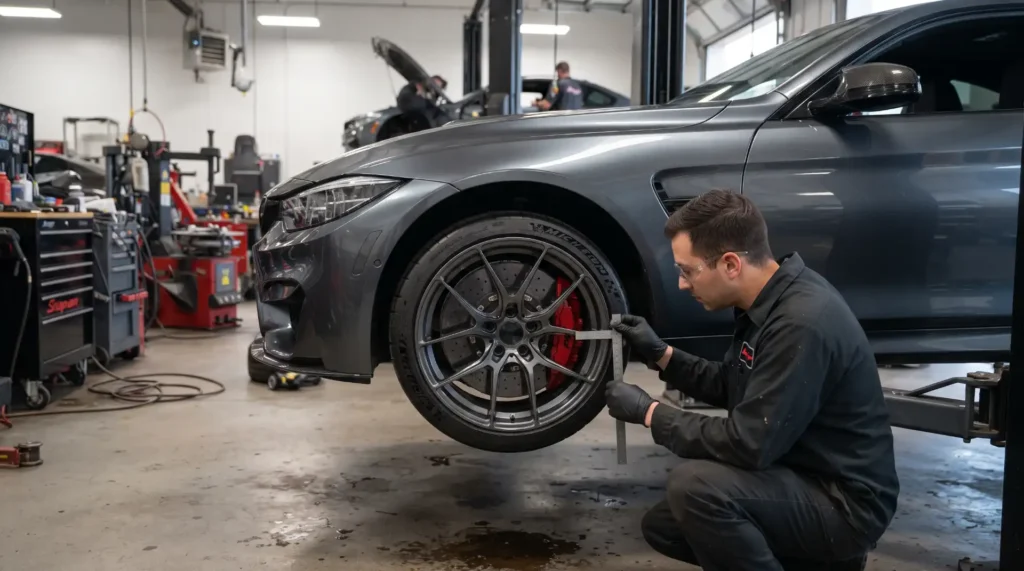 Wheel Strength Matters as Much as Weight
A wheel operates under considerable stress.
It must support the vehicle while dealing with cornering forces, braking loads, acceleration, potholes, road debris, temperature changes, and repeated impacts.
Chasing the lightest possible wheel without considering structural integrity can therefore be a poor strategy.
The ideal performance wheel is not simply lightweight.
It is light for the strength required by the application.
A track car running on a controlled racing surface operates in a different environment than a daily driver traveling over potholes, railroad crossings, broken pavement, and winter-damaged roads.
Similarly, a lightweight wheel suitable for a small sports coupe may not provide the appropriate load capacity for a heavier performance SUV or electric vehicle.
Always consider the wheel manufacturer’s stated load rating and vehicle application.
Fitment Has a Direct Effect on Performance
Weight is irrelevant if the wheel does not fit the vehicle correctly.
Critical fitment measurements include wheel diameter, width, offset, bolt pattern, center bore, brake clearance, and tire dimensions.
Offset deserves particular attention.
Wheel offset determines where the wheel sits relative to the hub.
Changing offset can alter track width and scrub radius. Large changes can affect steering feel, suspension loading, fender clearance, and handling behavior.
Wheel width influences the range of tire sizes that can be installed properly.
A wider wheel may support wider tires and improve sidewall support, but extreme width can create clearance problems.
Selecting the correct setup requires balancing appearance and performance with suspension geometry.
A wheel that sits perfectly flush with the fender is not automatically the best wheel for handling.
Alignment Matters After Changing Wheels and Tires
Wheel changes can reveal or exaggerate alignment problems.
Wider performance tires may respond more noticeably to camber and toe settings. Changes in wheel offset can also affect steering characteristics.
Auto Sport Performance’s guide to wheel alignment for performance driving explains how camber, caster, and toe affect stability, steering response, tire wear, and cornering behavior.
A good wheel upgrade therefore works best as part of a properly aligned suspension setup.
A lightweight performance wheel paired with poor alignment may produce less useful improvement than a factory wheel on a properly configured chassis.
Tires Matter More Than Many Wheel Buyers Realize
Wheels attract attention because their design is easy to see.
Tires may influence actual road performance even more.
A lightweight wheel with a poor tire can still produce disappointing braking, cornering, and wet-weather behavior.
A high-quality performance tire mounted on a sensible wheel often provides a greater improvement than an expensive wheel paired with an unsuitable tire.
NHTSA notes that tire design can affect wet and dry traction, handling, durability, ride comfort, and rolling resistance. It also advises drivers to use appropriately sized and load-rated tires and maintain correct inflation.
This makes tire selection a critical part of any lightweight-wheel upgrade.
Street cars should use tires suited to the temperatures, weather, and driving conditions they regularly encounter.
A tire designed primarily for dry track use may not make sense for a daily driver facing rain, cold temperatures, or long highway trips.
Lightweight Wheels for Track Cars
Track driving is where wheel weight reduction can become particularly attractive.
A vehicle repeatedly accelerates, brakes, and changes direction during every lap.
Reducing rotating and unsprung mass can complement suspension, brake, and tire modifications.
Track enthusiasts may also choose smaller-diameter wheels when brake clearance permits.
A smaller wheel can sometimes weigh less and allow the use of a tire with a taller sidewall while maintaining a similar overall diameter.
This approach is common because lap-time performance does not necessarily reward the largest-looking wheel.
Tire availability also matters.
Some wheel sizes provide a larger selection of track-oriented tires at more reasonable prices.
For drivers using separate street and track wheel sets, a dedicated lightweight setup may reduce wear on everyday wheels while allowing more specialized tires at events.
Lightweight Wheels for Daily Drivers
A daily driver has different requirements.
Pothole resistance, ride comfort, tire replacement cost, corrosion resistance, road noise, and long-term durability deserve more attention.
The lightest wheel available may not be the best option.
A moderately lightweight wheel from a reputable manufacturer can still reduce mass without creating unnecessary compromises.
Drivers should consider where the car operates.
Road conditions vary widely across the United States. A very low-profile setup may work well on smooth pavement but become frustrating in areas with rough roads or severe winter conditions.
Daily drivers also benefit from choosing common tire sizes.
An unusual wheel diameter or width can reduce tire availability and make replacements more expensive.
Practicality remains part of performance when the vehicle spends most of its life on public roads.
Lightweight Wheels and Electric Vehicles
Lightweight wheels can be especially interesting for electric vehicles because EVs are often substantially heavier than comparable combustion-powered cars due to their battery packs.
Reducing unnecessary wheel mass may help vehicle response, but EV wheel design involves additional considerations.
Many electric vehicles use aerodynamic wheels to reduce drag and improve efficiency.
Replacing them with an open-spoke performance design could reduce wheel weight while increasing aerodynamic resistance.
The net result depends on the vehicle and wheel.
EVs also produce strong low-speed torque, which places significant demands on tires.
Their higher vehicle weight means load ratings become particularly important.
Auto Sport Performance’s article about performance tuning for electric and hybrid vehicles discusses how tires, alignment, aerodynamics, and other chassis changes can complement modern electrified powertrains.
Can Lightweight Wheels Improve Fuel Economy?
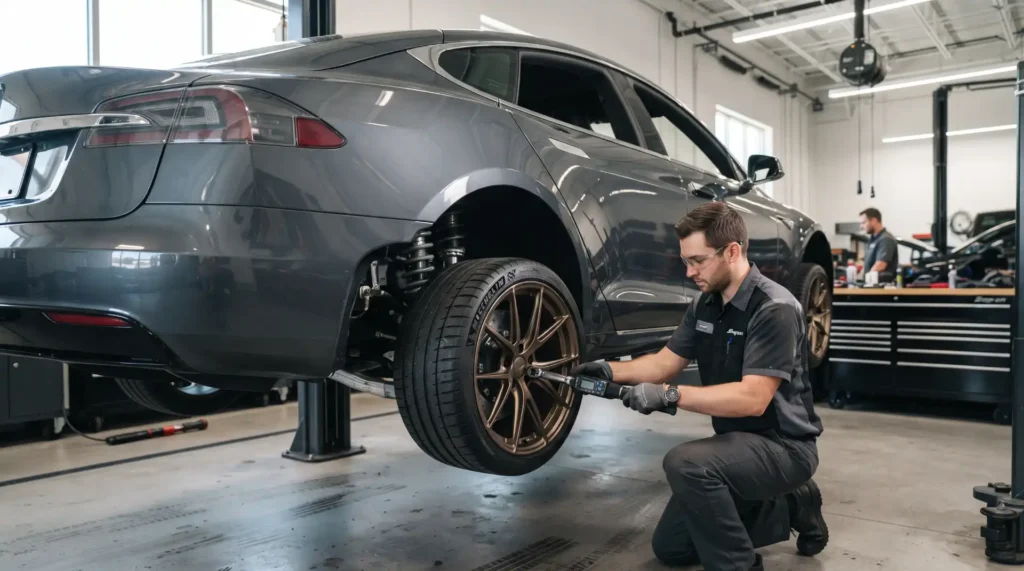 Can Lightweight Wheels Improve Fuel Economy?
Reducing vehicle weight can potentially reduce the energy required to accelerate the vehicle.
Lower rotational mass may also reduce some of the energy needed during repeated acceleration.
However, wheel changes can simultaneously affect aerodynamic drag, tire rolling resistance, tire width, and overall diameter.
That means a lighter wheel does not guarantee improved fuel economy.
For example, replacing a factory wheel with a lighter but wider wheel and a sticky performance tire may increase rolling resistance enough to offset some potential efficiency improvement.
A larger open-spoke wheel can also have different aerodynamic characteristics than a more enclosed factory design.
Drivers interested primarily in fuel economy or EV range should therefore evaluate the entire package rather than relying only on wheel weight.
Do Lightweight Wheels Make a Car Faster?
They can contribute to improved performance, but expectations should remain realistic.
Installing lighter wheels does not transform a normal street car into a substantially more powerful vehicle.
There is no additional engine horsepower.
Instead, the vehicle has less mass and rotational inertia to manage.
Depending on the setup, the driver may notice quicker response when accelerating, sharper steering, improved suspension behavior, or slightly more responsive braking.
The combined improvement can make a vehicle feel more agile.
That sensation is often why enthusiasts value lightweight wheels even when stopwatch differences are relatively small.
Performance is not defined exclusively by horsepower or zero-to-60 mph times.
Response and control matter.
Avoid Buying Wheels Based Only on Advertised Weight
The Internet makes wheel weight easy to compare, which can encourage buyers to focus on one number.
A better approach considers several specifications together.
Verify that the wheel fits the vehicle, clears the brakes, provides sufficient load capacity, accepts suitable tires, and comes from a manufacturer with appropriate quality controls.
Consider how the vehicle is used.
A lightweight track wheel and a daily-driver wheel may have very different priorities.
NHTSA emphasizes the importance of appropriate tire size, load capacity, tire condition, inflation, balance, and alignment.
Those fundamentals remain relevant regardless of how advanced or expensive the wheel is.
The Aftermarket Wheel Segment Remains Important in 2026
Wheel, tire, suspension, and brake products remain central categories within the U.S. automotive aftermarket. SEMA’s recently released 2026 market research reports that the U.S. specialty-equipment industry generated approximately $52.92 billion in accessory and performance-product sales during 2025.
This broader market continues to support a wide selection of wheel technologies for enthusiasts.
Buyers can choose from traditional cast wheels, flow-formed designs, forged aluminum wheels, specialized motorsport wheels, and increasingly sophisticated lightweight products.
More choice is beneficial, but it also places greater responsibility on the buyer to understand what they are purchasing.
A performance wheel should be selected as an engineering component rather than simply a cosmetic accessory.
Are Lightweight Wheels Worth It?
For many performance enthusiasts, lightweight wheels can be a worthwhile modification because they influence several areas of vehicle behavior at once.
They may reduce rotational inertia and unsprung mass while also creating opportunities to choose better wheel widths, tires, and fitment.
However, the benefits depend heavily on the starting point.
Replacing an unusually heavy factory wheel with a significantly lighter wheel of similar dimensions can produce a meaningful reduction in mass.
Replacing an already lightweight factory wheel with an aftermarket design that weighs only one pound less may produce a change that is difficult to notice.
Price should also factor into the decision.
Fully forged wheels can cost considerably more than quality cast or flow-formed alternatives.
Drivers should consider whether the additional weight reduction supports their actual goals.
For a competitive track build, every pound may matter.
For a street car, spending some of that budget on better tires, brake maintenance, suspension setup, or professional alignment could provide a more noticeable improvement.
Choosing a Lightweight Wheel for Your Car
Start by recording the specifications of the factory setup.
Know the original wheel diameter, width, offset, bolt pattern, center bore, wheel weight, tire dimensions, and combined wheel-and-tire weight when possible.
Then define the purpose of the replacement.
A street driver might prioritize lower weight while maintaining factory-like durability and ride quality.
An autocross driver may prioritize steering response and tire selection.
A track enthusiast could focus on low weight, brake clearance, strength, and affordable replacement tires.
Avoid increasing diameter unless there is a clear reason to do so.
A larger wheel might be necessary to clear bigger brakes, but increasing diameter purely for appearance can work against a weight-reduction goal.
Finally, compare complete packages.
The ideal setup balances wheel weight, tire weight, grip, construction, load capacity, cost, fitment, and durability.
Final Thoughts
Lightweight wheels can improve more than the appearance of a performance car.
Because wheels contribute to both rotational mass and unsprung mass, reducing their weight can influence acceleration response, braking, suspension behavior, and steering feel.
The largest benefits generally come when lighter wheels are combined with correctly sized performance tires and proper suspension alignment.
Wheel construction also matters. Forged wheels can provide impressive strength-to-weight characteristics, while flow-formed and well-designed cast wheels offer alternatives for drivers balancing performance with cost.
For street use, durability and proper fitment should remain priorities. Track builds may place greater emphasis on minimum weight, brake clearance, and tire availability.
Most importantly, consider the wheel and tire as one system.
A very lightweight wheel fitted with an unnecessarily heavy tire may erase part of the weight reduction. An expensive forged wheel fitted with a poor tire may not improve real-world grip. An aggressive offset can change suspension behavior even when the wheel itself is light.
For more information on related modifications, read Auto Sport Performance’s guide to lightweight materials in car modifications and its detailed article on wheel alignment for performance driving.
For authoritative tire guidance, drivers can also review the National Highway Traffic Safety Administration’s TireWise resources, which cover tire sizing, load ratings, maintenance, inflation, balancing, and alignment.
A well-selected lightweight wheel setup does not simply make a car look more aggressive. It can reduce unnecessary mass while helping the suspension, tires, brakes, and drivetrain work more effectively together.