
California has one of the most closely regulated automotive emissions programs in the United States. For car enthusiasts, that means building a faster, better-handling, or more responsive vehicle requires more than choosing the right turbocharger, exhaust system, suspension kit, or engine tune. Owners must also understand how California’s emissions laws apply to their vehicles and whether aftermarket parts are legal for their specific applications.
In 2026, California drivers continue to face important considerations when modifying gasoline-powered cars, diesel vehicles, and certain hybrid vehicles. The California Air Resources Board (CARB), the California Department of Motor Vehicles (DMV), and the Bureau of Automotive Repair (BAR) each play different roles in the regulatory environment. Depending on the modification, a vehicle may need compliant aftermarket equipment, an appropriate emissions label, a referee inspection, or a successful smog check.
The good news is that California drivers still have options for improving vehicle performance. Many modifications can enhance handling, braking, drivability, and appearance without creating unnecessary emissions problems. The key is understanding which changes affect emissions controls, which parts have the necessary approvals, and which modifications could make a vehicle illegal to operate on public roads.
This guide explains California performance car modification rules in 2026, how CARB compliance works, which upgrades deserve careful research, and how to plan a performance build that balances power, reliability, and legal road use.
Why California Performance Car Modification Laws Matter
California’s emissions requirements are designed to reduce pollutants that contribute to smog and poor air quality. The state has historically experienced serious air pollution challenges, particularly in densely populated metropolitan areas and regions with geographical conditions that can trap pollution. Vehicles remain one part of that broader environmental picture.
For enthusiasts, emissions regulation becomes especially important when a modification changes how the engine burns fuel, manages exhaust gases, or communicates with its onboard diagnostic system. A part that improves horsepower may also affect emissions performance, even when the change is not obvious to the driver.
For example, installing a high-flow intake system may seem like a straightforward way to improve airflow. However, if that intake replaces or changes an emissions-related component, its legality can depend on whether it has been approved for the vehicle’s exact engine and configuration. An intake that is compliant for one model year may not be approved for another.
The same principle applies to ECU tuning, turbocharger upgrades, exhaust components, and supercharger kits. A product advertised as suitable for street use nationwide is not automatically legal for every California vehicle.
Understanding these distinctions before purchasing parts helps drivers avoid expensive mistakes. A modification that passes a casual visual inspection may still create problems during a smog inspection or when an inspector checks the vehicle’s onboard diagnostics.
 Understanding CARB and Its Role in Aftermarket Modifications
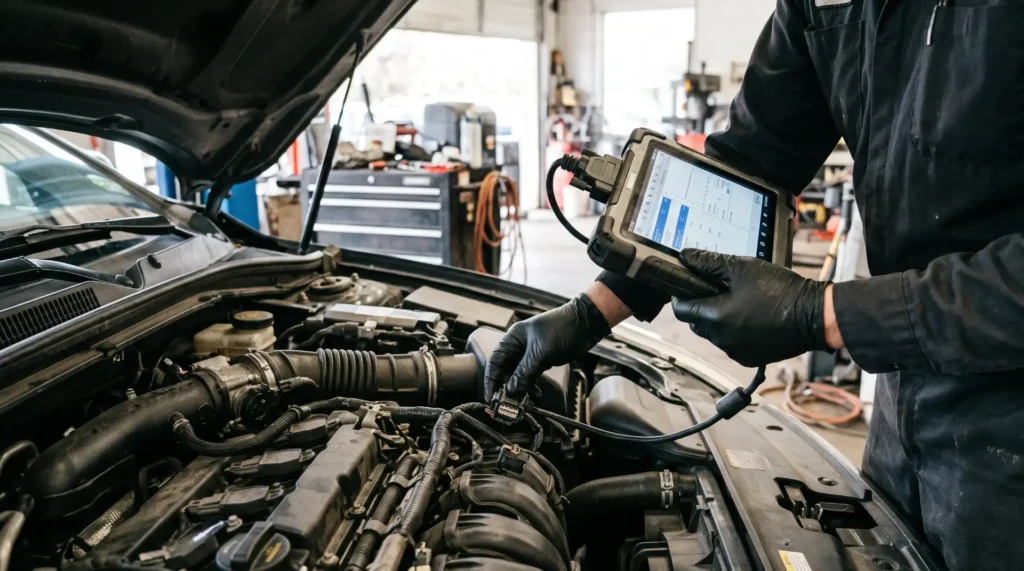 Understanding CARB and Its Role in Aftermarket Modifications
The California Air Resources Board, commonly known as CARB, develops and administers many of the state’s vehicle emissions requirements. Its responsibilities include regulating emissions-related aftermarket parts and evaluating whether certain modifications are acceptable for use on covered vehicles.
When enthusiasts discuss CARB compliance, they are usually referring to whether an aftermarket component has the appropriate approval for the vehicle on which it will be installed.
What Is a CARB Executive Order?
One important term is Executive Order (EO). In the aftermarket industry, a CARB EO is an official approval associated with a specific emissions-related part or system and its permitted vehicle applications.
Manufacturers may seek an EO for products such as intake systems, supercharger kits, exhaust components, and other modifications that could affect emissions. The approval is not a blanket authorization for every product sold by that manufacturer.
An EO typically identifies the approved configuration, including applicable vehicle models, engine families, model years, and installation conditions. Some approvals may impose additional requirements that owners and installers must follow.
Before purchasing a part, check whether the manufacturer’s documentation identifies a CARB EO number and whether that approval covers your exact vehicle. You can use the official California Air Resources Board website to find information about California’s emissions program and relevant regulatory resources.
Do not rely solely on a retailer’s product title, a social media post, or a claim that a part is “50-state legal.” Ask for the actual documentation and verify the application.
Why CARB Approval Is Not the Same as a Manufacturer’s Warranty
A manufacturer’s warranty addresses specified repair or replacement obligations under the warranty terms. CARB approval concerns emissions compliance for the approved application. These are separate matters.
A performance part might carry a warranty but lack the necessary California emissions approval. Conversely, an approved component may still affect the vehicle manufacturer’s warranty if an unrelated failure occurs, depending on the facts and applicable law.
Consumers should also distinguish between a product’s general quality certification and an emissions-related approval. A part manufactured to high standards is not necessarily approved for road use in California.
Does Every Aftermarket Part Need a CARB EO?
No. Not every modification is an emissions-related aftermarket part requiring an EO. The regulatory implications depend on what the component does, what it replaces, and whether it affects an emissions-controlled system.
For example, replacing a worn seat with a suitable replacement seat does not ordinarily raise the same emissions concerns as installing an aftermarket catalytic converter or changing engine calibration. Wheel and tire changes, cosmetic body components, and some suspension modifications generally present different compliance questions.
However, a modification’s category alone does not establish that it is legal in every situation. A suspension change could affect safety or vehicle equipment requirements, while an ECU change could affect emissions readiness or defeat an emissions control. Owners should evaluate the specific part and its intended use rather than assume all modifications in one category are automatically permitted.
California Smog Check Requirements for Modified Cars
A performance modification can affect a vehicle’s ability to pass California’s Smog Check program. Registration requirements depend on the vehicle’s age, fuel type, registration circumstances, and other applicable rules. Passing a smog inspection does not automatically make every modification legal, and having a compliant part does not guarantee that a vehicle will pass if another emissions problem exists.
The California Bureau of Automotive Repair (BAR) administers the Smog Check program. Its official Smog Check requirements and preparation guide explains which vehicles need inspections, how inspections work, and what owners should do when a vehicle fails.
Which Vehicles Need a Smog Check in 2026?
California generally requires Smog Checks for gasoline, hybrid, and alternative-fuel vehicles from model year 1976 onward, as well as diesel vehicles from model year 1998 onward, subject to applicable exceptions.
For registration renewals, gasoline, hybrid, and alternative-fuel vehicles that are eight model years old or newer generally do not need a biennial Smog Check, but an applicable smog abatement fee is required. This is different from the change-of-ownership exemption, which generally covers vehicles that are four model years old or newer.
Electric vehicles are exempt from Smog Check requirements, as are motorcycles under the program described by BAR. However, an exemption from a particular inspection requirement should not be interpreted as blanket permission to modify a vehicle in ways that violate other laws.
If you have a modified 2018 Mustang, for example, you should not assume that its age or its previous inspection result makes every aftermarket intake, exhaust component, or ECU calibration legal. The exact parts and vehicle configuration still matter.
What Inspectors Look for During a Smog Check
For many modern vehicles, the inspection includes an examination of the onboard diagnostic system, commonly known as OBD-II. Inspectors may also conduct visual and functional checks of the emissions control equipment.
Depending on the vehicle and inspection requirements, the process can identify issues such as an illuminated check engine light, incomplete readiness monitors, missing emissions equipment, or software that has been modified without the necessary approval.
A vehicle might feel powerful and run smoothly while still failing an inspection. Engine performance alone does not demonstrate that a vehicle meets emissions requirements.
Owners should also remember that clearing diagnostic codes shortly before an inspection is not a reliable solution. Clearing codes can reset readiness monitors, and an inspector may find that the vehicle is not ready for testing. The underlying issue should be diagnosed and repaired rather than concealed.
Does Passing a Smog Check Make an Illegal Modification Legal?
No. A successful inspection establishes that the vehicle passed the applicable inspection at that time. It does not automatically legalize an aftermarket component that violates emissions anti-tampering requirements.
For example, a modified car might pass a particular test without obvious symptoms, but an unapproved emissions-related component may still be unlawful. The appropriate approach is to verify the part’s legal status before installation and maintain the required emissions equipment.
This distinction is especially important for owners who buy used performance cars. A previous owner may have installed a tune, changed the exhaust, or replaced the intake. Before treating the car as ready for daily driving, identify the installed components and verify their compliance.
Performance Modifications That Require the Most Care
Some upgrades have a greater potential to affect emissions compliance than others. The most important consideration is whether a component changes a regulated system, replaces emissions equipment, or alters engine management.
1. ECU Tuning and Performance Software
Engine control unit (ECU) tuning is popular because it can change ignition timing, fueling, boost pressure, throttle response, and other parameters. Depending on the engine and calibration, these adjustments can produce meaningful performance differences.
However, ECU tuning deserves particular attention in California because software can affect emissions controls and OBD-II monitoring. An aggressive calibration may disable diagnostic trouble codes, change catalyst monitoring, or alter the operation of systems designed to control pollutants.
For a street-driven vehicle, choose a calibration specifically approved for the exact application when an approval is required. Verify the relevant EO and follow its conditions. A tune marketed as a performance solution for a broad range of vehicles should not be assumed to qualify for every model year.
Be cautious of claims such as “smog friendly,” “stock emissions retained,” or “easy to flash back.” These phrases are not substitutes for actual compliance documentation. Returning a vehicle temporarily to its original software may also fail to resolve other problems if hardware has been changed or emissions monitors have been tampered with.
A sensible approach is to discuss the intended use with a qualified tuner before purchasing a calibration. Ask whether the software is approved for California street use, whether it preserves all required diagnostic functions, and whether any accompanying hardware must be installed.
2. Cold-Air Intakes and High-Flow Air Filters
Intake upgrades are often marketed as simple ways to improve airflow, engine sound, and throttle response. Some systems replace only the filter, while others change the airbox, intake tube, airflow sensor housing, or other components.
Those differences matter. An intake system that alters airflow measurement or engine management may affect emissions performance. Its approval must cover the relevant vehicle configuration.
Before installing a cold-air intake, confirm that the product’s documentation identifies the correct model year, engine, and application. If the manufacturer claims a CARB exemption, verify the EO number rather than relying on a generic California-legal label.
Also consider heat management. An intake that draws hot air from the engine compartment may offer little real-world advantage compared with a properly engineered system. Fitment, filtration quality, sensor compatibility, and weather protection can be just as important as advertised peak horsepower.
For drivers who use their cars daily, an appropriately designed intake with valid documentation is usually a more practical choice than an unverified system that creates emissions or drivability problems.
3. Exhaust Systems, Headers, and Catalytic Converters
Exhaust modifications can change sound, weight, flow, and engine response. They can also create some of the most serious compliance problems when they involve catalytic converters or other emissions-related components.
An axle-back or cat-back exhaust generally changes components farther downstream than an exhaust manifold or catalytic converter. That does not mean every such system is automatically legal. Noise restrictions, applicable equipment laws, product design, and the specific vehicle still need to be considered.
Headers and catalytic converters require more careful verification because they are closer to the engine’s emissions-control functions. A header that changes catalyst location, or a converter that does not meet the applicable requirements, can cause legal and inspection problems.
Never remove a required catalytic converter or replace it with a test pipe on a California street-driven vehicle. Likewise, do not assume that a universal aftermarket converter is suitable for every application. California has specific requirements for replacement catalytic converters, and the correct part depends on the vehicle and its emissions certification.
Owners should verify the applicable approval, keep required emissions equipment installed, and avoid exhaust configurations that defeat catalyst monitoring or other emissions controls.
Exhaust noise is another consideration. A system can be emissions compliant and still violate noise or equipment rules. Before purchasing an exhaust, review its documentation and intended application, and ask the installer about both emissions and sound compliance.
4. Turbochargers and Superchargers
Forced induction can provide a substantial power increase, but it also changes engine operating conditions. Boost pressure, fueling, ignition timing, intake temperatures, and exhaust temperatures all influence the system’s performance.
A turbocharger or supercharger kit should be evaluated as a complete package, not just as a single mechanical component. The kit may include engine-management software, injectors, intercooling equipment, intake plumbing, and other components that affect emissions.
In California, an aftermarket forced-induction kit needs the appropriate approval for the particular vehicle and configuration when required. A kit approved for one engine family or model year may not be approved for another.
Before buying a kit, ask the manufacturer for the EO documentation and confirm that it covers the exact application. Do not assume that a kit approved for an older version of an engine is automatically legal for a newer model with different emissions equipment.
Proper installation is equally important. Incorrect plumbing, leaks, poor calibration, or inadequate cooling can cause reliability problems even when the underlying product is compliant.
For street-driven builds, choose a complete, documented package rather than assembling a combination of unrelated components without confirming their compatibility.
5. Camshafts, Engine Swaps, and Internal Engine Modifications
Engine modifications can range from a mild camshaft change to a complete engine swap. Their legal implications depend on how the work affects the vehicle’s original emissions configuration.
A camshaft can alter valve timing, idle characteristics, combustion behavior, and exhaust emissions. A part designed primarily for competition may not be appropriate for a street-driven car, even if it physically fits the engine.
Engine swaps are particularly complex because the replacement engine, its emissions equipment, the vehicle’s original configuration, and the applicable inspection requirements all matter.
BAR explains that vehicles with engine changes generally need an initial inspection at a Referee Center and a BAR Referee label. Once the initial inspection is completed, future Smog Checks can generally be performed at a regular station, subject to the applicable requirements. See the official BAR engine-change guidance before planning a swap.
Replacing an engine with an identical configuration or using an appropriately exempted engine package can help avoid complications. However, owners should not assume that installing a newer engine automatically makes the swap compliant.
Before spending money on a swap, speak with BAR or a qualified emissions specialist about the proposed configuration. Getting guidance beforehand can prevent an expensive build from becoming difficult or impossible to register for street use.
Legal Performance Upgrades That Can Improve Driving
Not every performance upgrade involves engine calibration or emissions equipment. Many owners can improve the way their cars drive by concentrating on tires, braking, alignment, and suspension.
These modifications can make a vehicle more predictable, comfortable, and capable without necessarily changing its engine emissions systems. Nevertheless, owners must still consider fitment, safety, applicable equipment laws, and the specific characteristics of the parts they choose.
Performance Tires and Lightweight Wheels
Tires have a direct influence on acceleration, cornering, braking, and wet-weather performance. A quality tire matched to the car’s intended use can make a more noticeable real-world difference than an expensive engine modification.
Summer performance tires may offer strong dry-road grip, but they are not ideal for every climate. All-season tires may be more practical for drivers who encounter changing weather, while dedicated track tires require special attention to temperature, wear, and intended use.
Wheel upgrades can reduce unsprung weight when the new wheels are lighter than the originals. Lower unsprung weight can help suspension components respond to road irregularities, although the actual benefit depends on wheel construction, tire selection, diameter, and total assembly weight.
Before changing wheel size, check load ratings, brake clearance, offset, tire diameter, and fender clearance. Oversized wheels may increase weight, reduce ride comfort, or create rubbing problems. Extremely stretched tires and unsuitable wheel combinations can also compromise safety.
For additional guidance on the relationship between wheel weight and driving behavior, readers can explore the AutoSportPerformance.com blog, which covers automotive performance topics, including lightweight wheels and their effect on vehicle performance.
Suspension and Handling Improvements
Suspension modifications can help reduce body roll, sharpen steering response, and improve vehicle control. Common options include quality dampers, springs, sway bars, bushings, and adjustable coilovers.
However, lowering a vehicle too far can create practical and safety concerns. Reduced ground clearance may cause the car to scrape on driveways or road surfaces. Changes in suspension geometry can also affect alignment, tire wear, and handling balance.
A well-planned suspension setup should suit the vehicle’s actual use. A daily driver that travels on uneven city streets has different needs from a car used primarily for autocross or track events.
After installing suspension components, obtain a professional alignment and inspect the vehicle for clearance problems. Check that the suspension operates through its intended range and that tires do not contact bodywork during turns or compression.
Also consider the effects on advanced driver assistance systems. On vehicles with cameras, radar, or other sensors, major changes to ride height or alignment may require inspection or calibration according to manufacturer procedures.
Brake Pads, Rotors, and Complete Brake Kits
Braking performance is essential for both street driving and track use. Better brake pads, suitable rotors, fresh brake fluid, and properly maintained calipers can improve braking consistency under the right conditions.
A complete big-brake kit is not automatically the best choice for every vehicle. Larger brakes may increase cost and unsprung weight, and some kits require specific wheel dimensions. Drivers should compare the benefits with their intended driving conditions.
For everyday use, a well-matched set of pads and rotors may provide adequate performance without the expense of a full conversion. Track drivers may need pads and fluid designed to tolerate higher temperatures, but race-oriented components can perform poorly when cold or produce more noise and dust on the street.
Brake upgrades should always preserve safe operation and comply with applicable laws. Correct installation, suitable brake balance, and the right fluid are more important than choosing parts based on appearance alone.
Cooling System Improvements
Performance driving places additional demands on cooling systems. Sustained high engine loads can increase coolant, oil, transmission, and intake-air temperatures.
Depending on the vehicle and intended use, an upgraded radiator, oil cooler, transmission cooler, or intercooler may help maintain temperatures within the manufacturer’s or component supplier’s specified operating range. But the correct solution depends on the problem being addressed.
A larger radiator will not fix every overheating issue. A failing thermostat, restricted airflow, a damaged water pump, low coolant, or a faulty fan can produce similar symptoms. Diagnose the cause before purchasing upgraded equipment.
Cooling components should be selected for compatibility and installed without compromising other systems. Pay attention to hose routing, airflow, pressure ratings, leak prevention, and service access.
For street-driven cars, a reliable cooling system is often more valuable than a modification that produces a small peak-horsepower gain but increases heat-related problems.
California Vehicle Noise Rules and Street-Legal Exhaust Upgrades
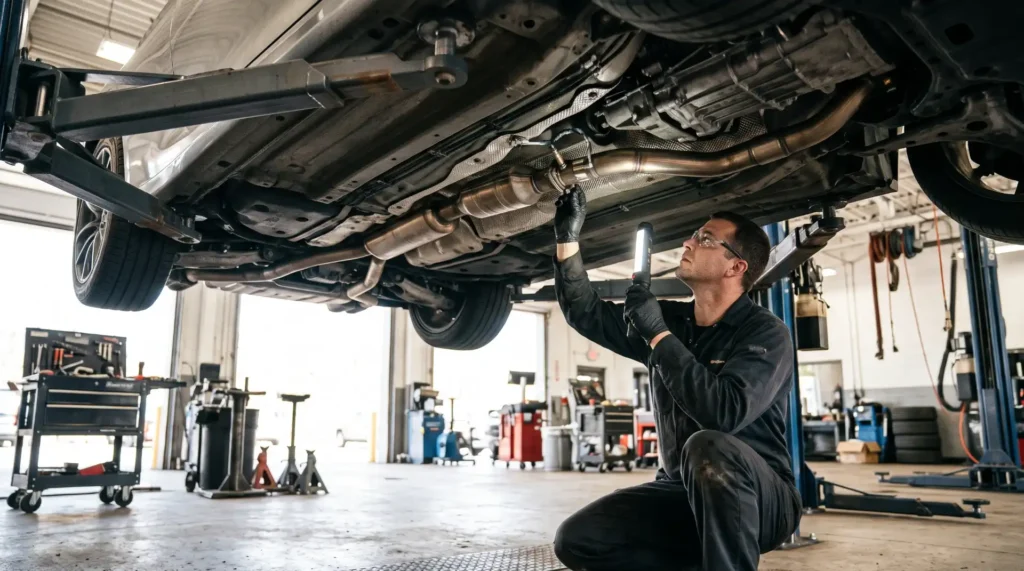 California Vehicle Noise Rules and Street-Legal Exhaust Upgrades
Emissions compliance is only one part of making a modified car legal for public roads. California also has vehicle equipment and noise requirements that can affect exhaust systems, suspension modifications, lighting, and other aftermarket changes.
An exhaust system may preserve the catalytic converters and still create a problem if it violates applicable noise requirements. Similarly, a vehicle can meet emissions standards but have unsafe tires, improperly installed suspension components, or lighting that does not comply with applicable rules.
How to Choose an Exhaust That Works for Street Driving
Start by deciding what you want from the exhaust. Some owners want a deeper sound, while others are looking for weight savings, improved flow, or a more refined driving experience. These goals do not always require the same hardware.
For a street car, look for a system that retains all required emissions equipment and has clear documentation for its intended application. Ask whether the product is intended for public-road use in California, and distinguish between a manufacturer’s sound description and an actual legal approval.
Be cautious of exhaust systems marketed primarily around maximum volume, removable sound-control components, or configurations that require removing emissions equipment. A setup that attracts attention at a car meet may be impractical for daily commuting and could create avoidable legal issues.
Before purchasing, verify the complete system configuration rather than looking at individual parts in isolation. The legality of a modified exhaust can depend on how the components work together.
Are Track-Only Performance Parts Legal on California Streets?
One of the most common misunderstandings in performance car modification is the belief that a product becomes legal simply because it is advertised as “race use only.”
A competition-only component may be designed for vehicles used exclusively in organized racing or other restricted off-road activities. That designation does not automatically authorize installation on a vehicle driven on public roads.
A part that is unsuitable for California street use may be appropriate for a dedicated race car, subject to the rules governing that vehicle and its intended activity. The same part may create problems when installed on a registered street car.
Building a Dedicated Track Car
If your primary goal is circuit driving, autocross, or another organized motorsport activity, determine the rules of the event before purchasing parts. Competition organizations can impose requirements concerning tires, roll protection, seats, restraints, fire suppression, noise, and other safety equipment.
You should also distinguish between a dedicated competition vehicle and a street-registered car that occasionally visits a track. Driving a modified street car on a race circuit does not automatically exempt it from California’s public-road requirements when it is driven on public roads.
For enthusiasts who want both street usability and track capability, a conservative dual-purpose build is often the most practical option. Use compliant components, preserve required emissions equipment, and reserve modifications that are not street legal for a genuinely separate competition vehicle.
Buying a Used Modified Car in California
Purchasing a modified performance car can save money compared with building one from scratch. However, it can also transfer hidden compliance problems to the new owner.
Before buying a used Mustang, Camaro, Corvette, BMW, Subaru, Honda, or another performance-oriented vehicle, ask the seller for a list of modifications. Request receipts, product numbers, installation records, tuning information, and any relevant CARB EO documentation.
Do not assume that a clean engine bay or a seller’s assurance that the car “passes smog” proves that every modification is legal. A car may have passed an earlier inspection before a part was installed, or its configuration may have changed since that inspection.
What to Inspect Before Purchasing
Have a qualified mechanic inspect the car for leaks, unusual engine noises, damaged wiring, poor installation practices, and signs of overheating. If the vehicle has been tuned, ask for information about the software and whether it is approved for the intended street application.
Review available service records and determine whether the required emissions equipment is present. Look for evidence of missing catalytic converters, altered sensor wiring, disconnected vacuum lines, or unexplained warning lights.
A pre-purchase inspection should also cover tires, brakes, suspension, steering, and wheel fitment. Performance parts can hide underlying maintenance problems, especially on vehicles that have been driven aggressively.
Finally, account for the cost of correcting noncompliant modifications. A vehicle that looks inexpensive at first may require substantial work to restore its original or otherwise approved emissions configuration.
What Happens if Your Modified Car Fails a Smog Check?
A failed Smog Check does not always mean that a vehicle needs a major repair. The first step is to review the inspection report and identify the reason for failure.
Common issues include an illuminated malfunction indicator light, incomplete readiness monitors, emissions-system faults, missing or modified equipment, and non-approved software. Each problem requires a different response.
If the vehicle fails because of a mechanical fault, a qualified technician can diagnose the underlying cause. If the failure involves a noncompliant modification, the owner may need to restore the original configuration or install an approved replacement.
Avoid repeatedly clearing fault codes or replacing parts without a diagnosis. Those approaches can waste money and make it more difficult to identify the actual problem.
If the situation is complicated, BAR’s Smog Check Referee Program can help with certain unusual vehicles, inspection questions, and hard-to-find emissions parts. The official BAR Smog Check page provides information about inspection results, repair options, and referee assistance.
How to Plan a California-Legal Performance Build in 2026
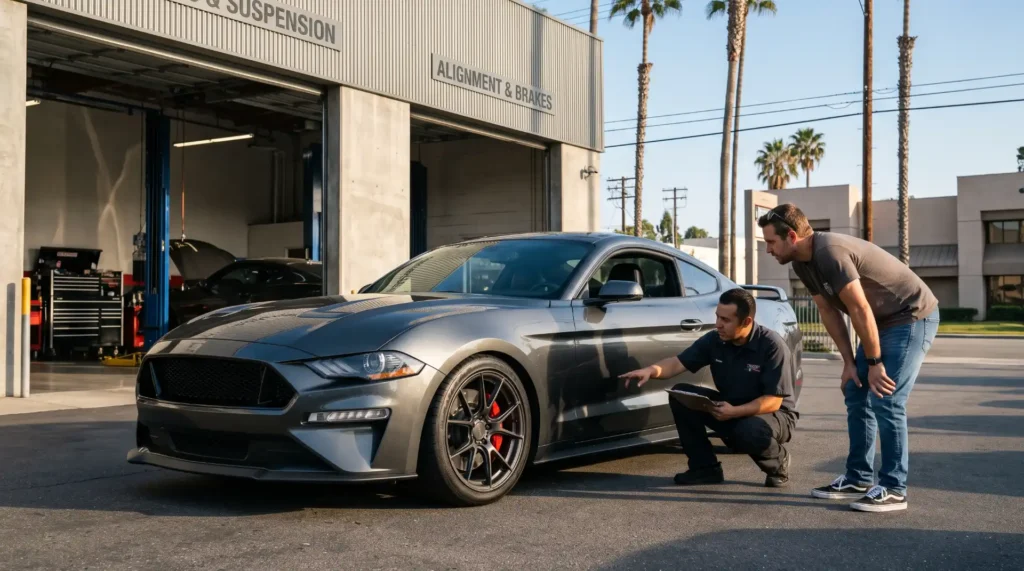 How to Plan a California-Legal Performance Build in 2026
The best way to avoid compliance problems is to plan the entire build before ordering parts. Start by deciding how the vehicle will be used, then identify upgrades that support that purpose without compromising road legality.
For a daily driver, priorities may include tires, brake maintenance, alignment, suspension improvements, and cooling-system reliability. A track-oriented street car may need additional attention to brake temperature, fluid quality, tire performance, and sustained cooling capacity.
If engine power is the primary goal, investigate the legal status of the complete intake, exhaust, and tuning package before spending money. Confirm that approvals apply to the exact vehicle and model year.
A Practical Pre-Purchase Process
Use the following process for each emissions-related component:
Identify the exact year, make, model, engine, and relevant vehicle configuration.
Determine whether the part affects an emissions-controlled system.
Ask the manufacturer for the applicable CARB EO number or other relevant documentation.
Verify that the approval covers your vehicle and intended configuration.
Read installation instructions and confirm whether the approval imposes specific conditions.
Keep receipts, part numbers, approval documents, and installation records.
Have the work completed by a qualified installer who understands California requirements.
Confirm that the finished vehicle retains all required emissions equipment and diagnostic functions.
This process is especially valuable when combining multiple upgrades. Individual parts may each have different conditions, and a collection of components should not be assumed compliant merely because each one is sold by a reputable brand.
Budget for Compliance, Installation, and Maintenance
A realistic performance budget includes more than the advertised price of the parts. Installation labor, alignment, diagnostic work, replacement fluids, supporting components, and future maintenance can all affect the final cost.
It is also sensible to reserve money for troubleshooting. A modification that introduces a drivability issue may require additional diagnostic time even when the installation appears straightforward.
For engine-related upgrades, compare the expected benefit with the potential effect on reliability, fuel economy, insurance, and resale value. A modest, well-integrated upgrade may be a better investment than a high-output configuration that is difficult to maintain or legalize.
Keep all documentation in a digital folder. Include invoices, installation records, warranty information, EO documentation, and maintenance receipts. These records can help with future inspections, repairs, and private sales.
Common California Performance Modification Mistakes to Avoid
One frequent mistake is purchasing a part based on an online review without verifying its legal application. Reviews may describe a different model year, a different engine, or a vehicle used exclusively for racing.
Another mistake is assuming that a part is compliant because the seller ships it to California. Product availability does not establish that the part is legal for installation on every California-registered vehicle.
Some owners also believe that returning a vehicle to its factory tune before an inspection resolves every issue. Software restoration may not correct missing hardware, incompatible components, or other changes to the emissions system.
A further mistake is treating emissions compliance and vehicle safety as the same thing. An approved intake does not make an unsafe tire setup acceptable, and a legal exhaust does not guarantee that modified suspension geometry is safe.
Finally, avoid relying on outdated forum discussions as the sole source of legal guidance. Rules, product approvals, inspection procedures, and manufacturer applications can change. Use official state resources and current product documentation to make decisions.
Frequently Asked Questions About California Performance Car Modifications
Are performance modifications illegal in California in 2026?
No. Many modifications can be installed legally, but the answer depends on the component, vehicle, and intended use. Emissions-related modifications must comply with applicable anti-tampering rules and have the required approval when one is necessary. Safety and noise requirements may also apply.
Can I install a cold-air intake on my California-registered car?
Potentially, yes. Verify whether the specific intake is approved for your vehicle’s year, make, model, and engine. If the system requires an EO, confirm the approval before installation and retain the documentation.
Can I tune my ECU and still pass a California Smog Check?
Some approved calibrations may be suitable for California street use, but non-approved or emissions-defeating software can cause a vehicle to fail. Confirm the calibration’s status before installation, and make sure all required diagnostic functions remain operational.
Can I remove my catalytic converter if my car still runs properly?
No. A car running smoothly does not make removal of required emissions equipment legal. Preserve the required catalytic converters and use compliant replacement parts when repairs are necessary.
Are modified cars exempt from California smog laws if they are old?
Not automatically. California has specific age-based and vehicle-type exceptions, but a modification does not itself create an exemption. Check the applicable rules for your vehicle before assuming an inspection is unnecessary.
Can I build a high-horsepower car that is street legal in California?
It may be possible, depending on the vehicle, available approved components, and the configuration of the build. The most reliable approach is to select documented, compatible parts and verify the legal status of engine-management and emissions-related modifications before purchasing them.
What should I do if I bought a car with illegal modifications?
Start by identifying the installed parts and reviewing the vehicle’s inspection history. Ask a qualified technician to inspect the emissions system and determine which components need to be restored or replaced. If the vehicle has an engine change or a complicated configuration, contact BAR for guidance before spending money on repairs.
Final Thoughts: Build for Performance Without Ignoring Compliance
California performance car modifications in 2026 require a balance between driving enjoyment, mechanical reliability, and legal road use. Owners do not have to abandon performance upgrades, but they do need to understand how modifications interact with emissions controls, inspection requirements, and vehicle safety rules.
The most effective strategy is to research before purchasing, verify the applicable CARB approval, preserve required emissions equipment, and work with knowledgeable installers. Tires, brakes, suspension, cooling, and carefully selected engine upgrades can all contribute to a better driving experience when the parts are suitable for the vehicle and its intended use.
For California enthusiasts, a successful build is not simply the car with the highest horsepower figure. It is a car that performs consistently, remains maintainable, and can be driven legally on the roads for which it was built.
Disclaimer: This article provides general educational information, not legal advice. California emissions and vehicle equipment requirements can change, and individual applications may have additional conditions. Verify current requirements with CARB, BAR, the DMV, and the relevant part manufacturer before modifying a street-driven vehicle.