
Aerodynamics is one of the most significant aspects of performance for any car—whether on the track or the street. Achieving the right balance between downforce and drag can make the difference between a car that handles exceptionally well in corners and one that struggles with stability at high speeds. Among the various components that influence a car’s aerodynamics, front splitters, diffusers, and rear wings are the most crucial.
These parts work together to manage airflow across the vehicle, directing it in a way that maximizes grip, stability, and speed while minimizing resistance. In this article, we’ll explore the roles of each of these components, how they contribute to your car’s performance, and how they function together to create optimal aerodynamic balance.
Whether you’re a motorsport enthusiast, a car modder, or simply someone interested in improving the performance of your vehicle, understanding the synergy between these components will help you make informed decisions when tuning your car for performance.
The Basics of Aerodynamics in Motorsports and Performance Cars
Aerodynamics is the science of how air interacts with a moving vehicle. In the context of motorsports and high-performance vehicles, it’s all about balancing two primary forces: downforce and drag.
- Downforce: This is the force that pushes the car downward, increasing the grip of the tires on the road or track. More downforce generally means better cornering capabilities, as it ensures the tires remain in contact with the surface even at high speeds. This is crucial in motorsports, where precise handling is necessary to maintain speed and control through sharp turns.
- Drag: This is the resistance the car experiences as air flows over it. While downforce improves stability, it often comes at the cost of increased drag, which can slow the car down. Therefore, the goal of aerodynamic modifications is to maximize downforce while minimizing drag.
When modifying your car’s aerodynamics, finding the right balance between these two factors is critical. This balance allows the car to maintain stability at high speeds and during cornering, while also ensuring that the car doesn’t lose excessive speed due to drag. The components that achieve this balance include front splitters, diffusers, and rear wings.
Understanding the Front Splitter and Its Role
The front splitter is one of the most recognizable aerodynamic components, particularly on performance and race cars. Typically located at the front of the car, beneath the bumper, the splitter is a flat or slightly angled surface designed to direct airflow under the vehicle.
Function of the Front Splitter:
- Generating Downforce: The front splitter creates a high-pressure area above the vehicle and a low-pressure area below it. This pressure difference generates downforce, pushing the car’s front end toward the road and improving tire grip.
- Reducing Lift: Without a front splitter, the airflow under the car can cause the front end to lift, reducing tire contact and stability, especially at high speeds. The splitter helps counteract this lift, keeping the car’s front end firmly planted on the ground.
- Managing Airflow: The splitter also plays a crucial role in managing airflow to other important components, such as the radiator, brake ducts, and the diffuser. By controlling the flow of air to these components, the splitter ensures that the car remains cool and efficient, while also aiding in the car’s overall aerodynamic balance.
- Increased Cornering Speed: By improving front-end downforce, a well-designed front splitter can enhance cornering speeds. The more stable the front of the car is, the more precisely it can hold its line through turns.
Ideal Use:
Front splitters are most beneficial in racing conditions or for performance cars that spend a lot of time at high speeds or on tight corners. On the street, a front splitter can improve driving dynamics but should be carefully designed to avoid creating too much drag.
 The Diffuser: Enhancing Downforce and Stability
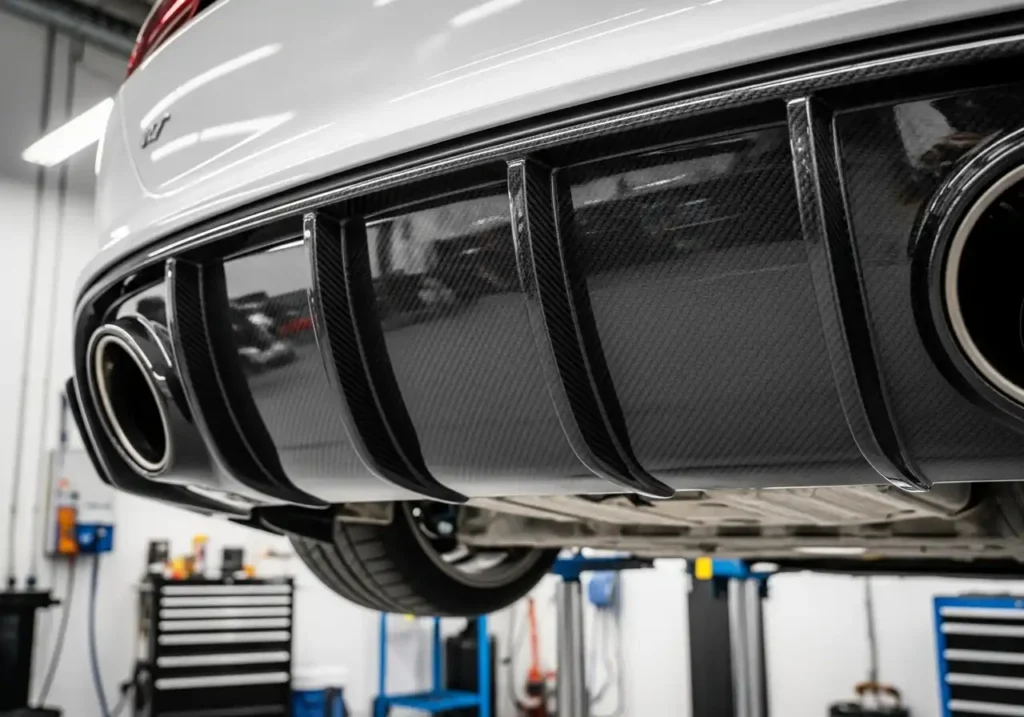 The Diffuser: Enhancing Downforce and Stability
The diffuser is another critical element of a car’s aerodynamic setup, located at the rear underside of the vehicle. It functions primarily by controlling the airflow beneath the car as it exits toward the rear.
Function of the Diffuser:
- Ground Effect: The diffuser accelerates the air flowing beneath the car, creating a low-pressure area at the rear. This ground effect increases downforce by sucking the car down toward the track or road, enhancing stability, especially at high speeds.
- Reducing Turbulence: Without a diffuser, air exiting the underbody can become turbulent, which increases drag and reduces stability. The diffuser smooths out this airflow, reducing drag and ensuring that the rear of the car remains stable.
- Balancing Front and Rear: While the front splitter generates downforce at the front of the car, the diffuser works to balance that downforce at the rear, helping to stabilize the entire car. Without proper rear downforce, the car can experience oversteer, where the rear of the car slides out during cornering.
- Efficient Airflow Management: The diffuser helps direct the airflow toward the rear wing, completing the vehicle’s aerodynamic profile. The air directed by the diffuser flows smoothly over the rear wing, enhancing its effectiveness in generating downforce.
Ideal Use:
Diffusers are most commonly found on performance and racing cars, as they are highly effective at higher speeds. On street cars, diffusers can improve handling and fuel efficiency by managing airflow under the car, though the benefits are more noticeable on high-performance vehicles.
Rear Wings: Boosting Downforce and High-Speed Stability
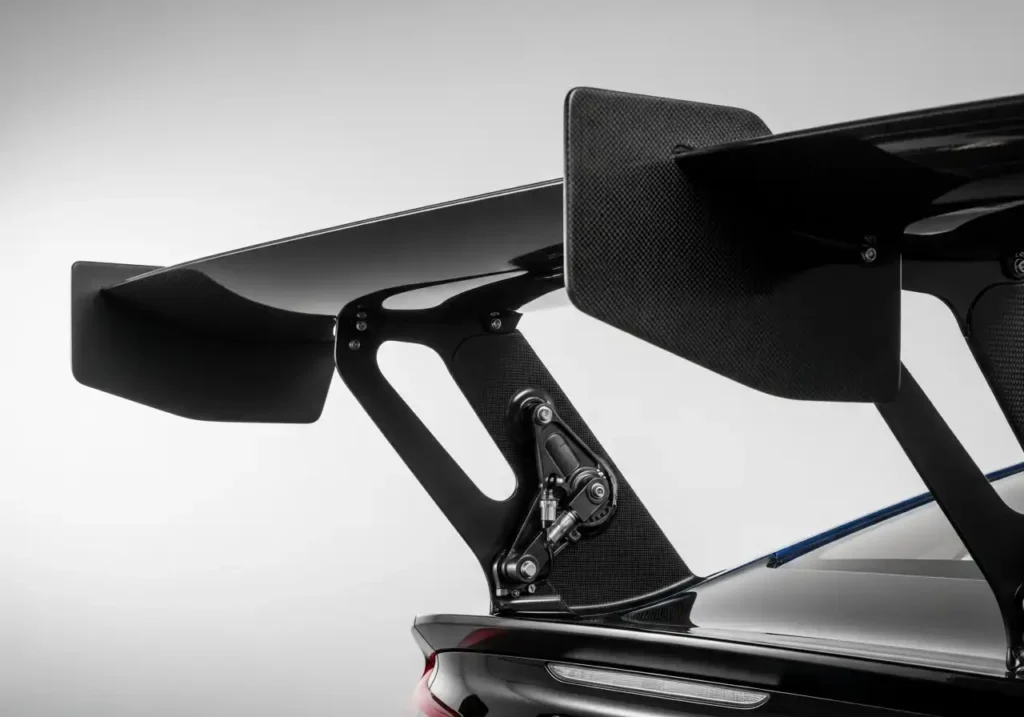 Rear Wings: Boosting Downforce and High-Speed Stability
The rear wing is one of the most iconic aerodynamic features of performance cars, and for good reason. Located at the back of the vehicle, the rear wing plays a crucial role in creating downforce at the rear of the car, keeping the tires planted and the car stable.
Function of the Rear Wing:
- Generating Rear Downforce: The rear wing creates downforce by directing airflow downward, pushing the rear tires into the track or road. This improves tire grip and ensures that the car maintains its stability at high speeds.
- Adjustability: Many high-performance vehicles feature adjustable rear wings that allow the driver to alter the angle of attack. This adjustment changes the amount of downforce produced by the wing and can be tailored to specific track conditions or driving preferences. For example, more downforce is required on a track with lots of corners, while less is needed on a straight road or high-speed section.
- Maintaining Balance: The rear wing works in conjunction with the front splitter and diffuser to maintain aerodynamic balance. By generating rear downforce, the wing helps keep the car’s rear stable, preventing understeer or oversteer during high-speed driving or cornering.
- Reducing Lift: Just as the front splitter prevents lift at the car’s front, the rear wing reduces lift at the back. This ensures that both ends of the car are stable, contributing to overall balance.
Ideal Use:
The rear wing is essential for track use, where high-speed stability is crucial. For street use, it’s often scaled down to prevent excess drag while still offering some benefits in terms of handling.
How These Components Work Together for Optimal Aerodynamic Balance
Individually, each of these components—front splitter, diffuser, and rear wing—contributes significantly to the car’s overall aerodynamic performance. However, their true potential is realized when they work together in harmony.

- Front Splitter and Diffuser: The splitter manages airflow under the car, while the diffuser ensures that air exits efficiently, creating a high-pressure difference that maximizes downforce. The combination of these two elements keeps the car firmly planted on the road, improving both stability and handling.
- Front Splitter and Rear Wing: The front splitter generates front-end downforce, while the rear wing ensures stability at the back. Together, they balance the car’s aerodynamics, reducing the risk of aerodynamic lift and providing consistent downforce across the vehicle.
- Diffuser and Rear Wing: The diffuser and rear wing work closely together, with the diffuser directing airflow to the rear wing, where it can be effectively used to generate downforce. This synergy ensures that both the front and rear of the car remain stable, particularly at high speeds.
Achieving the right balance between these components is critical for performance cars. The goal is to create enough downforce for stability while minimizing drag to maintain speed. Proper integration of these components leads to a car that feels planted during aggressive cornering, yet maintains sufficient straight-line speed.
The Impact of Aerodynamic Balance on Cornering and Straight-Line Speed
The aerodynamic balance directly affects how a car performs in different driving scenarios:
- Cornering: Proper downforce improves the car’s ability to stay on its line through turns, allowing for faster lap times and greater control. The front splitter and rear wing help keep the car’s tires in contact with the road during turns, ensuring that it doesn’t slide or lose traction.
- Straight-Line Speed: While downforce is crucial for handling, too much can slow the car down. The rear wing can add significant drag, which reduces the car’s straight-line speed. Finding the right balance between downforce and drag is essential for achieving fast speeds without sacrificing stability.
Choosing the Right Aerodynamic Setup for Your Car
When tuning your car for performance, it’s essential to consider your goals. Are you looking for maximum downforce for racing, or do you prefer a setup that’s more suitable for daily driving? The right setup will depend on your priorities:
- For Track Use: You’ll need a more aggressive setup, with larger front splitters, diffusers, and rear wings to generate significant downforce. This setup is ideal for handling tight corners at high speeds.
- For Street Use: A more subtle setup, focusing on smaller front splitters and rear wings, can provide improved handling without creating excessive drag. This setup is best for everyday driving, where aerodynamics are important but extreme performance isn’t necessary.
Common Mistakes to Avoid in Aerodynamic Modifications
When modifying your car for better aerodynamics, be aware of these common mistakes:
- Overdoing the Downforce: Too much downforce can create excessive drag, slowing the car down on straightaways. Balance is key.
- Uneven Aerodynamic Setup: Modifying just the front splitter or rear wing without considering the entire car’s aerodynamic balance can lead to instability. Ensure that all components work together cohesively.
- Not Testing: Always test your modifications to see how they perform in real-world conditions. What works in theory may not always translate to better performance.
Conclusion: Optimizing Your Car’s Aerodynamic Performance
Achieving aerodynamic balance is crucial for optimizing your vehicle’s performance, whether you’re building a track monster or improving your daily driver’s handling. By understanding how front splitters, diffusers, and rear wings work together, you can make modifications that will enhance your car’s stability, speed, and handling.
For car enthusiasts, making the right aerodynamic modifications can be the key to unlocking better driving performance. With the right knowledge, you can balance downforce and drag to ensure your vehicle performs at its best.