
Why Modern Performance Tuning Depends on Data
Getting more horsepower from a performance car is not simply a matter of increasing boost pressure, changing ignition timing, installing larger fuel injectors, or modifying the engine control unit. Modern engines operate through a complex network of electronic controls, sensors, and mechanical systems. Each component influences how the engine responds to throttle input, fuel delivery, air temperature, exhaust flow, and load. A modification that improves one part of the engine’s operation can create a problem somewhere else if the entire system is not monitored carefully.
This is why automotive performance data logging has become an essential part of professional engine tuning. Instead of relying exclusively on sound, feel, dashboard gauges, or a single horsepower reading, technicians can record what the engine is doing under specific operating conditions. They can examine boost pressure, air-fuel ratio, ignition timing, engine speed, throttle position, fuel pressure, intake air temperature, coolant temperature, and other measurements. These readings help explain not only how much power an engine produces but also how consistently and safely it produces that power.
Data logging is useful for many types of vehicles, including turbocharged imports, supercharged muscle cars, naturally aspirated sports cars, modified trucks, and track-focused vehicles. It can help identify a boost leak, detect fuel delivery limitations, reveal excessive ignition correction, or show that an intercooler is struggling to control intake temperatures. It can also help a tuner compare the vehicle’s behavior before and after a modification.
For American drivers and enthusiasts, this technology is particularly relevant because the U.S. performance aftermarket includes a wide range of engine platforms, fuels, climates, and driving environments. A car tuned in cool weather in one state may behave differently during a hot summer day in another. A vehicle that performs well during a short acceleration run may experience higher temperatures or fuel system stress during repeated track sessions.
Understanding what data logging measures, how sensors work, and how technicians interpret the results helps vehicle owners make better decisions about performance upgrades. It also explains why responsible tuning should be based on measured engine behavior rather than guesses or isolated peak horsepower figures.
What Automotive Performance Data Logging Actually Does
Automotive data logging is the process of recording information from a vehicle’s electronic control systems and additional monitoring equipment while the engine is operating. Depending on the vehicle and the equipment being used, the system may collect information several times per second or at even higher sampling rates. The result is a time-based record that shows how engine conditions change as the driver accelerates, shifts gears, lifts off the throttle, or operates the vehicle under a sustained load.
A basic scan tool can display live information from a vehicle’s onboard diagnostics system. More advanced tuning software can record multiple channels simultaneously, graph their changes, and synchronize them with engine speed, throttle position, vehicle speed, and other operating conditions. Dedicated motorsport data loggers may also collect information from external sensors that are not available through the factory computer.
The important difference between looking at a gauge and reviewing a data log is the amount of context available. A boost gauge might show that a turbocharged engine reached a certain pressure, but it may not reveal whether boost arrived too slowly, rose beyond the target, or dropped unexpectedly near redline. A coolant temperature gauge might look normal when the driver checks it, while a recorded log could reveal a gradual temperature increase during repeated acceleration runs.
Data logging also allows a tuner to compare different operating conditions. A vehicle can be monitored during idle, steady cruising, moderate acceleration, and controlled high-load testing. Each condition reveals different information. Idle data may help identify airflow or fuel-trim problems, while high-load data can reveal limitations in fuel delivery, ignition control, turbocharger performance, or cooling capacity.
The purpose is not to collect the largest possible amount of information. It is to record the right measurements, understand how they relate to one another, and use the results to make informed decisions.
Data Logging Versus Reading Diagnostic Trouble Codes
An OBD-II scanner is useful for reading diagnostic trouble codes, checking emissions-related readiness information, and viewing supported live data. However, reading a trouble code is not the same as performing a detailed performance data logging session.
A diagnostic code generally indicates that a control module has detected a condition outside an expected range or identified a system malfunction. It does not necessarily explain the complete cause. For example, a code related to a lean condition may be associated with an intake leak, a fuel delivery problem, a sensor issue, or another fault. A technician needs to examine additional information to determine what is happening.
A recorded data log can help show when the condition occurs and which other measurements change at the same time. If fuel trims move significantly at idle but become more normal as engine speed increases, that pattern may point toward a different type of problem than fuel trims that become increasingly positive under load. The log does not automatically provide a diagnosis, but it gives the technician more evidence to investigate.
For a broader explanation of warning lights and diagnostic codes, readers can also review What Does a Check Engine Light Really Mean? A Technician’s Guide. Understanding the difference between a stored fault code and a complete engine performance record helps explain why a scan tool is only one part of a proper diagnostic process.
How a Data Logger Collects Information
The vehicle’s engine control unit, or ECU, receives information from sensors and uses programmed strategies to control fuel injection, ignition timing, throttle operation, variable valve timing, and other functions. A tuning interface or diagnostic device can request supported information from the ECU and record it as the engine operates.
Some systems connect through the vehicle’s OBD-II diagnostic port. Others connect directly to an ECU, a motorsport data acquisition system, or external sensors. A tuner may combine factory ECU channels with additional measurements such as wideband oxygen sensor output, fuel pressure, exhaust gas temperature, or dedicated boost pressure.
The recording software usually organizes the information into channels. Each channel represents a specific measurement, such as engine RPM, manifold pressure, intake air temperature, or ignition timing. The software then places the readings against a common timeline. This makes it possible to identify what happened first and how one change affected another.
The quality of the result depends on the logger, sensor accuracy, wiring, calibration, sampling rate, and the way the data is interpreted. A beautifully presented graph is not useful if the sensor is installed incorrectly or the selected channel does not represent the measurement the tuner thinks it does.
 The Most Important Sensors Used in Performance Data Logging
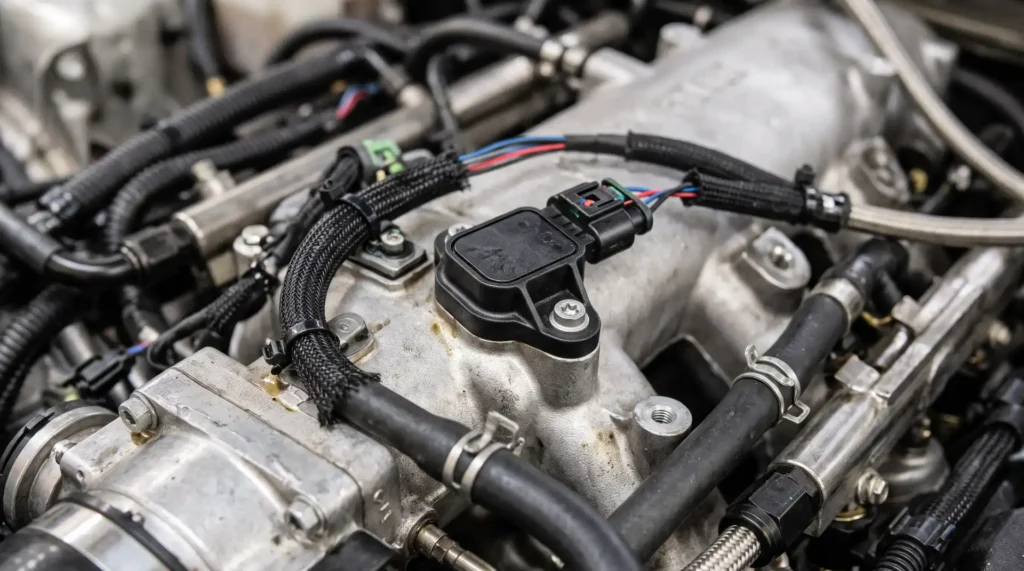 The Most Important Sensors Used in Performance Data Logging
A modern performance engine depends on several sensor systems working together. Each one provides a different piece of information about engine operation. Some sensors measure the air entering the engine, others monitor exhaust gases, and others report temperature, pressure, or mechanical position.
A tuner should select channels based on the vehicle’s engine design, modifications, fuel system, and intended use. A naturally aspirated street car does not need exactly the same monitoring setup as a turbocharged track car. The following sensors and measurements are among the most useful in performance tuning.
Mass Airflow Sensor
A mass airflow sensor, commonly called a MAF sensor, measures the amount of air entering the engine. The ECU uses this information to calculate engine load and determine how much fuel is required. In many factory engine management systems, the MAF signal is a major input for fuel delivery.
Data logging can show how airflow changes with engine speed and throttle position. If airflow increases smoothly as the engine accelerates, the reading may be consistent with expected operation. If the signal becomes erratic, reaches a sensor’s measurable limit, or does not correspond with other engine information, the tuner may need to investigate.
Aftermarket intake systems, larger turbochargers, altered intake piping, and changes to the MAF housing can affect sensor behavior. A larger housing may change the relationship between airflow and the sensor’s output. If the ECU calibration is not configured correctly for the new arrangement, the engine may calculate airflow inaccurately.
A data log can help identify this problem, but the reading must be interpreted in the context of the sensor type and calibration. A MAF value by itself does not establish how much horsepower an engine is producing.
Manifold Absolute Pressure Sensor
A manifold absolute pressure sensor, or MAP sensor, measures pressure inside the intake manifold relative to an absolute pressure reference. It is especially important on turbocharged and supercharged engines because it helps the ECU determine engine load and calculate the amount of air entering the cylinders.
Unlike a traditional boost gauge that may display pressure relative to atmospheric pressure, a MAP sensor reports absolute pressure. This distinction matters when comparing data. A reading of approximately 100 kilopascals at sea level represents atmospheric pressure, not one bar of boost. Boost pressure is calculated by comparing manifold absolute pressure with the local atmospheric pressure.
MAP sensor range is also important. A sensor designed for a naturally aspirated engine may not accurately measure the higher pressures produced by a modified turbocharged engine. When a vehicle receives a larger turbocharger or a higher-boost calibration, the tuner must confirm that the MAP sensor has sufficient measurement range and that the ECU is correctly calibrated for it.
If the sensor reaches its maximum reporting value, the log may appear to show boost flattening even though actual manifold pressure continues to rise. That can lead to incorrect tuning decisions if the limitation is not recognized.
Throttle Position Sensor
The throttle position sensor reports the position of the throttle plate or, in electronic throttle systems, information used to determine the requested and actual throttle opening. It helps the ECU understand driver demand and manage airflow.
Throttle position is valuable when reviewing acceleration behavior. A tuner can compare the driver’s input with actual throttle operation, engine load, boost pressure, and ignition timing. If the driver requests full throttle but the ECU closes the throttle, the log may reveal that the vehicle’s control system is limiting torque.
Electronic throttle closure can occur for several reasons, including traction control intervention, torque management, temperature protection, transmission-related strategies, or a calibration limit. It should not automatically be treated as a fault or a reason to disable factory protections. The tuner must determine why the ECU is intervening.
Oxygen Sensors and Wideband Air-Fuel Ratio Monitoring
Oxygen sensors measure oxygen content in the exhaust and help the engine management system control combustion and emissions. Factory narrowband oxygen sensors are generally designed to help the ECU maintain the correct air-fuel mixture around the stoichiometric point during closed-loop operation. They are not a substitute for a dedicated wideband measurement when evaluating air-fuel ratio across a broad range.
A wideband oxygen sensor can provide a much wider and more useful measurement range for performance tuning. It allows a tuner to monitor the air-fuel ratio or lambda under changing engine loads. Lambda is particularly useful because it describes the mixture relative to stoichiometric combustion without depending on a specific fuel’s theoretical air-fuel ratio.
This matters when a vehicle uses gasoline, ethanol blends, or flex-fuel systems. The numerical air-fuel ratio associated with stoichiometric combustion changes with fuel composition, while lambda remains a consistent reference.
Wideband sensor installation and calibration are critical. Exhaust leaks, poor wiring, incorrect sensor placement, damaged sensor elements, and unsuitable controller configurations can produce misleading readings. The tuner should verify the wideband system before relying on it to make fueling decisions.
A wideband reading should also be considered alongside fuel pressure, injector duty cycle, engine load, and ignition behavior. A single air-fuel ratio number does not establish that an engine is safe under every operating condition.
Intake Air Temperature Sensor
Air temperature affects air density and combustion behavior. As intake air becomes hotter, its density generally decreases at a given pressure, meaning the engine receives less oxygen mass for the same volume of air. Hot intake conditions can also increase the risk of knock in spark-ignition engines.
Performance data logging can reveal whether intake temperatures rise excessively during repeated acceleration, extended highway pulls, or track sessions. A turbocharged vehicle may show relatively low intake temperatures during the first acceleration run but much higher readings after several consecutive runs. This pattern can indicate heat soak in the intercooler, intake piping, or engine compartment.
Some vehicles report intake air temperature before the turbocharger or supercharger, while others provide a second measurement after the intercooler. The location of the sensor matters because pre-compressor and post-intercooler temperatures describe different conditions.
When reviewing a log, the tuner should identify exactly which temperature channel is being displayed. Comparing the wrong sensor can create an inaccurate picture of intercooler performance.
Coolant Temperature and Engine Oil Temperature
Coolant temperature is one of the most familiar engine measurements, but it is also one of the most important to record during performance testing. An engine that is operating normally during everyday commuting may experience higher coolant temperatures during sustained high-load driving.
Engine oil temperature is equally valuable, particularly in vehicles used for track days, autocross, or repeated high-speed driving. Oil performs lubrication, cooling, cleaning, and protection functions. If the oil becomes excessively hot, its viscosity and protective characteristics can change. The correct operating range depends on the engine design, oil specification, and manufacturer guidance.
A data log can show whether temperatures stabilize, continue rising, or recover after the engine returns to lighter load. If temperatures climb steadily during a track session, the vehicle may need improved cooling, revised driving intervals, or a mechanical inspection rather than additional engine power.
Fuel Pressure Sensor
Fuel pressure is a critical measurement on modified engines. The fuel pump, pressure regulator, lines, filter, injectors, and electrical supply must deliver the required fuel under the engine’s operating conditions.
A vehicle can appear to run correctly at idle while experiencing a fuel pressure drop at high engine load. This can happen when the pump cannot maintain the required flow, the filter is restricted, the wiring cannot supply adequate voltage, or the fuel system is undersized for the engine’s power demand.
Logging fuel pressure alongside air-fuel ratio and injector duty cycle helps identify whether the fuel system is keeping up. If pressure drops while injector demand rises, the tuner should investigate the fuel delivery system before attempting to compensate through calibration changes.
Knock Sensor and Ignition Timing Data
Knock sensors detect vibration patterns associated with combustion knock and provide information to the ECU. The engine management system may respond by reducing ignition timing or making other protective adjustments.
A data logger can record ignition advance, knock correction, and related channels where the ECU makes them available. These measurements are important because an engine may continue producing power while the ECU is repeatedly reducing timing to protect it.
However, knock-related channels are not always direct measurements of actual combustion knock. Their meaning depends on the ECU, sensor strategy, calibration, and software definitions. Mechanical noise, drivetrain vibration, and sensor faults can sometimes complicate interpretation.
A tuner should never assume that a single knock-related number tells the entire story. It must be compared with engine load, RPM, fuel quality, temperature, and the manufacturer’s control strategy.
Understanding Boost Pressure in Turbocharged Performance Cars
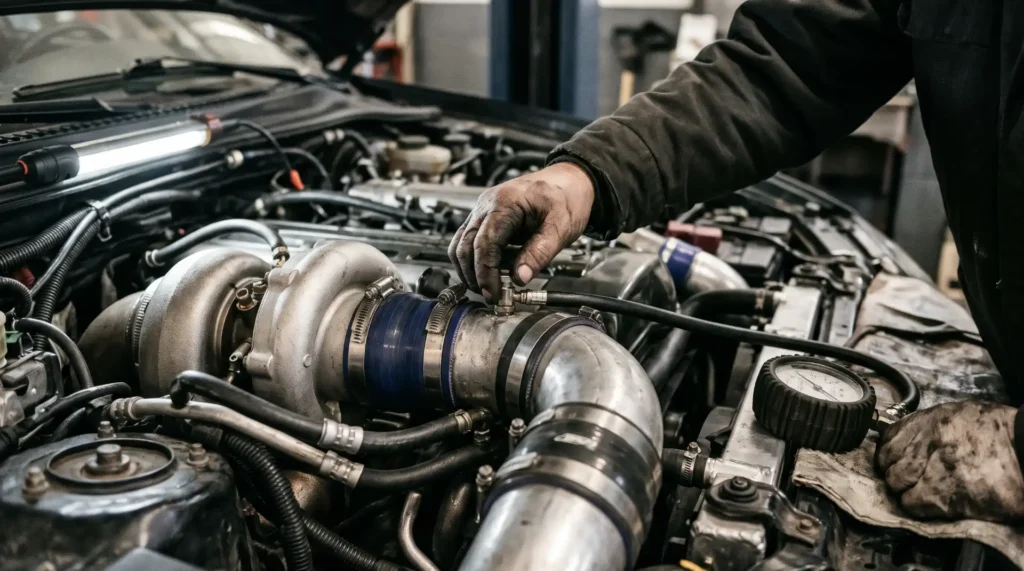 Understanding Boost Pressure in Turbocharged Performance Cars
Boost pressure is one of the most closely watched measurements in turbocharged performance tuning. It describes how much pressure the turbocharger creates in the intake system above atmospheric pressure. Increasing boost can increase the mass of air entering the engine, potentially allowing more fuel to be burned and producing more power.
However, boost pressure alone does not determine engine output or safety. Two engines operating at the same boost pressure can produce different power because of differences in airflow efficiency, turbocharger size, intercooler performance, engine displacement, camshaft design, exhaust restriction, fuel quality, and ignition timing.
Boost Pressure Versus Manifold Absolute Pressure
A common source of confusion is the difference between boost pressure and manifold absolute pressure. Boost gauges usually display pressure above atmospheric pressure, often in pounds per square inch, or PSI. MAP sensors generally measure absolute pressure.
For example, if a sensor reports 200 kPa absolute pressure and atmospheric pressure is approximately 100 kPa, the manifold pressure is roughly 100 kPa above atmospheric pressure. That is approximately 14.5 PSI of boost under those simplified conditions.
Atmospheric pressure changes with altitude and weather. A car operating in Denver, Colorado, for example, may experience lower atmospheric pressure than a similar car operating near sea level. This affects how absolute pressure and boost pressure should be interpreted.
A tuner must know whether the software is displaying absolute pressure, gauge pressure, or a calculated boost value. Confusing these measurements can lead to incorrect conclusions about turbocharger operation.
Why Boost Targets Matter
A boost target is the pressure level the ECU or boost controller is attempting to achieve under a particular set of operating conditions. The actual boost reading shows what the system produces.
Comparing target boost with actual boost can reveal important behavior. If actual boost consistently falls below the target, the tuner may investigate a boost leak, wastegate operation, turbocharger capacity, exhaust restriction, or control strategy. If actual boost overshoots the target, the wastegate or boost control system may not be responding as expected.
A temporary difference between target and actual boost does not necessarily indicate a problem. Turbochargers need time to accelerate, and boost response changes with engine speed, gear, throttle input, and load. The key is to understand whether the difference is expected for the system.
Boost Spikes and Boost Creep
A boost spike occurs when pressure rises above the intended target, often briefly during a change in engine load or boost control response. Even a short spike may matter if it pushes the engine beyond its calibrated operating range.
Boost creep is different. It occurs when boost pressure continues rising at higher engine speeds despite the boost controller attempting to limit it. Possible causes include inadequate wastegate flow, exhaust housing design, wastegate plumbing, or system configuration.
A data log helps distinguish between these patterns. A gauge observed at one moment may not show how quickly pressure increased or whether it continued climbing as RPM rose. A recorded trace provides a clearer picture of the event.
Diagnosing a Boost Leak Through Data
A boost leak can reduce engine performance and make the turbocharger work harder than necessary. Leaks may occur at couplers, clamps, intercooler end tanks, charge pipes, vacuum lines, or other connections.
A tuner may suspect a leak when actual boost remains below target, airflow readings do not match expected behavior, or the engine exhibits unusual fuel corrections. However, these symptoms are not exclusive to leaks. A pressure test and physical inspection are often necessary to confirm the cause.
For modified vehicles, data logging should be part of a broader inspection process. A log can point toward a likely problem, but it should not replace mechanical testing.
Why More Boost Is Not Always Better
Increasing boost without considering fuel delivery, charge-air temperature, ignition timing, engine internals, and fuel quality can increase the risk of engine damage. Higher cylinder pressure creates additional stress on pistons, connecting rods, head gaskets, bearings, and other components.
The correct boost level depends on the engine’s design, condition, fuel, turbocharger efficiency, and intended use. A street car that needs to operate reliably in traffic and hot weather may require a different calibration strategy from a dedicated competition vehicle.
A responsible tuner uses data to understand the engine’s limits rather than treating a higher boost number as an automatic improvement.
Air-Fuel Ratio, Fuel Delivery, and Injector Monitoring
Fueling data is central to performance tuning because the engine needs the correct amount of fuel for the air entering the cylinders. Too much fuel can reduce efficiency and affect drivability. Too little fuel under high load can increase combustion temperatures and create dangerous operating conditions.
What Air-Fuel Ratio Tells a Tuner
Air-fuel ratio describes the relationship between the mass of air and the mass of fuel entering the combustion process. A wideband oxygen sensor estimates the mixture by measuring exhaust oxygen content.
A tuner uses this information to check whether the engine is operating near the intended mixture for a particular condition. The target depends on the engine, fuel, combustion chamber, boost level, temperature, and calibration strategy. There is no single air-fuel ratio that is correct for every performance engine.
Lambda is often the preferred measurement because it allows comparison across different fuels. A lambda value of 1.00 represents the stoichiometric mixture for the fuel being used. Values below or above that point indicate richer or leaner mixtures, respectively.
When analyzing a log, the tuner should examine the wideband reading together with engine load, RPM, throttle position, fuel pressure, and injector operation. A mixture change during a gear shift may have a different explanation from a mixture change that occurs near peak engine torque.
Injector Duty Cycle
Fuel injectors open and close to deliver fuel into the engine. Injector duty cycle describes the proportion of available time that an injector is being commanded to remain open during an operating cycle.
As engine load and fuel demand increase, injector duty cycle generally rises. If the injectors are too small for the engine’s power requirements, they may approach their usable operating limit. This can restrict the tuner’s ability to deliver the required fuel safely.
A data log can help show whether injector demand is increasing beyond the intended range. However, the exact interpretation depends on injector type, fuel pressure, ECU strategy, and how the software calculates the displayed value.
A high duty-cycle reading should prompt a broader review of injector capacity, fuel pressure, pump flow, fuel composition, and engine demand. Simply installing larger injectors is not always a complete solution because the ECU calibration must also account for injector characteristics.
Fuel Pressure Under Load
Fuel pressure should be monitored under the conditions where the engine needs the most fuel. A pump that maintains pressure at idle may not provide sufficient flow at high RPM and high boost.
For turbocharged engines, some fuel systems use a pressure regulator strategy that accounts for manifold pressure. The relationship between rail pressure and manifold pressure must be understood before interpreting the reading. A pressure value that appears stable may still represent a change in the pressure differential across the injector.
This is why a tuner should use the correct fuel pressure channel and know where the sensor is installed. If fuel pressure falls unexpectedly during a controlled load test, the next step should be diagnosing the fuel system rather than simply changing the fuel table.
Flex-Fuel and Ethanol Content
Many U.S. performance vehicles use ethanol blends such as E10 or E85. Ethanol content can vary, particularly when a vehicle is filled at different stations or uses fuel from different seasonal supply conditions.
Flex-fuel systems can use an ethanol-content sensor to report the fuel’s composition to the ECU. The calibration can then adjust fueling and, where appropriate, ignition strategy according to the detected blend.
Data logging ethanol content alongside fuel trims, fuel pressure, and ignition timing helps a tuner confirm that the system is responding appropriately. A flex-fuel tune should not assume that every tank contains exactly the same ethanol percentage.
Ignition Timing, Knock Correction, and Engine Protection
Ignition timing determines when the spark plug fires relative to the piston’s position in the cylinder. Adjusting timing can influence torque, efficiency, throttle response, and engine temperature. It is one of the most important calibration areas, but it must be handled carefully.
What Ignition Advance Means
Ignition advance is generally measured in crankshaft degrees before top dead center. The ECU schedules the spark so that combustion pressure develops at a useful point in the piston’s movement.
The ideal timing depends on engine speed, load, combustion chamber design, fuel quality, air temperature, and many other factors. Too little timing can reduce power, while excessive timing can increase the risk of knock and mechanical damage.
A data log allows the tuner to see how commanded or delivered ignition timing changes as the engine accelerates. It can also show whether the ECU is applying corrections because of temperature, knock detection, traction control, or other strategies.
Understanding Knock Retard
Knock occurs when part of the air-fuel mixture auto-ignites in an uncontrolled manner rather than burning through the intended flame front. Severe or sustained knock can damage pistons, ring lands, bearings, and other engine components.
Modern ECUs often use knock sensors and protective logic to detect vibration patterns associated with knock. When the system identifies a condition requiring correction, it may reduce ignition timing.
Knock retard data can help a tuner identify areas where the engine is experiencing unwanted combustion behavior or where the ECU is responding to a perceived knock event. However, the channel must be interpreted carefully. The displayed value may represent a correction, a learned adjustment, or a cylinder-specific response depending on the platform.
If a log shows repeated timing corrections under high load, the tuner should investigate fuel quality, intake temperature, engine condition, spark plugs, sensor operation, and calibration. Disabling knock protection to obtain a cleaner-looking graph is not a responsible solution.
Fuel Quality and U.S. Octane Ratings
In the United States, gasoline pumps commonly display octane using the Anti-Knock Index, or AKI, calculated from the Research Octane Number and Motor Octane Number. This differs from the RON figure commonly displayed in some other countries.
A vehicle calibrated for premium fuel may require the octane grade specified by its manufacturer or tuner. Using a lower-octane fuel than required can increase knock tendency, especially under high load, high boost, or elevated intake temperatures.
Data logging can reveal when the ECU is reducing timing, but it cannot make unsuitable fuel safe. Owners should use the fuel grade and type required by the calibration and avoid assuming that a fuel’s marketing label guarantees compatibility with a particular tune.
Engine Load, RPM, and Throttle Position: Reading the Bigger Picture
Individual sensor readings become much more useful when they are viewed together. Engine speed, calculated load, throttle position, vehicle speed, and gear selection provide the context needed to understand why a sensor value changed.
Engine RPM and the Powerband
Engine RPM indicates how quickly the crankshaft is rotating. A tuner uses RPM as a reference for examining boost response, ignition timing, fuel delivery, airflow, and torque production.
A log can reveal where a turbocharger begins building boost, where torque rises most rapidly, and where airflow begins to taper off. It can also show whether the engine continues to make useful power near the upper end of its operating range or whether performance drops because of airflow restrictions, ignition intervention, fuel limitations, or another factor.
RPM should not be considered alone. An engine operating at 5,000 RPM under light throttle is experiencing a different load from the same engine speed under full acceleration. The relationship between RPM and load is essential when interpreting the rest of the log.
Calculated Engine Load
Many engine management systems calculate load using airflow, manifold pressure, engine speed, and other variables. The exact calculation depends on the ECU design. Some systems report load as a percentage, while others use different units or model-specific values.
Load information helps a tuner distinguish between light cruising, moderate acceleration, and high-demand operation. This is important because a sensor reading that is normal at light load may become concerning at high load.
For example, an engine may maintain stable fuel trims during highway cruising but show a fuel pressure drop during a high-load acceleration event. Without load information, the tuner might not immediately recognize that the issue appears only when fuel demand increases.
Driver Throttle Input Versus Actual Throttle Opening
Electronic throttle systems can provide separate channels for accelerator pedal position and throttle plate position. Comparing them helps explain how the ECU responds to driver demand.
If pedal position rises but actual throttle opening does not follow, the ECU may be managing torque or protecting the engine or drivetrain. This can occur during traction control intervention, transmission shifts, temperature protection, or other programmed operating conditions.
A tuner should investigate the reason for the difference before changing the calibration. Removing a factory intervention without understanding its purpose can make the vehicle less predictable or less safe.
Gear Selection and Vehicle Speed
Gear selection changes engine load, RPM progression, and the time the engine spends under boost. A vehicle may behave differently in second gear than it does in fourth gear because the engine accelerates through the RPM range at a different rate.
Recording gear information helps a tuner compare similar tests. Vehicle speed can also help identify whether an acceleration event occurred in a consistent manner. These channels are especially useful when reviewing track sessions, chassis dynamometer runs, and controlled testing.
Sampling Rates, Time Stamps, and Choosing the Right Channels
A data log is only as useful as the information it captures. Recording too few channels may leave out an important part of the problem. Recording too many channels at a low sampling rate can make the log less useful when analyzing rapid events.
Why Sampling Rate Matters
Sampling rate describes how frequently a measurement is recorded. A channel recorded once per second provides less detail than one recorded many times per second. The appropriate rate depends on what the tuner is trying to observe.
Slow-changing measurements such as coolant temperature may not require the same sampling frequency as ignition events, boost control behavior, or rapid throttle changes. If the logger is trying to record dozens of channels simultaneously, the software or vehicle communication network may limit how frequently each channel can update.
A tuner should prioritize the measurements most relevant to the test. For example, a boost-control investigation may require manifold pressure, target boost, wastegate duty cycle, RPM, throttle position, and intake temperature. Adding unrelated channels can reduce the quality of the information being collected.
Time Alignment and Channel Synchronization
When multiple sensors are recorded, their readings need to be aligned on a common timeline. This makes it possible to see whether a pressure change happened before or after a throttle movement, temperature increase, or ECU correction.
Time alignment can be complicated when some channels update more slowly than others. Certain OBD-II channels may be refreshed at different intervals, while external sensors connected to a dedicated logger may have different sampling rates.
Professional tuning software often handles these differences, but the user should still understand that not every displayed value represents a perfectly simultaneous measurement. This matters when analyzing very brief events.
Choosing Channels for a Specific Tuning Goal
The best channel list depends on the question being investigated. A tuner diagnosing inconsistent boost should prioritize pressure and boost-control information. A tuner checking fuel delivery should focus on air-fuel ratio, fuel pressure, injector operation, and engine load. A vehicle experiencing high temperatures needs coolant, oil, and intake temperature information.
A practical channel list should be focused enough to capture detailed information while still including the measurements needed to understand the event. The goal is a useful record, not a dashboard filled with every available number.
How Professional Tuners Use Data Logs to Improve Engine Calibration
Professional tuners use data logging as part of an iterative process. They establish a baseline, review the results, make a controlled change when justified, and then record another log to determine whether the change produced the intended result.
This process is more reliable than making several changes at once and trying to determine afterward which one caused the improvement or problem.
Establishing a Baseline Before Modifications
Before installing a larger turbocharger, intake system, intercooler, exhaust component, or fuel system upgrade, it is useful to understand how the vehicle operates in its current condition.
A baseline log can reveal existing issues such as unstable fuel trims, inconsistent boost, high intake temperatures, or unusual ignition corrections. If the car already has a mechanical problem, adding performance parts may make diagnosis more difficult.
A baseline also creates a reference for comparison. After a modification, the tuner can examine whether airflow improved, whether temperatures changed, and whether the engine continues to operate within the intended calibration strategy.
Making One Change at a Time
Changing multiple calibration areas simultaneously makes cause and effect difficult to identify. If a tuner changes boost control, fuel delivery, and ignition timing in one step, a later improvement or problem may be difficult to attribute to a specific adjustment.
A controlled process focuses on one area at a time whenever practical. The tuner records the result, compares it with the previous log, and decides whether another change is appropriate.
This does not mean every tuning adjustment can be isolated perfectly. Engine systems interact, and some changes require coordinated calibration. However, keeping a clear record of what was changed and why makes the process more understandable and repeatable.
Comparing Before-and-After Logs
Before-and-after comparisons can show whether a modification achieved its intended purpose. For example, an upgraded intercooler may be installed to reduce intake air temperatures during repeated acceleration. The tuner can compare temperature behavior under similar ambient conditions and similar load.
A larger fuel pump may be intended to maintain pressure at higher engine demand. A comparison can show whether pressure remains stable under the conditions where the original system struggled.
For a broader discussion of how component choices affect performance, readers can explore OEM vs. Aftermarket Parts: What’s Best for Your Car’s Performance?. Data logging helps evaluate whether a selected part is working as intended rather than assuming that every aftermarket component automatically improves the complete vehicle.
Why Dyno Testing and Data Logging Work Well Together
A chassis dynamometer measures vehicle output at the driven wheels under controlled test conditions. It is useful for comparing power and torque, but a dyno graph alone does not explain every detail of engine operation.
Data logging adds information about what the ECU and sensors were reporting during the run. A tuner can review horsepower and torque alongside boost, air-fuel ratio, ignition timing, fuel pressure, and temperature.
The combination provides a more complete picture. If a vehicle produces less power than expected, the log may help identify whether the cause involves boost control, throttle closure, fuel delivery, ignition correction, or another factor.
Dyno testing should be performed by qualified operators using appropriate equipment and safety procedures. The vehicle must be secured correctly, and cooling airflow should be suitable for the test. A dyno is not a guarantee that a vehicle will behave identically on the street or at a race circuit.
Real-World Examples of Problems Data Logging Can Reveal
The value of data logging becomes clearer when it is applied to common performance problems. The following examples illustrate how a technician might use recorded information to guide further inspection. They are general scenarios, not universal diagnostic rules; actual results depend on the vehicle and its control system.
Example One: A Turbocharged Car That Cannot Reach Its Boost Target
Imagine a modified turbocharged coupe that feels slower than expected after an intake and exhaust upgrade. The driver reports that the turbocharger takes longer to build pressure and that acceleration feels inconsistent.
The tuner records target boost, actual manifold pressure, RPM, throttle position, wastegate control, and intake temperature. The log shows that the ECU requests a certain pressure, but actual pressure remains below target during the acceleration event.
This pattern may lead the technician to inspect the charge piping, intercooler connections, wastegate system, turbocharger condition, and exhaust path. A pressure test may reveal a loose coupler that leaks under load.
The important point is that the data log helps narrow the investigation. It does not prove the exact location of the leak, but it provides a reason to perform a targeted physical test.
Example Two: A Performance Car That Loses Power After Repeated Runs
A supercharged sports car performs strongly during the first acceleration run but feels noticeably slower after several consecutive runs. The driver assumes the engine needs a more aggressive tune.
The technician records intake air temperature, coolant temperature, engine oil temperature, ignition timing, and knock-related correction channels. The logs show that intake temperature rises with each run and that the ECU reduces ignition timing as the system becomes hotter.
This suggests that heat management may be affecting performance. The next step could involve inspecting the intercooler system, coolant circulation, heat exchanger, airflow, and operating conditions.
Increasing boost or disabling protective timing corrections would not address the underlying issue. Improving heat rejection may provide more consistent performance without placing unnecessary stress on the engine.
Example Three: Fuel Pressure Drops During High-Load Acceleration
A turbocharged vehicle runs smoothly during normal driving but hesitates near the upper part of the RPM range. The driver has recently installed larger injectors and expects the car to produce more power.
The tuner logs wideband lambda, fuel pressure, injector duty cycle, RPM, and engine load. The data shows that fuel pressure drops as demand increases, while injector demand rises.
This pattern suggests that the fuel system may not be maintaining the required delivery under load. The technician should inspect pump capacity, electrical supply, filters, pressure regulation, lines, and fuel quality before making further calibration changes.
The correct solution may involve repairing an existing fault or upgrading a component, but the log helps identify the area that needs attention.
Example Four: Unexpected Ignition Timing Corrections
A modified V8 engine develops inconsistent acceleration on hot days. The owner reports that the car feels stronger in cooler weather and less responsive during summer driving.
The tuner reviews intake temperature, coolant temperature, ignition timing, knock correction, RPM, and load. The log shows that timing corrections become more frequent as operating temperatures rise.
The technician may investigate cooling performance, fuel octane, spark plug condition, engine deposits, sensor accuracy, and the calibration’s temperature compensation strategy. The log helps establish that the issue is associated with operating conditions rather than simply a random loss of power.
These examples demonstrate why performance data logging is useful for both tuning and troubleshooting. It turns a driver’s description into measurable information that can guide a more systematic inspection.
Data Logging for Naturally Aspirated, Turbocharged, and Supercharged Engines
Different engine configurations require different monitoring priorities. The basic principles of data logging remain the same, but the most important channels change according to how the engine produces airflow and manages heat.
Naturally Aspirated Engines
Naturally aspirated engines draw air into the cylinders without a turbocharger or supercharger. Their performance depends on displacement, airflow efficiency, camshaft design, intake and exhaust configuration, compression ratio, and engine speed.
Useful channels may include MAF or MAP, throttle position, ignition timing, air-fuel ratio, intake temperature, coolant temperature, and engine load. A tuner may use the data to evaluate how an intake or exhaust modification affects airflow and throttle response.
Because there is no forced-induction boost system, the focus is less on boost control and more on airflow measurement, fueling, ignition, and engine response across the RPM range.
Turbocharged Engines
Turbocharged engines need additional monitoring because exhaust energy drives the compressor and creates intake pressure. Important channels may include target boost, actual manifold pressure, wastegate control, intake temperature after the intercooler, fuel pressure, wideband lambda, and ignition correction.
Turbocharger performance is influenced by exhaust flow, compressor efficiency, turbine behavior, intercooler capacity, and boost control. A tuner should also consider how the system responds during gear changes and at different engine speeds.
A turbocharged car that produces a high peak boost number is not necessarily making efficient or reliable power. The engine must receive the required fuel, maintain appropriate temperatures, and operate within the mechanical limits of its components.
Supercharged Engines
Supercharged engines use a mechanically driven compressor or an electrically assisted system, depending on the vehicle design. Monitoring priorities include manifold pressure, intake temperature, throttle position, fuel pressure, air-fuel ratio, ignition timing, and engine load.
Some superchargers produce boost in a manner closely related to engine speed, while others use bypass valves or electronic control strategies. Data logging can help reveal whether the system is delivering expected pressure and whether intake temperatures rise during sustained operation.
A supercharged vehicle may also experience heat soak, particularly when repeatedly accelerated in warm weather. Monitoring intake temperature and ECU timing corrections can help identify when heat management is limiting performance.
Data Logging on the Street, Dyno, and Race Track
The environment in which data is collected affects how useful the results will be. A vehicle behaves differently during a short dyno pull, steady highway driving, stop-and-go traffic, and a long track session.
Street Data Logging
Street logs can provide information about everyday drivability, cold starts, idle quality, part-throttle response, and normal operating temperatures. They may help a technician investigate hesitation, rough running, fuel-trim issues, or intermittent faults.
However, public roads are not appropriate places for distracted high-load testing. Drivers should not watch a laptop or scan tool while driving, perform unsafe acceleration runs, or exceed posted speed limits to collect data.
If a road test is necessary, it should be planned and performed by a qualified technician under safe, lawful conditions. A passenger or properly configured automatic recording system may be used where appropriate, but the driver must remain focused on operating the vehicle.
Chassis Dynamometer Logging
A chassis dyno offers a controlled environment for evaluating engine performance under load. The technician can record engine data while measuring wheel horsepower and torque.
Dyno testing is useful for repeatable comparisons, but the results depend on equipment calibration, vehicle setup, test procedure, correction method, tire condition, and environmental factors. Different dynos can produce different readings, so numbers from separate facilities should not automatically be treated as directly comparable.
A dyno session should also include sufficient cooling airflow and appropriate monitoring. High-load testing can create significant heat, especially in turbocharged and supercharged vehicles.
Track-Day Data Logging
Track use places sustained demands on engines, transmissions, cooling systems, brakes, and tires. A car that performs well during a short acceleration run may experience different conditions after several laps.
Track data can help reveal rising coolant or oil temperatures, intake heat soak, fuel starvation during cornering, or changes in engine behavior as the vehicle spends more time under load. Additional sensors may be needed for a more complete picture, depending on the vehicle and intended use.
Drivers should review data between sessions rather than attempting to interpret complex information while driving. Any warning signs involving oil pressure, coolant temperature, fuel pressure, or engine noise should be treated seriously. A track session should be stopped if the vehicle shows signs of a potentially damaging mechanical problem.
Choosing Data Logging Equipment and Software
Performance data logging equipment ranges from basic OBD-II adapters to advanced motorsport systems. The right option depends on the vehicle, ECU compatibility, budget, and the level of detail required.
Basic OBD-II Scanners
A basic OBD-II scanner can read supported diagnostic trouble codes and display selected live data. It is useful for general diagnostics and can help owners understand what information the vehicle’s control module is reporting.
However, not every scanner supports the enhanced channels required for performance tuning. Some vehicles expose only a limited set of standardized parameters through generic OBD-II communication. Manufacturer-specific software may be needed to access additional data.
ECU-Specific Tuning Software
Many tuning platforms provide software designed for particular ECU families or vehicle models. These systems may offer access to manufacturer-specific channels, calibration information, and more detailed data logging.
Compatibility is important. A software package designed for one engine management system may not support another. Before purchasing an interface, owners should verify the vehicle’s year, make, model, engine, ECU version, and supported features.
Dedicated Motorsport Data Loggers
Motorsport data loggers are designed to record information from multiple sources, including ECU data, external sensors, GPS, and vehicle networks. They can be useful for track cars, race vehicles, and complex builds that need more detailed analysis.
These systems can be more expensive and may require professional installation and configuration. The benefit is the ability to collect synchronized information that may not be available through a standard diagnostic port.
External Sensors and Additional Monitoring
Some modified vehicles require sensors beyond the factory equipment. Examples include dedicated fuel pressure sensors, oil pressure sensors, exhaust gas temperature probes, external wideband controllers, and additional temperature sensors.
Before adding a sensor, the installer should confirm that the ECU or logger can accept its signal and that the channel can be calibrated correctly. A sensor that is wired incorrectly or assigned the wrong scaling can create misleading information.
Owners should avoid installing pressure fittings, fuel lines, or electrical components without the necessary experience. Incorrect installation can create fuel leaks, electrical faults, or other hazards.
Common Data Logging Mistakes That Can Lead to Incorrect Tuning Decisions
Even advanced equipment cannot guarantee accurate tuning if the information is collected or interpreted incorrectly. Some of the most common mistakes involve using the wrong sensor channel, overlooking environmental conditions, comparing inconsistent tests, or assuming that a single reading explains an entire problem.
Recording Too Many Channels at Once
It can be tempting to record every available parameter because more information seems better. However, excessive channel selection can reduce the refresh rate of some diagnostic systems. A log may contain many measurements but lack the detail needed to analyze a fast-changing event.
A better approach is to select channels based on the tuning objective. If the concern is boost control, prioritize pressure, RPM, throttle position, wastegate operation, and intake temperature. If the concern is fuel delivery, focus on lambda, fuel pressure, injector operation, and engine load. Additional channels can be added when the first review identifies another area that needs investigation.
Using Incorrect Sensor Scaling
Sensor scaling converts an electrical signal into a displayed measurement. If the software is configured for the wrong sensor range or calibration, the displayed pressure, temperature, or voltage may be inaccurate.
This is particularly important when installing aftermarket MAP sensors, fuel pressure sensors, or external wideband controllers. The tuner must confirm the sensor specification, wiring, reference voltage, signal type, and software configuration.
A reading should not be trusted simply because it appears on the screen. It must be checked against the sensor’s documentation and, where appropriate, an independent measurement.
Comparing Different Conditions
A before-and-after comparison is only meaningful when the tests are reasonably comparable. Differences in outside temperature, fuel quality, gear selection, vehicle weight, tire condition, road surface, and engine temperature can affect results.
For example, a turbocharged car may produce different intake temperatures on a cool morning than it does on a hot afternoon. Comparing those two logs without considering the environmental difference may lead to an incorrect conclusion about an intercooler upgrade or engine calibration.
Professional tuners document the conditions of each test so that changes can be evaluated more accurately.
Treating Every Warning Channel as a Confirmed Failure
An unusual sensor reading may indicate a genuine problem, but it can also result from a sensor fault, wiring issue, software definition, or normal ECU intervention. A knock-related correction, for example, should be investigated in context rather than automatically treated as proof of severe detonation.
The correct response is to verify the channel, review related measurements, and perform additional testing when necessary. Replacing parts or changing calibration settings based on one unexplained value can waste money and introduce new problems.
Ignoring Mechanical Condition
Data logging does not replace routine maintenance or mechanical inspection. Worn spark plugs, damaged ignition coils, restricted filters, leaking hoses, weak fuel pumps, low oil pressure, and poor compression can all affect performance.
A tuner should confirm that the engine is mechanically healthy before attempting to extract additional power. A calibration cannot reliably compensate for a failing component, and increasing engine load can make an existing weakness worse.
How Data Logging Supports Long-Term Engine Reliability
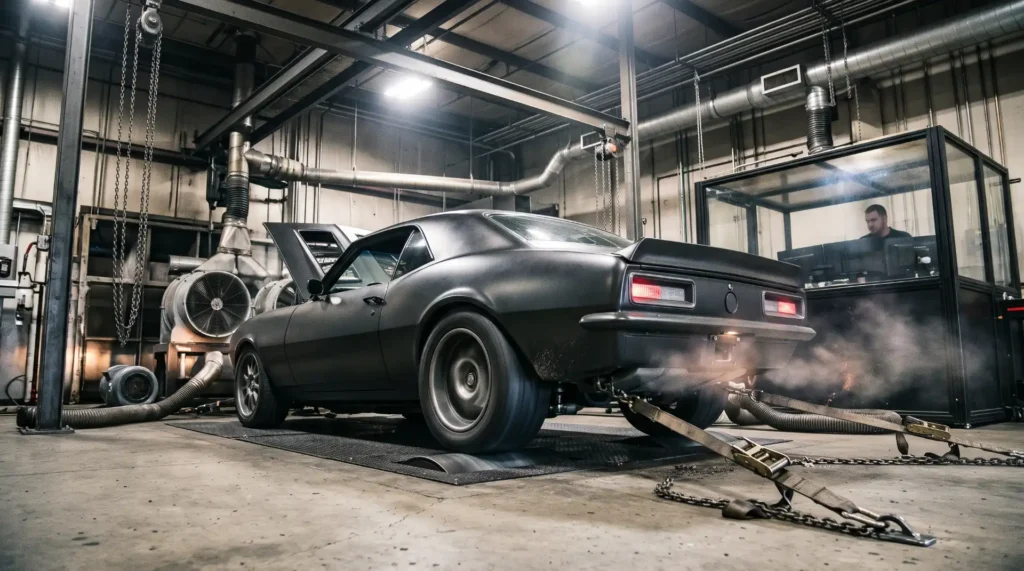 How Data Logging Supports Long-Term Engine Reliability
Performance tuning should not be judged only by the highest horsepower number displayed on a dyno. A vehicle also needs to start consistently, maintain stable temperatures, deliver predictable throttle response, and operate within the limits of its engine and drivetrain.
Data logging can support those goals by creating a record of how the vehicle behaves over time. Owners and technicians can compare logs after maintenance, upgrades, or changes in operating conditions. They can also identify gradual changes that might not be obvious during a short drive.
For example, if a vehicle begins showing higher intake temperatures during similar acceleration runs, the technician may inspect the intercooler, cooling fans, heat exchanger, or airflow path. If fuel pressure gradually becomes less stable, the fuel system can be examined before the problem becomes more serious.
Logging can also help verify that a repair or modification has produced the intended result. After replacing a faulty sensor, repairing a boost leak, or upgrading a fuel pump, a technician can record the relevant channels again and compare them with the earlier data.
Keeping a Consistent Maintenance and Tuning Record
Owners of modified vehicles benefit from keeping organized records of their modifications, maintenance, fuel type, and calibration changes. Each data log should be labeled with the date, vehicle configuration, relevant parts, fuel used, and test conditions.
This is particularly useful when a car has multiple owners, receives seasonal maintenance, or is used for both commuting and track events. A clear history helps a technician understand what changed between two sessions.
A useful record should include the original calibration information, the parts installed, any known mechanical issues, and the results of important diagnostic tests. Owners should also keep copies of calibration files and avoid making undocumented changes to the ECU.
Why Reliability Matters More Than a Single Peak Number
A vehicle that produces slightly less peak power but maintains consistent temperatures, stable fueling, and predictable ignition behavior may be a better choice for regular street and track use than a car with a more aggressive tune and narrow operating margin.
The right calibration depends on the owner’s goals. A daily-driven vehicle needs dependable cold starts, smooth part-throttle operation, manageable heat, and compatibility with the fuel available locally. A dedicated competition car may prioritize performance within a defined event and maintenance schedule.
Data logging helps the tuner understand these trade-offs. It provides a basis for balancing performance with the demands placed on the engine.
U.S. Emissions Rules and Responsible Performance Tuning
Performance tuning in the United States must take emissions compliance into account. Engine calibration changes can affect fuel delivery, ignition timing, catalyst operation, onboard diagnostics, and other systems that influence vehicle emissions.
The U.S. Environmental Protection Agency explains that the Clean Air Act prohibits tampering with emissions controls and the manufacture, sale, or installation of certain aftermarket defeat devices. Its guidance on vehicle and engine tampering and aftermarket defeat devices is an important resource for owners considering modifications.
The Department of Energy’s Alternative Fuels Data Center also provides information about vehicle conversion and tampering regulations, including the role of federal and state emissions requirements. California has additional requirements administered by the California Air Resources Board, and owners should check the rules that apply to their vehicle and the parts they plan to install.
Data logging can help a technician monitor engine behavior and diagnose problems, but it does not make an otherwise noncompliant modification legal. Removing or disabling emissions equipment, suppressing diagnostic functions, or using software intended to defeat emissions controls can create legal and environmental consequences.
For street-driven vehicles, owners should select compliant parts and calibrations and retain required emissions equipment. Track-only vehicles may be subject to different rules depending on their use and location, but owners should not assume that describing a vehicle as a competition car automatically makes every modification lawful.
How to Prepare Your Car for a Professional Data Logging Session
A successful tuning session begins before the vehicle is connected to a laptop. Preparing the car helps reduce the risk of mechanical problems and gives the technician more reliable information.
Start with a basic mechanical inspection. Check for fluid leaks, damaged hoses, loose electrical connections, worn belts, and obvious intake or exhaust problems. Confirm that engine oil and coolant levels are correct and that the vehicle has been maintained according to its service requirements.
The ignition system should also be in suitable condition. Spark plugs and coils need to be appropriate for the engine and its modifications. A misfire can distort data and make it difficult to evaluate fueling or ignition behavior.
Fuel quality is another important consideration. The owner should tell the tuner what fuel is in the tank, including the octane grade and whether the vehicle is using an ethanol blend. If the calibration requires a particular fuel, the vehicle should not be tested using an unsuitable substitute.
The owner should also provide a complete list of modifications. This includes turbochargers, superchargers, intake systems, intercoolers, exhaust components, injectors, fuel pumps, sensors, and ECU changes. Even a modification that seems unrelated to engine calibration may affect airflow, fueling, or control behavior.
Before testing begins, the tuner should explain what will be recorded and what the test is intended to establish. The vehicle should be tested in an appropriate environment, with proper safety procedures and adequate cooling. Public-road testing should never involve distracted driving or unsafe acceleration.
After the session, ask for an explanation of the important findings. A useful review should cover what the data showed, whether any mechanical issues were identified, which calibration changes were made, and whether further inspection is recommended. Owners should also ask for a copy of the log when the shop’s policies and software permit it.
Frequently Asked Questions About Automotive Performance Data Logging
Is data logging necessary for every performance tune?
The level of data logging required depends on the vehicle and the work being performed. Even relatively mild tuning benefits from checking relevant engine information before and after calibration changes. More heavily modified turbocharged and supercharged engines generally need more detailed monitoring because they place additional demands on fuel delivery, cooling, and engine components.
A tuner should use enough information to verify that the engine is operating as intended. Guessing based on sound, feel, or a peak horsepower result alone is not a reliable substitute.
Can an OBD-II scanner perform performance data logging?
Some OBD-II scanners and compatible mobile applications can record live data, but their capabilities vary. Basic devices may provide only a limited set of standardized channels, while more advanced systems can access manufacturer-specific information.
A dedicated tuning interface may be necessary to record parameters such as detailed ignition corrections, boost control information, injector operation, or other enhanced channels. Owners should confirm compatibility with their vehicle before purchasing equipment.
Does data logging increase horsepower?
Data logging does not directly add horsepower. It provides information that helps a tuner make better-informed decisions about engine calibration and diagnose problems that may be limiting performance.
A log might reveal that an engine is not reaching its boost target, that fuel pressure drops under load, or that high intake temperatures cause the ECU to reduce ignition timing. Correcting the underlying issue may restore lost performance or allow the engine to operate more consistently.
What is the difference between a boost gauge and a data logger?
A boost gauge displays pressure, usually in real time. A data logger records pressure alongside other measurements and preserves the information for later review.
A gauge can tell the driver what the boost pressure is at a particular moment. A data log can show how pressure changed with RPM, throttle position, gear selection, intake temperature, and ECU boost target. That extra context makes it more useful for diagnosis and calibration.
Can data logging detect engine damage?
Data logging can identify warning signs that may be associated with mechanical problems, including unusual temperature behavior, low oil pressure, fuel pressure loss, misfires, and abnormal sensor readings. However, it cannot confirm every type of internal engine damage.
A compression test, leak-down test, oil analysis, borescope inspection, or mechanical pressure test may be needed to determine the engine’s actual condition. Data logging should be considered one part of a complete diagnostic process.
How often should a modified car be data logged?
There is no universal schedule. A log may be appropriate after a major modification, ECU calibration change, repair involving engine management, or the appearance of unusual performance symptoms. Track vehicles may benefit from monitoring during regular event preparation and after changes to the engine or cooling system.
A professional tuner can recommend an appropriate monitoring plan based on the vehicle’s configuration, usage, and maintenance needs.
Can data logging be done while driving?
Some systems record information automatically while the vehicle is operating. However, drivers should never become distracted by watching a laptop, phone, or tuning display while driving.
If road testing is necessary, it should be conducted legally and safely by a qualified technician. High-load testing should take place in a suitable controlled environment, such as a properly operated chassis dynamometer or approved closed course.
Is data logging useful for stock vehicles?
Yes. Stock vehicles can benefit from diagnostic data recording, particularly when investigating intermittent faults, hesitation, poor fuel economy, unusual temperature behavior, or sensor problems.
A factory vehicle may not need the same external sensors as a heavily modified race car, but the ECU’s available information can still help technicians understand how the engine is operating.
Conclusion: Better Tuning Starts With Better Information
Automotive performance data logging gives tuners a clearer understanding of what is happening inside a modern engine. By recording boost pressure, airflow, air-fuel ratio, fuel pressure, ignition timing, knock correction, temperatures, throttle position, and engine load, technicians can evaluate performance with more context than a dashboard gauge or horsepower figure can provide.
The greatest benefit is the ability to connect measurements. A boost reading becomes more useful when compared with target pressure, RPM, throttle position, and intake temperature. An air-fuel ratio becomes more meaningful when reviewed alongside fuel pressure and injector operation. Ignition timing data provides additional insight when considered with engine load, fuel quality, and temperature.
For U.S. performance enthusiasts, this approach is valuable across a wide range of vehicles, from daily-driven turbocharged imports to domestic V8 builds and dedicated track cars. It can help identify problems, verify modifications, improve consistency, and support responsible tuning decisions.
Data logging is not a substitute for mechanical inspection, proper maintenance, qualified tuning, or emissions compliance. It is a tool that makes those activities more informed. When used correctly, it helps owners and technicians move beyond guesswork and build a better understanding of how a vehicle performs under real operating conditions.
The best performance result is not simply the highest number on a dyno sheet. It is an engine that delivers the response and power its owner wants while maintaining appropriate operating conditions, predictable behavior, and long-term reliability.