
Modifying a car is one of the most popular ways for American automotive enthusiasts to personalize their vehicles, improve performance, and create a more engaging driving experience. From cold-air intakes and upgraded exhaust systems to suspension kits, larger wheels, and ECU tuning, aftermarket modifications offer countless possibilities. However, drivers with newer vehicles often face an important question before installing their first upgrade: Can you modify a car without voiding the warranty?
The short answer is yes. In the United States, installing an aftermarket part does not automatically cancel an entire vehicle warranty. Federal warranty law provides important protections for consumers, although manufacturers and warranty providers can have legitimate reasons to deny coverage for specific failures when the terms of the warranty and applicable law support that decision.
Understanding the difference between a modification and a warranty claim is essential. A performance upgrade might have no connection to a failed radio, defective seat adjustment motor, or unrelated manufacturing defect. However, an improperly installed intake, poorly calibrated engine tune, or incompatible component could contribute to engine damage or another mechanical problem.
For drivers planning upgrades in 2026, the goal is to understand their rights, evaluate modification risks, maintain proper records, and choose components carefully. This guide explains how car modifications affect warranty coverage, which upgrades deserve extra caution, and how U.S. owners can make informed decisions before spending money on performance parts.
1. Does Modifying a Car Automatically Void the Warranty?
No. Installing an aftermarket component does not automatically eliminate every protection under a vehicle’s factory warranty.
The Federal Trade Commission (FTC) explains that a manufacturer or dealer generally cannot deny warranty coverage simply because an owner used an aftermarket or recycled part. If an aftermarket part is defective or installed incorrectly and causes damage to a covered component, however, the manufacturer or dealer may deny coverage for the damage attributable to that part or installation.
This distinction is important because people often hear that modifying a car will immediately void the warranty. In practice, warranty coverage is more complicated than that statement suggests.
A factory warranty usually covers specified defects in materials or workmanship during a defined period or mileage limit. It does not necessarily cover every mechanical failure, wear item, accident, misuse, or modification-related problem. The actual terms depend on the written warranty and applicable law.
For example, suppose you install aftermarket wheels and tires that meet the vehicle’s requirements. Several months later, a factory-installed infotainment screen stops working. The wheel upgrade would not ordinarily explain that electrical failure, so it should not automatically eliminate coverage for the screen.
Now consider a different situation. You install an incompatible suspension setup that causes a component to contact the tire, damaging the tire and related parts. The manufacturer may have grounds to dispute coverage for the resulting damage, depending on the evidence, warranty terms, and applicable law.
The important principle is that a modification and a warranty claim must be evaluated in context. The presence of an aftermarket part alone does not establish that it caused a failure.
 2. Understanding the Magnuson-Moss Warranty Act
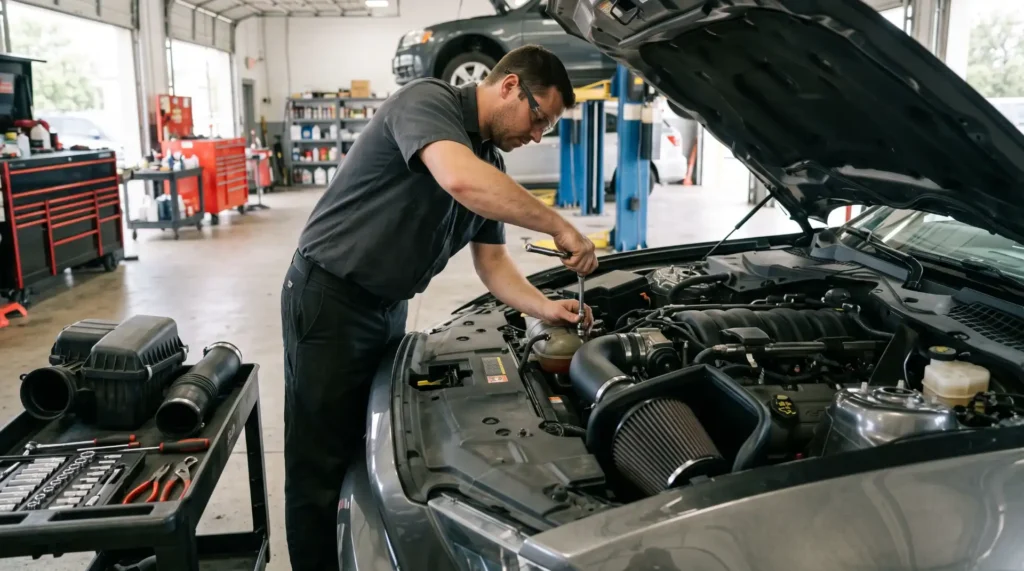 2. Understanding the Magnuson-Moss Warranty Act
One of the most important federal laws for American car owners is the Magnuson-Moss Warranty Act. This law governs many written consumer-product warranties and establishes rules concerning warranty terms and consumer protections.
The law is particularly relevant to aftermarket automotive parts because it restricts certain attempts to make warranty coverage dependent on the use of particular branded parts or services.
In general, a manufacturer cannot require consumers to use a specific brand of replacement part or service to preserve warranty coverage unless an applicable legal exception applies, such as providing the required part or service without charge or obtaining the necessary waiver.
This does not mean that every aftermarket modification must be covered or that manufacturers must pay for every failure on a modified vehicle. Warranty protection still depends on the nature of the defect, the applicable warranty, the evidence concerning the failure, and other relevant legal requirements.
For example, an owner who performs routine maintenance at an independent repair shop does not automatically lose factory warranty protection merely because the work was not performed at a dealership. Similarly, using a qualifying aftermarket replacement part does not automatically eliminate coverage for unrelated defects.
However, owners should not interpret these protections as permission to ignore maintenance requirements or modify a vehicle without considering the consequences.
A manufacturer may have a legitimate basis to deny a claim when evidence establishes that a modification or improper repair caused the failure at issue. The specific analysis can depend on the claim, warranty language, and applicable law.
For an authoritative explanation, review the FTC’s Auto Warranties and Auto Service Contracts guide. It explains the difference between factory warranties and service contracts, aftermarket parts, repair requirements, and the importance of keeping maintenance records.
Because warranty disputes can involve detailed facts and state-specific issues, consumers with substantial claims may benefit from consulting a qualified attorney or their state consumer protection office.
3. Which Car Modifications Usually Carry Lower Warranty Risk?
Some modifications are less likely to affect major mechanical warranty claims than others. However, no modification is completely risk-free, and compatibility, installation quality, vehicle-specific requirements, and warranty terms all matter.
Wheels and tires
Changing wheels and tires is a common starting point for enthusiasts. Owners may want a different appearance, improved grip, or a wheel-and-tire package suited to their driving style.
When selecting aftermarket wheels, verify the correct bolt pattern, offset, width, load rating, and clearance. Tire size, load capacity, speed rating, and compatibility with the vehicle’s systems also deserve attention.
An appropriately selected wheel package is unlikely to explain an unrelated factory defect, but an unsuitable setup can create problems. Incorrect fitment may cause rubbing, damage suspension components, interfere with brakes, or affect handling.
Keep the original specifications and the documentation for the replacement wheels and tires. This makes it easier to demonstrate that the parts were selected appropriately and installed correctly.
Cosmetic modifications
Exterior trim, interior accessories, decorative lighting, and other cosmetic changes may present relatively low mechanical risk when they are installed correctly.
Nevertheless, drilling into body panels, modifying factory wiring, or using unsuitable adhesives can create problems. Water intrusion, damaged paint, electrical faults, and corrosion may result from poor installation.
Before making permanent changes, consider whether the modification can be reversed and whether it could interfere with airbags, sensors, wiring harnesses, or other factory systems.
Replacement filters and maintenance components
Replacing routine service items with compatible alternatives can be a reasonable way to maintain a vehicle. Air filters, oil filters, spark plugs, and other consumables should meet the relevant specifications for the engine and application.
The word “performance” on packaging does not automatically establish compatibility or quality. A filter that does not seal properly, a spark plug with an incorrect specification, or an unsuitable fluid can create problems.
Owners should retain product information and receipts, particularly while a vehicle remains under factory warranty.
4. Can You Install a Cold-Air Intake Without Voiding the Warranty?
Cold-air intakes are popular because they can change the sound of an engine and, depending on the vehicle and system, may affect airflow and performance. Their warranty implications depend on the specific design, installation, and any resulting failure.
A properly designed intake that is compatible with the vehicle may not create any warranty issue. However, an intake system that introduces unmetered air, uses an incompatible sensor housing, or causes incorrect sensor readings can affect engine operation.
Modern engines rely on accurate information from airflow and pressure sensors to manage fueling and ignition. Changes in intake design can affect those readings, particularly when the system is not engineered for the original engine-management strategy.
Installation quality also matters. Loose clamps, poorly sealed connections, and incorrectly routed hoses can introduce problems that may be difficult to diagnose later.
Before purchasing an intake, verify that it is designed for your exact vehicle, engine, and model year. Check whether installation requires a calibration change and whether the supplier provides reliable technical support.
For a vehicle that remains under warranty, ask the manufacturer or dealer about any vehicle-specific concerns before proceeding. Keep the original intake components in case you need to return the car to its original configuration for diagnosis or future resale.
It is also important to distinguish between a performance claim and a warranty guarantee. A manufacturer of aftermarket parts may advertise improved airflow or horsepower, but that does not establish that the product is compatible with every factory calibration or emissions system.
5. ECU Tuning and Engine Modifications: Where the Risk Increases
ECU tuning can produce significant changes in how a performance car operates. Depending on the vehicle, tuning may alter boost targets, ignition timing, fueling, throttle response, torque management, and other engine-control parameters.
Because these changes can affect the operation and loads of major powertrain components, ECU tuning generally deserves more caution than a cosmetic modification.
A tune that increases boost or changes ignition timing may increase stress on the engine, turbocharger, fuel system, and transmission. An unsuitable calibration can cause knock, excessive temperatures, fuel-delivery problems, or other conditions that damage components.
If a modified engine experiences internal damage, the manufacturer or warranty provider may investigate whether the calibration contributed to the failure. The outcome depends on the technical evidence, the relevant warranty, and applicable law.
This does not mean that every tune automatically eliminates all coverage. It means that a tune can create a more direct connection between a modification and certain types of mechanical failure.
Before tuning a newer vehicle, consider several questions. Does the tuner support your exact engine and model year? Is the calibration designed for the fuel available in your area? Are supporting upgrades required? Will the tune affect emissions compliance? Can the original calibration be restored, and what happens if the manufacturer updates the software?
Restoring a factory calibration does not necessarily erase all evidence that a vehicle was previously modified. Owners should not assume that returning a vehicle to stock guarantees that a warranty claim will be approved.
If preserving powertrain coverage is a high priority, delaying ECU tuning until the relevant factory warranty expires may be the more conservative decision.
6. Do Aftermarket Exhaust Systems Affect Warranty Coverage?
Aftermarket exhaust systems range from simple cat-back replacements to extensive changes involving manifolds, catalytic converters, downpipes, and engine-management calibration.
A cat-back exhaust typically replaces components downstream of the catalytic converter, although the exact configuration varies by vehicle. A downpipe or exhaust manifold modification may affect components closer to the engine and emissions-control system.
The potential warranty implications depend on which components are changed and whether the modification contributes to a failure.
For example, an exhaust system that is installed incorrectly and damages nearby wiring or other components may create a basis for disputing coverage for that damage. A separate factory defect unrelated to the exhaust should be evaluated independently.
Owners must also consider emissions regulations. Federal law prohibits certain forms of tampering with required emissions controls, and state rules may impose additional requirements. California and some other jurisdictions have particularly specific emissions inspection and aftermarket-part requirements.
Before installing an exhaust component, verify that it is legal for the intended vehicle and use. Do not assume that a product advertised as “off-road only” is lawful for a street-driven car.
Check whether the modification requires additional tuning, whether it changes emissions-system operation, and whether the supplier provides appropriate compliance documentation.
The best approach is to choose a system that fits the vehicle correctly, maintains required emissions controls, and does not require unsupported changes to the engine-management system.
7. Suspension, Brakes, and Handling Upgrades
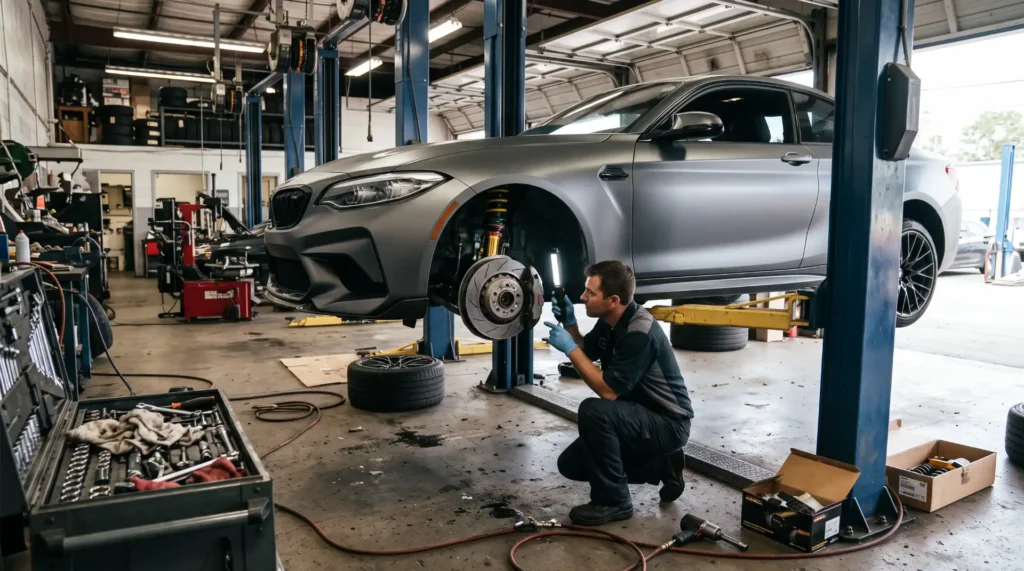 7. Suspension, Brakes, and Handling Upgrades
Suspension and brake modifications can improve a car’s behavior when the parts are selected and installed properly. Lowering springs, coilovers, sway bars, upgraded pads, and larger brake kits are common examples.
However, these systems interact with other components. A suspension change can affect alignment, tire wear, ride height, and clearance. A brake upgrade may require attention to wheel fitment, hydraulic compatibility, and front-to-rear balance.
When installing lowering springs or coilovers, use components designed for the vehicle’s weight and intended use. Excessively low ride height or unsuitable spring and damper combinations can cause poor handling, component contact, or premature wear.
Brake modifications should also be matched to the intended driving conditions. A track-oriented pad may behave differently when cold than a pad designed for ordinary street use. A larger brake kit is not automatically better if it is poorly matched to the rest of the system.
If a suspension modification contributes to damage involving a related component, warranty coverage for that damage may be disputed. However, it should not automatically cancel coverage for unrelated defects elsewhere in the car.
Keep installation receipts, alignment records, and part specifications. These documents can help establish that the work was performed correctly and that the components were suitable for the vehicle.
8. Aftermarket Parts Versus OEM Parts
One of the easiest ways to reduce uncertainty when modifying a newer car is to understand the difference between original equipment manufacturer parts and aftermarket alternatives.
OEM parts are supplied by the vehicle manufacturer or its designated suppliers for the relevant application. Aftermarket parts are produced or sold outside that original supply arrangement. Both categories contain products of varying quality, and an aftermarket part is not automatically inferior.
An OEM replacement may offer predictable fitment and compatibility, but it can cost more or be difficult to obtain. A reputable aftermarket component may offer comparable functionality, a different design, or better availability.
The correct choice depends on the part, vehicle, intended use, and quality of the supplier.
For warranty-sensitive repairs, verify specifications carefully. A replacement sensor that physically fits may have a different calibration or electrical characteristic. A filter may have incorrect dimensions, and a cap or seal may fail to maintain the required pressure or prevent leaks.
Auto Sport Performance’s article on OEM gas caps versus aftermarket alternatives provides a useful example of why fitment and product quality matter even for relatively inexpensive parts.
When selecting aftermarket performance components, prioritize established suppliers, clear application information, installation instructions, and accessible technical support. Keep the packaging and documentation until you are confident the part is operating correctly.
9. Can a Dealer Refuse Warranty Service Because You Used an Independent Mechanic?
In general, a dealer cannot deny warranty coverage simply because you had routine maintenance or repairs performed by an independent mechanic rather than the dealership.
The FTC explains that consumers do not ordinarily have to use the dealer for routine maintenance to keep factory warranty coverage in effect. However, the warranty may impose particular requirements for services or parts that the manufacturer provides free of charge, subject to applicable law.
Independent shops can be a practical option for oil changes, brake service, inspections, and other maintenance. The key is ensuring that the work follows the manufacturer’s specifications and that appropriate records are retained.
For example, if you have an independent shop replace the engine oil, keep the invoice showing the date, mileage, oil specification, and filter used. If a warranty claim arises later, those records can help demonstrate that the vehicle was maintained correctly.
Avoid relying solely on verbal assurances. Ask for an itemized receipt and retain any inspection reports or relevant diagnostic results.
If a dealership claims that using an independent mechanic automatically cancels your warranty, ask for the specific warranty provision and written explanation supporting the claim. The facts and applicable law matter, so a disputed claim should be evaluated carefully rather than accepted or rejected based on a general statement.
10. How to Protect Your Warranty Before Modifying Your Car
The best time to think about warranty coverage is before buying parts. Once a component has been installed and a problem develops, it may be harder to establish the vehicle’s original condition or determine what caused the failure.
Start by obtaining the written warranty that applies to your vehicle. Read the sections covering powertrain components, modifications, maintenance, exclusions, and claim procedures. Do not assume that a salesperson’s summary contains every relevant limitation.
Next, identify the exact modification you are considering. Research the part number, compatibility, installation requirements, and whether additional calibration is needed. If the modification involves engine management, emissions controls, or safety systems, seek reliable technical guidance before proceeding.
Consider asking the manufacturer or dealer specific questions in writing. For example, ask whether a proposed component affects any stated warranty provisions and what evidence would be considered if a related failure occurred. A general verbal promise that “the warranty will be fine” may not resolve a later dispute.
Keep the original parts whenever practical. This can help with troubleshooting and gives you the option of restoring the vehicle to its previous configuration, although returning a vehicle to stock does not guarantee warranty approval.
Finally, avoid installing several modifications at once. If a problem develops after multiple components are changed, identifying the cause can become much more difficult. A staged approach makes it easier to test each change and recognize unexpected behavior.
11. Why Maintenance Records Matter More Than Many Owners Realize
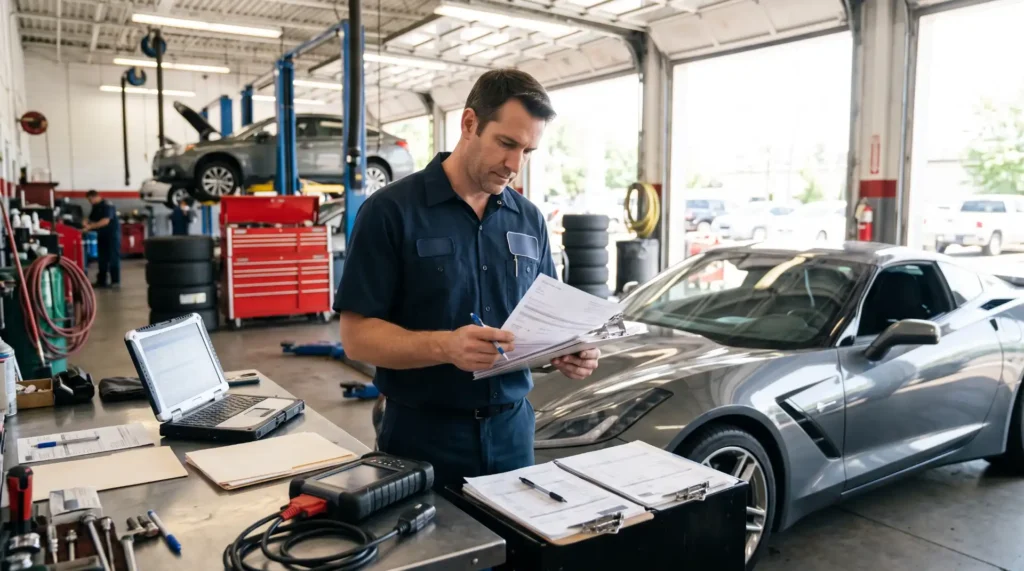 11. Why Maintenance Records Matter More Than Many Owners Realize
A complete maintenance history can make warranty discussions easier because it provides evidence of how the vehicle was cared for.
Save receipts for oil changes, coolant service, transmission maintenance, brake repairs, tire replacements, and any performance modifications. Include the mileage and date whenever possible.
For aftermarket parts, retain invoices, part numbers, warranty documents, installation instructions, and records of any professional calibration. If a shop performs the work, ask for a description of the installation and any relevant test results.
Digital records can be particularly convenient. Store scans of invoices in a folder organized by date or vehicle system, and maintain a simple spreadsheet listing maintenance intervals and completed repairs.
If a warning light appears, record the diagnostic codes and operating conditions before clearing them, when it is safe and appropriate to do so. Photographs, inspection reports, and professional diagnostic results can also help establish a timeline.
Do not conceal modifications or alter records to influence a claim. Accurate documentation is more useful than attempting to hide the vehicle’s history, and it allows technicians to investigate the problem more effectively.
Maintenance records do not guarantee that a claim will be approved, but they can help clarify whether the vehicle was maintained appropriately and whether a proposed explanation for a failure is supported by the evidence.
12. What to Do If a Warranty Claim Is Denied
A denied warranty claim does not necessarily mean the decision is correct. If you believe a manufacturer or dealer has denied coverage unfairly, request a written explanation.
Ask which component failed, what evidence supports the conclusion, and how the modification allegedly contributed to the failure. A clear explanation can help distinguish a technical finding from a broad assertion that the vehicle was modified.
Review the written warranty and compare the explanation with the relevant provisions. Gather maintenance records, modification invoices, photographs, diagnostic reports, and any independent inspection findings.
If the disagreement involves a complex mechanical failure, an independent automotive expert may be able to evaluate the cause. For example, a dispute involving engine damage after an ECU tune may require analysis of the calibration, operating conditions, physical damage, and available vehicle data.
Follow the manufacturer’s appeal process where available. You can also contact the FTC or your state consumer protection office for information about consumer rights and complaint options. Depending on the amount involved and the circumstances, consulting an attorney experienced in warranty disputes may be appropriate.
Avoid assuming that every denial is unlawful or that every manufacturer explanation is conclusive. The strongest approach is to evaluate the written terms and technical evidence objectively.
13. Does an Extended Warranty Cover Modified Cars?
An extended warranty is often actually a vehicle service contract sold by a manufacturer, dealer, or independent company. It is separate from the original factory warranty, and its terms may differ substantially.
Some service contracts restrict certain modifications or exclude failures associated with performance parts, nonstandard calibrations, or improper installation. Other contracts may have different requirements. The exact language matters.
Before purchasing a service contract for a modified car, read the exclusions and ask specifically about the parts you intend to install. Get answers in writing and retain them with the contract.
Pay attention to how the contract defines covered components, mechanical breakdowns, preexisting conditions, maintenance requirements, and modification-related damage. Determine whether the provider requires prior authorization before repairs begin and whether it limits the shops you can use.
Do not assume that a service contract provides the same protections as a factory warranty. The FTC explains these distinctions in its guidance on auto warranties and service contracts.
If you already have a service contract, review its terms before making modifications. A component that is acceptable under a factory warranty may be treated differently under a separate contract, depending on the contract’s language and applicable law.
14. Choosing a Modification Strategy for a Newer Performance Car
If your vehicle is still within its factory warranty period, the best modification strategy depends on your priorities.
Drivers who place a high value on preserving powertrain coverage may prefer reversible, lower-risk changes that do not alter engine calibration or emissions controls. They might focus on compatible wheels and tires, approved accessories, or maintenance improvements that meet the manufacturer’s specifications.
Owners who prioritize maximum performance may accept greater uncertainty around certain powertrain claims. In that case, it is important to understand the potential financial consequences before proceeding.
A modification budget should account for more than the cost of the part and installation. Consider the possibility that a related failure might not be covered, the cost of diagnostic work, the price of restoring the vehicle to its original configuration, and the effect of the modification on resale.
It is also worth considering the vehicle’s intended use. A daily driver that must remain dependable for commuting may benefit from a conservative approach, while a dedicated track car may be built around different priorities and maintenance expectations.
Auto Sport Performance’s guide to balancing a daily driver and a track build explores the practical differences between street-focused and track-focused modifications.
The best strategy is the one that fits your goals, budget, driving conditions, and tolerance for risk. There is no single modification plan that works equally well for every owner.
Conclusion: Modify Your Car With a Clear Understanding of Warranty Risks
You can modify a car without automatically voiding its entire warranty. U.S. federal warranty law provides important protections for consumers, and an aftermarket part alone does not establish that a manufacturer can deny every future claim.
However, the details matter. A modification that contributes to engine damage, electrical failure, cooling problems, or another covered-system issue may create a legitimate dispute over responsibility. Separate service contracts may also impose their own restrictions.
Before installing performance parts, read the warranty, research the component, confirm compatibility, and consider whether calibration or professional installation is required. Maintain accurate records and retain original components when practical.
If a claim is denied, request a written explanation and review the technical evidence rather than relying on assumptions about what modifications do or do not affect coverage.
For American enthusiasts in 2026, responsible modification is about balancing performance, reliability, compliance, and ownership costs. By understanding the rules before making changes, you can make better decisions, reduce avoidable risks, and enjoy your vehicle with greater confidence.