
How Wheel Size and Unsprung Weight Affect Real World Performance
Changing wheel size is one of the most common modifications made to performance cars, but bigger wheels do not automatically mean better performance. Wheel diameter, width, tire construction, and total wheel-and-tire weight all influence acceleration, braking, steering response, suspension behavior, ride quality, and grip. Understanding wheel size and unsprung weight can help drivers choose upgrades that improve the way a car performs on real roads rather than simply changing its appearance.
For U.S. drivers, this matters because everyday roads rarely resemble perfectly smooth racetracks. Expansion joints, potholes, patched asphalt, concrete highways, changing temperatures, and uneven pavement constantly force the wheels and suspension to react. A wheel setup that looks impressive at a car meet might behave very differently when driven through these conditions.
What Is Unsprung Weight?
A vehicle’s weight can generally be divided into sprung and unsprung mass. Sprung mass includes components supported by the suspension, such as the body, interior, engine, transmission, passengers, and much of the chassis.
Unsprung mass includes components that move with the wheels rather than being fully supported by the suspension. These typically include the wheels, tires, portions of the brake assemblies, hubs, wheel bearings, and parts of the suspension.
The distinction matters because the suspension must control the movement of unsprung components whenever a tire encounters a bump, dip, pothole, or other surface irregularity. Lighter unsprung components generally require less force to accelerate upward and downward.
SAE International has studied unsprung mass and vehicle ride dynamics for decades. Research published through SAE International discusses the role of unsprung weight in race car and suspension engineering. Modern vehicle-dynamics research continues to treat unsprung mass as an important factor when modeling ride comfort and handling behavior.
Why Wheel Weight Matters More Than Many Drivers Expect
Removing ten pounds from a vehicle’s trunk and removing ten pounds from its wheels do not affect the car in exactly the same way.
A wheel is both unsprung mass and rotating mass. During acceleration, the drivetrain must move the vehicle forward while also increasing the rotational speed of the wheels and tires. During braking, the brakes must reduce both the vehicle’s forward motion and the rotational energy stored in those components.
That is why lightweight wheels have remained popular in motorsports and performance applications for decades. Reducing wheel weight can affect several parts of the driving experience at the same time.
There is no universal formula saying that one pound removed from a wheel is always equal to a specific number of pounds removed from the chassis. The real result depends on wheel diameter, where the mass is concentrated, gearing, tire size, vehicle weight, suspension geometry, and driving conditions.
Still, the basic principle remains useful. Less rotating and unsprung mass can help a properly designed performance vehicle react more efficiently.
 Larger Wheels Can Increase Unsprung Weight
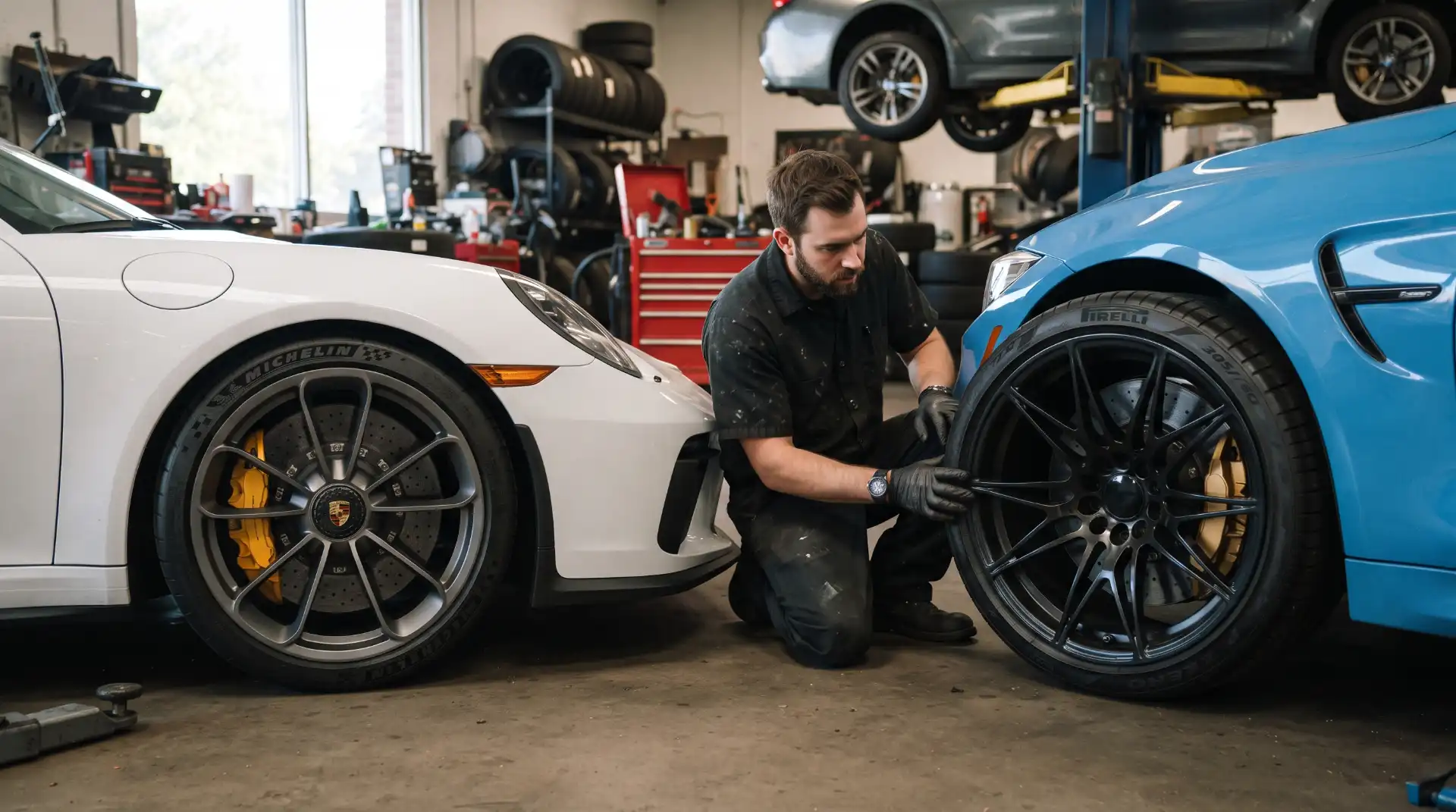 Larger Wheels Can Increase Unsprung Weight
Increasing wheel diameter frequently adds weight, although wheel construction makes a major difference.
For example, replacing a factory 18-inch wheel with an inexpensive 20-inch cast wheel may significantly increase wheel mass. The larger tire required for the setup could add even more.
However, a high-quality forged 20-inch wheel could weigh less than a smaller heavy cast wheel. Diameter alone does not determine the outcome.
Drivers should therefore compare actual wheel weights instead of assuming that smaller automatically means lighter or larger automatically means heavier.
Wheel width also matters. A wider wheel requires more material and generally supports a wider tire. Increasing both wheel diameter and width can create a substantial change in the total wheel-and-tire assembly weight.
This is one reason performance builds benefit from considering weight during the planning stage. Our article on why weight reduction matters in performance builds explains that vehicle mass affects acceleration, braking, tire performance, suspension behavior, and efficiency.
Wheel Diameter Changes More Than Appearance
Larger wheels have become increasingly common on modern U.S. vehicles. Many factory performance cars now use 19-inch, 20-inch, or even larger wheels.
There are legitimate reasons for this trend. Larger wheels can provide clearance for larger brake rotors and calipers. They may also allow shorter tire sidewalls, which can produce sharper steering response under certain conditions.
Large wheels also play a major styling role. Automakers use them to fill larger wheel arches and give cars a more aggressive appearance.
However, there are tradeoffs.
When total tire diameter remains roughly the same, increasing wheel diameter requires reducing tire sidewall height. A shorter sidewall usually flexes less, which can make steering feel more immediate.
At the same time, the tire has less sidewall available to absorb sharp impacts. This can make the vehicle feel harsher on broken pavement and may increase the likelihood of wheel damage when hitting severe potholes.
Those compromises become particularly relevant on public roads.
How Unsprung Weight Affects Suspension Response
A suspension system has several jobs. It controls body movement, manages wheel motion, maintains tire contact with the pavement, and helps provide a reasonable balance between handling and comfort.
When a tire hits a bump, the wheel accelerates upward. The spring and damper then control the wheel as it returns toward its normal position.
A heavier wheel assembly carries more inertia. More force is required to change its direction.
If unsprung mass becomes excessive relative to the suspension setup, the wheel may have more difficulty following rapidly changing road surfaces. That can affect how consistently the tire maintains contact with the pavement.
Lower unsprung weight can allow the suspension to respond more quickly to certain road irregularities. Instead of forcing the entire vehicle body to react strongly to every bump, the wheel may move more efficiently within the available suspension travel.
This does not mean that the lightest possible wheel always produces the best suspension behavior. Engineers must balance wheel strength, tire characteristics, spring rates, damper settings, suspension geometry, braking requirements, and vehicle mass.
SAE research has long recognized the relationship between unsprung mass, ride characteristics, wheel movement, and suspension behavior.
The Difference Is Easier to Notice on Rough Roads
On a perfectly smooth road, changes in unsprung weight may be difficult for some drivers to identify.
Real roads are different.
A performance car traveling across cracked pavement encounters repeated vertical movements at each wheel. The suspension continuously works to keep the tires connected to the road while controlling body movement.
A lighter wheel-and-tire package can reduce the amount of mass the suspension must control during those movements.
This is why wheel weight can sometimes change the feel of a car even when peak horsepower and suspension settings remain exactly the same.
The car may feel more composed over rapid surface changes. Steering can feel more responsive. The suspension may also recover more quickly after hitting a bump.
Those differences depend heavily on the car and the amount of weight removed. Swapping a 30-pound wheel for a 29-pound wheel probably produces a much smaller difference than replacing a very heavy aftermarket setup with a significantly lighter forged wheel and tire package.
Wheel Size and Acceleration
Wheel changes can affect acceleration through both weight and effective gearing.
If overall tire diameter remains the same, the gearing difference may be minimal. However, the drivetrain still has to accelerate the rotating wheel-and-tire assembly.
Reducing rotational mass can reduce some of the energy required to increase wheel speed.
The location of the mass also matters. Weight located farther from the center of rotation contributes more strongly to rotational inertia than the same amount of weight located closer to the hub.
That means two wheels with identical total weight may not have identical rotational characteristics.
Wheel design, spoke construction, barrel thickness, tire construction, and diameter all influence how mass is distributed.
For a street car, these changes may not transform acceleration dramatically. However, enthusiasts chasing a balanced performance setup should consider wheel weight alongside horsepower modifications.
A vehicle does not need additional engine output to benefit from reducing unnecessary mass.
Overall Tire Diameter Can Change Effective Gearing
One of the most overlooked aspects of wheel upgrades is overall tire diameter.
If a driver increases wheel diameter but selects a lower-profile tire that preserves approximately the same overall diameter, the effective gearing remains relatively close to stock.
If the total diameter increases substantially, the effect is similar to installing taller gearing.
For each wheel revolution, the vehicle travels farther. Engine rpm at a given road speed may decrease, but acceleration can feel softer because the drivetrain has less mechanical leverage at the tire contact patch.
A smaller overall diameter can have the opposite effect. Acceleration may feel more immediate while engine rpm at highway speeds increases.
Diameter changes can also affect speedometer readings and potentially interact with systems that rely on wheel-speed information.
That is why performance wheel selection should include tire sizing rather than treating the wheel and tire as completely separate modifications.
Wheel Size and Braking Performance
Brakes must slow rotating wheels and tires in addition to slowing the vehicle itself.
A heavier wheel assembly can increase rotational energy that the braking system must manage. Again, the real effect depends on how much weight changes and where that weight is located.
Larger wheels can also provide an important braking advantage: clearance.
High-performance brake packages often require large-diameter rotors and multi-piston calipers. A larger wheel can create enough internal space for those components.
This creates an important performance tradeoff.
A smaller wheel might be lighter, but it may not clear the brakes required for repeated high-speed stopping. A larger wheel might create more clearance but add unnecessary mass if the wheel itself is poorly designed.
The best performance setup balances wheel size, brake clearance, cooling, strength, tire selection, and weight.
Why Tire Sidewall Still Matters
Performance discussions often treat tire sidewall flex as something that should always be minimized. In reality, the sidewall is part of the vehicle’s overall compliance.
A tire with a taller sidewall can absorb small bumps and pavement imperfections before they reach the suspension.
This is especially useful on public roads where surface quality varies constantly.
Lower-profile tires generally provide more immediate steering response because there is less sidewall movement between the wheel and road surface. That characteristic can make a performance car feel sharper during fast transitions.
However, extremely short sidewalls may make the vehicle more sensitive to potholes and broken pavement.
The correct balance depends on the vehicle’s purpose.
A dedicated show car, a daily-driven sports sedan, an autocross car, and a track-focused build may all benefit from different wheel and tire combinations.
Can Smaller Wheels Actually Make a Car Faster?
In some applications, yes.
Performance drivers sometimes move to a smaller wheel because it allows a lighter setup, a more useful tire sidewall, or access to a better tire size.
For example, a car equipped with heavy 20-inch factory wheels may perform better in certain situations with a lightweight 18-inch package, assuming the smaller wheels clear the brakes and the tire dimensions are appropriate.
The potential advantages can include lower unsprung mass, reduced rotational inertia, improved ride compliance, and possibly lower replacement tire costs.
However, smaller wheels are not automatically superior.
A smaller wheel could interfere with brake clearance. Tire availability might become limited. Excessive sidewall flex may also reduce steering precision for a particular suspension setup.
Performance comes from matching components rather than following a simple rule such as “smaller is always faster.”
Why Wider Wheels Are Not Always Better
Wheel width affects the types of tires that can be fitted to a vehicle.
Wider tires can provide additional traction potential, particularly when the vehicle has enough power or cornering capability to use that additional tire.
But widening the wheel and tire package usually adds weight.
It can also increase aerodynamic drag and rolling resistance. Steering effort or feedback may change, and improper wheel offset can affect suspension geometry or create clearance problems.
The widest wheel that physically fits is therefore not necessarily the best-performing choice.
A properly sized tire operating at an appropriate temperature can perform better than an oversized tire that never reaches an effective operating range.
Street-driven vehicles also need to manage rain, standing water, cold temperatures, road grooves, and normal highway driving.
Choosing wheel width should reflect the complete use case rather than appearance alone.
Wheel Offset Can Change the Driving Experience
Offset describes the relationship between the wheel mounting surface and the wheel centerline.
Changing offset alters where the wheel sits relative to the suspension and fender.
This is often done for appearance or clearance, but significant offset changes can also affect steering geometry.
Scrub radius, wheel-bearing loading, steering feel, and tire clearance may all be influenced when the wheel position moves substantially from the original specification.
This is another reason wheel upgrades should not be selected based purely on diameter and appearance.
A lightweight wheel with incorrect dimensions can create more problems than a slightly heavier wheel designed correctly for the vehicle.
Lightweight Wheels Can Improve Steering Feel
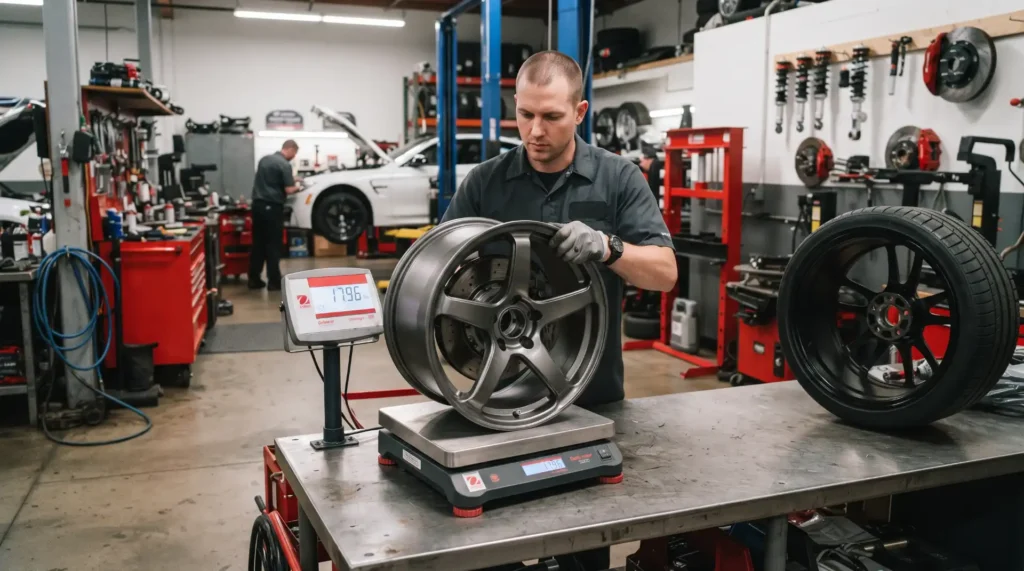 Lightweight Wheels Can Improve Steering Feel
Drivers often describe lightweight wheel setups as feeling more responsive.
Part of that sensation can come from reduced rotational mass. Part may also come from tire construction, sidewall characteristics, alignment, wheel width, and changes in overall grip.
Removing unnecessary unsprung mass can make steering inputs feel more immediate because the suspension and wheel assembly have less mass to manage.
The difference is usually most meaningful when the weight reduction is substantial and the replacement tires remain appropriate for the vehicle.
This is why comparing complete wheel-and-tire packages is more useful than looking only at wheel diameter.
Forged, Cast, and Flow-Formed Wheels
Construction method plays a major role in wheel weight and strength.
Cast wheels are produced by pouring molten metal into a mold. They are widely used because they can offer reasonable strength at relatively low manufacturing cost.
Flow-formed wheels begin with a cast center and use a forming process to shape and strengthen the barrel. Depending on design, they can reduce weight compared with conventional cast wheels.
Forged wheels are produced by applying substantial pressure to aluminum material before machining the wheel into its final form. This manufacturing process can create a strong structure with less material, allowing many forged wheels to achieve low weight while retaining significant strength.
That does not mean every forged wheel is lighter than every cast wheel. Design, load rating, diameter, width, spoke layout, and intended application still matter.
Drivers comparing wheels should examine actual specifications rather than relying exclusively on construction labels.
Do Lightweight Wheels Improve Fuel Economy?
Reducing vehicle weight generally reduces the energy required to move the vehicle, although small wheel-weight changes may produce modest fuel-economy differences during normal driving.
The larger consideration is often the complete package.
A lightweight wheel paired with an extremely wide, high-rolling-resistance tire may not improve efficiency. Likewise, a larger overall tire diameter can alter gearing and aerodynamic characteristics.
For electric vehicles, wheel and tire selection can also influence driving range. Aerodynamic wheel design, tire rolling resistance, wheel diameter, and total mass all contribute to energy consumption.
This is why modern performance engineering increasingly considers efficiency and vehicle dynamics together rather than treating them as separate goals.
What About Electric Performance Cars?
Electric vehicles make the discussion particularly interesting because many EVs are substantially heavier than comparable combustion-powered cars.
Battery weight increases the total mass the tires, brakes, and suspension must control.
At the same time, electric motors can produce immediate torque, which places additional demands on traction.
Large wheels are common on performance EVs because manufacturers need brake clearance, tire capacity, and styling that matches the vehicle’s proportions.
However, wheel weight and aerodynamics remain important because additional rotating mass and aerodynamic drag can affect efficiency.
For a performance EV, the best wheel setup may therefore balance acceleration, brake clearance, tire grip, range, aerodynamic efficiency, and unsprung weight.
More Wheel Diameter Does Not Equal More Grip
One of the biggest misconceptions surrounding wheels is that increasing diameter automatically increases traction.
Wheel diameter alone does not create grip.
Tire compound, construction, width, operating temperature, pressure, suspension setup, alignment, road surface, and vehicle weight all influence available traction.
A car running an excellent 18-inch performance tire can easily outperform another car running mediocre 20-inch tires.
For real-world driving, tire quality often matters more than visual wheel size.
This is particularly important for performance enthusiasts working with a fixed budget. Spending more on a carefully selected tire and lightweight wheel combination can produce a more balanced result than buying the largest wheel available and compromising tire quality.
Consider the Whole Wheel-and-Tire Assembly
Wheel specifications only tell part of the story.
A performance enthusiast may save four pounds per wheel by purchasing lightweight wheels, then install tires that are several pounds heavier than the originals.
The final assembly may weigh nearly the same as before.
For that reason, weighing or comparing the complete mounted wheel-and-tire combination provides a better understanding of the change in unsprung and rotating mass.
Drivers should also consider brake rotor weight, caliper design, hub components, and suspension parts when building a more advanced performance setup.
The wheel is simply one of the easiest unsprung components to change.
Strength Still Comes Before Minimum Weight
Weight reduction should never come at the expense of appropriate wheel strength.
Public roads can place substantial impact loads on wheels. Potholes, debris, curbs, railroad crossings, and broken pavement can create forces that track-only driving may not reproduce.
A wheel designed for street use needs an appropriate load rating and should come from a reputable manufacturer.
Drivers should also use correct lug hardware, torque specifications, tire sizes, and inflation pressures.
A lightweight wheel that bends or cracks under normal road conditions is not a performance improvement.
How to Choose Wheel Size for a Street Performance Car
 How to Choose Wheel Size for a Street Performance Car
The best wheel size depends on what the vehicle needs to do.
Start with brake clearance. The wheel has to clear the rotor, caliper, suspension components, and bodywork throughout the available steering and suspension travel.
Next, consider tire availability. Performance tire choices vary significantly by diameter and width. A slightly smaller wheel may sometimes offer more tire options or more favorable pricing.
Then compare weight. Look at the actual weight of each wheel and, where possible, compare the complete wheel-and-tire assembly.
Finally, consider the roads the car regularly uses. Drivers facing rough urban pavement may benefit from more tire sidewall than someone driving primarily on smooth roads or closed circuits.
This approach treats the wheel as a functional performance component rather than simply a styling accessory.
Why Suspension Tuning Matters After a Major Wheel Change
Large wheel and tire changes can alter the behavior the suspension was originally designed around.
The dampers, springs, alignment, steering system, and electronic stability controls were developed around a particular range of tire and wheel characteristics.
Changing weight, sidewall stiffness, tire width, diameter, or offset can alter the way those systems respond.
Minor changes may require little adjustment. More aggressive performance builds may benefit from reviewing alignment, ride height, damping, tire pressures, and clearance after installing new wheels.
This is particularly relevant when a wheel change is part of a larger performance package.
Real World Performance Is About Balance
The fastest-looking wheel is not always the fastest-performing wheel.
Real-world performance depends on a combination of acceleration, braking, cornering, ride control, tire grip, durability, and driver confidence.
A slightly smaller lightweight wheel with a quality tire may provide better everyday performance than a larger and heavier setup chosen primarily for appearance.
At the same time, larger wheels can provide useful brake clearance, steering precision, and access to certain performance tire sizes.
The key is matching the wheel to the car rather than assuming one diameter is universally superior.
Final Thoughts on Wheel Size and Unsprung Weight
Wheel size and unsprung weight affect far more than appearance. Wheels influence suspension response, acceleration, braking, steering feel, tire behavior, ride quality, and efficiency.
Larger wheels can provide brake clearance and sharper tire response, but they may also add weight and reduce sidewall compliance. Smaller wheels can reduce mass and improve ride behavior, but they must still clear the brakes and support the correct tires.
For performance enthusiasts, the most useful approach is to evaluate wheel diameter, width, offset, construction, tire size, total assembly weight, brake clearance, and intended use together.
A balanced wheel-and-tire package may help a car feel quicker, more responsive, and more composed without adding a single horsepower.
Drivers considering wheels as part of a broader build can also explore our guide to performance tuning and automotive upgrades and our discussion of weight reduction in modern performance vehicles.