
When most people think about building a faster car, the first thing that comes to mind is adding power. Bigger turbos, stronger fuel systems, upgraded exhausts, aggressive tunes, and higher boost levels tend to dominate the performance conversation.
But there is another performance upgrade that often delivers just as much impact, sometimes even more, without touching the engine at all.
Weight reduction.
In today’s automotive world, weight reduction matters more than ever because modern vehicles are heavier than they have ever been. Between advanced safety systems, larger chassis designs, luxury features, sound insulation, and the rapid growth of hybrid and electric platforms, the average performance car now carries hundreds, sometimes thousands, of extra pounds compared to older builds.
That extra weight affects everything: acceleration, braking, cornering, tire wear, and even long-term reliability. For enthusiasts building street cars, track machines, or modern EV performance projects, reducing weight has become one of the most effective ways to unlock real-world speed.
Modern Cars Are Getting Heavier Every Year
One of the biggest reasons weight reduction has become so important is simple: cars keep gaining mass.
Performance models today come loaded with technology. Even a sporty coupe or sedan now includes advanced driver assistance systems, reinforced crash structures, large infotainment displays, heavier wheels, and increasingly complex powertrains.
Electric vehicles push weight even further. Battery packs alone can add over a thousand pounds, which is why many EV performance builds focus heavily on suspension tuning and weight management rather than traditional horsepower upgrades.
This shift has changed the performance equation. Power is still important, but managing weight has become just as critical for building a balanced, responsive car.
 Weight Reduction Improves Acceleration Without More Horsepower
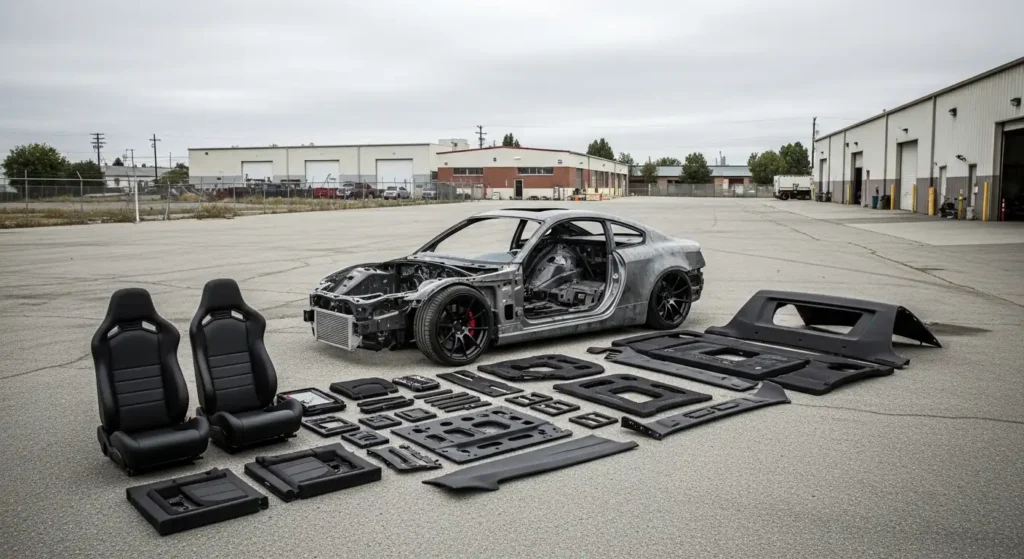 Weight Reduction Improves Acceleration Without More Horsepower
The most obvious benefit of weight reduction is acceleration.
A lighter car requires less force to move, which means the engine does not need as much power to achieve the same speed. This is why stripping unnecessary weight can feel like gaining horsepower, even though the engine output remains unchanged.
In practical terms, dropping 100 to 200 pounds can noticeably improve how quickly a car launches, how aggressively it pulls through the midrange, and how responsive it feels overall.
This is especially valuable for street builds where adding large horsepower numbers may require expensive supporting modifications. Weight reduction is often a more efficient path to quicker performance.
Handling and Cornering Become Sharper

Weight does not only affect straight-line speed. It has an even bigger impact on how a car behaves in corners.
Every extra pound increases inertia, making the car harder to rotate, slower to change direction, and less predictable under load. A lighter chassis responds faster to steering input and maintains better balance through turns.
This is why track-focused builds often prioritize weight reduction early in the process. A car with moderate horsepower but reduced weight frequently outperforms a heavier car with much more power on a road course.
In performance driving, agility matters as much as acceleration.
Braking Performance Improves Dramatically
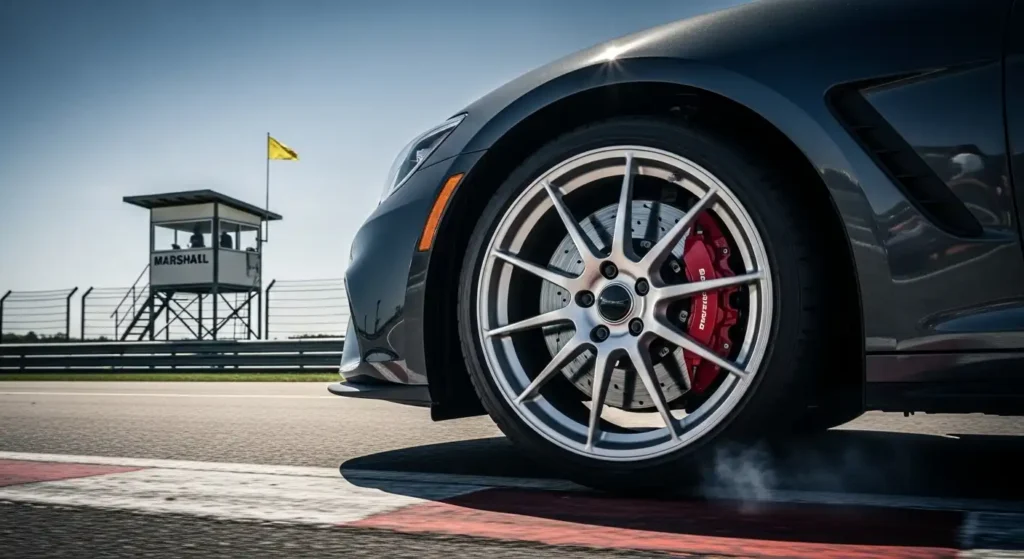
Braking is one of the most overlooked areas where weight reduction makes a huge difference.
A heavier car requires more braking force to slow down. That leads to higher brake temperatures, faster pad wear, increased rotor stress, and longer stopping distances.
Reducing weight lowers the demand on the braking system, helping the car stop more efficiently and consistently. This is one of the reasons weight reduction is so valuable for track builds, where repeated hard braking can quickly overwhelm even upgraded brake setups.
Lighter cars brake harder, brake longer, and brake more reliably.
Weight Reduction Helps Tire and Suspension Performance
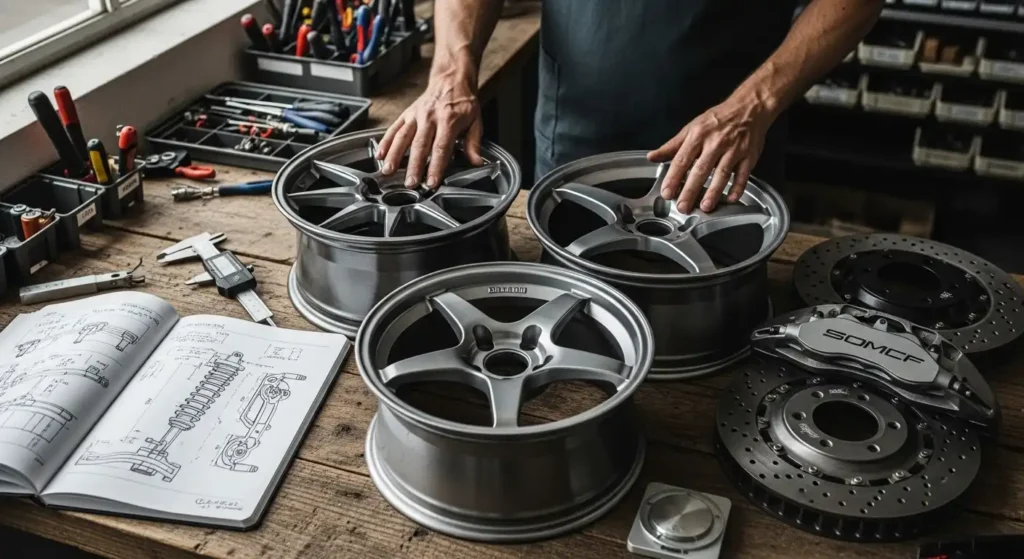
Tires and suspension components work harder as weight increases.
More weight means more load transfer during acceleration, braking, and cornering. That load transfer increases tire wear and places greater stress on suspension bushings, dampers, and control arms.
Reducing weight improves how evenly the car distributes force, helping tires maintain grip and allowing suspension setups to perform more effectively.
This is especially important today because many modern performance cars come from the factory already pushing the limits of tire and suspension capability due to their size and mass.
Efficiency Gains Matter in Modern Performance Builds
Weight reduction is not only about speed. It also affects efficiency.
A lighter car requires less energy to move, which improves fuel economy in combustion vehicles and increases driving range in electric vehicles.
The US Department of Energy highlights that reducing vehicle weight improves fuel economy because less power is required for acceleration and maintaining speed.
You can read more from the Department of Energy here:
https://www.energy.gov/eere/vehicles/articles/reducing-vehicle-weight-improves-fuel-economy
This matters more now than ever because enthusiasts are increasingly balancing performance with efficiency, especially in hybrid and EV builds.
The Rise of EV and Hybrid Performance Makes Weight Even More Critical
Electric and hybrid performance builds are changing the tuning landscape. These platforms deliver instant torque, but they also carry significant weight due to batteries and complex drivetrains.
That means weight management is becoming one of the biggest challenges in modern performance engineering.
If you are interested in how performance tuning is evolving alongside electrification, Autosport Performance covers this shift in detail here:
Performance Tuning for the Electric & Hybrid Revolution
As electrified platforms become more common, weight reduction strategies may become even more valuable for enthusiasts seeking sharper performance.
Weight Reduction Is About Balance, Not Just Removing Everything
It is important to understand that weight reduction should be approached thoughtfully.
Removing weight from the wrong areas can negatively affect safety, comfort, or structural integrity. The best weight reduction builds focus on smart upgrades such as lightweight wheels, improved seats, carbon fiber components, and reducing unnecessary rotational mass.
The goal is not simply to strip a car down, but to improve the power-to-weight ratio while maintaining balance and usability.
Final Thoughts
Weight reduction matters more than ever because modern cars are heavier, more complex, and more technology-driven than previous generations.
Dropping weight improves acceleration, braking, cornering, efficiency, and overall driving feel. In many cases, reducing mass delivers performance gains that rival expensive horsepower upgrades, especially in real-world driving and track environments.
As the performance world shifts toward heavier electrified platforms, weight reduction may continue to be one of the most effective and overlooked tools for building faster, sharper, and more responsive vehicles.
In performance builds, adding power is only part of the equation. Reducing weight is often what makes the entire package work.
