
When enthusiasts start modifying a car for better performance, horsepower often gets most of the attention. Intake systems, exhaust upgrades, ECU tuning, and forced induction are exciting because the gains are easy to understand. But a faster car also needs a braking system that can handle the extra speed, heat, and repeated use that often come with performance driving.
That brings many U.S. car enthusiasts to an important question: should you install a complete big brake kit, or would a quality set of performance brake pads give you the improvement you actually need?
The debate over big brake kits vs performance brake pads is not simply about which upgrade is more powerful. These two options address different problems. Performance pads can substantially improve friction characteristics, temperature capability, pedal consistency, and resistance to fade while retaining most of the factory brake hardware. A big brake kit goes further by changing major components such as calipers, rotors, brackets, and sometimes brake lines in an effort to increase thermal capacity and improve braking consistency during demanding use.
For a daily-driven street car, the most expensive option is not automatically the best one. At the same time, a vehicle that regularly sees road-course sessions, repeated high-speed braking, mountain driving, or significant power increases may eventually exceed what the factory brake system can comfortably manage.
This guide explains how both upgrades work, where each provides the biggest benefit, and how U.S. drivers can decide which path makes the most sense for their vehicle.
Why Upgrade Your Brakes in the First Place?
Factory braking systems are designed to satisfy a broad range of requirements. Automakers have to consider cost, noise, dust, pedal feel, cold-weather operation, durability, fuel economy, wheel fitment, maintenance, safety regulations, and the expectations of the average buyer.
That usually makes factory brakes a good compromise for normal road driving. However, enthusiasts can demand far more from a braking system than the typical commuter.
Repeated hard braking generates substantial heat. As temperatures rise, brake pads, rotors, and fluid may move outside their ideal operating range. The driver may notice a softer pedal, reduced initial bite, longer stopping performance during repeated applications, smoke, odor, or other signs that the system is being pushed harder than intended.
This is often described as brake fade, although several different heat-related effects can contribute to a loss of braking consistency.
Drivers who have already made other modifications should also think about brakes as part of the complete vehicle. Auto Sport Performance’s guide to affordable performance modifications under $1,000 discusses brake upgrades alongside tires and suspension because usable performance depends on more than engine power alone.
 What Are Performance Brake Pads?
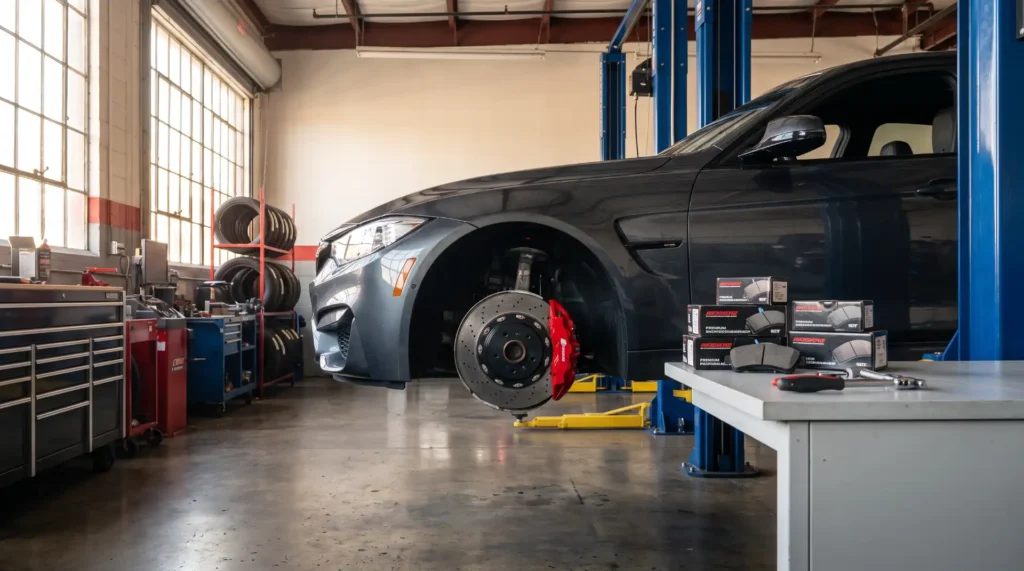 What Are Performance Brake Pads?
Performance brake pads replace the friction material inside the existing brake calipers. In most cases, you retain the original calipers and, depending on condition and compatibility, the factory-size rotors.
The important difference is the friction compound.
OEM brake pads generally prioritize quiet operation, predictable cold performance, low dust, long service life, and comfortable everyday behavior. Performance pads can shift that balance toward stronger initial bite, better high-temperature stability, improved resistance to fade, or more consistent pedal response during aggressive driving.
This is why changing pads can have such a noticeable effect without replacing the entire brake system.
A street-performance pad may work well from cold while providing greater temperature capability than the factory pad. More aggressive compounds designed for autocross or track use may tolerate considerably more heat but could introduce additional compromises such as noise, dust, rotor wear, or poor cold response.
The key is choosing a pad designed for how the car is actually driven.
What Is a Big Brake Kit?
A big brake kit, commonly shortened to BBK, usually replaces several major factory brake components. A typical front big brake kit may include larger-diameter rotors, multi-piston calipers, caliper mounting brackets, performance pads, and upgraded brake lines.
Some systems use one-piece iron rotors, while higher-end setups may use two-piece floating or semi-floating rotor designs with separate aluminum hats. The exact configuration varies widely depending on the vehicle and manufacturer.
The purpose is not simply to make the brakes physically larger. A properly engineered kit can increase the system’s ability to absorb and dissipate heat, improve pad pressure distribution, provide more consistent braking during repeated hard use, and sometimes reduce unsprung or rotating mass depending on the components used.
This is especially useful on vehicles that repeatedly build more heat than their original system can manage.
Large calipers and rotors also create the visual appearance many enthusiasts want. However, appearance should be considered a secondary benefit. Brake components should first be selected around engineering, fitment, balance, and intended use.
The Biggest Misconception About Big Brake Kits
One of the most common assumptions is that installing a bigger brake kit automatically allows a car to stop dramatically shorter in every situation.
That is not necessarily how braking performance works.
During a single maximum-effort stop, the tires often become the limiting factor once the factory brakes already have enough force to approach or activate the vehicle’s anti-lock braking system. If the tires cannot generate more grip, additional brake torque alone cannot magically create additional traction between the rubber and the pavement.
This is why tires and brakes should be considered together.
Auto Sport Performance’s guide on choosing performance tires explains why tire grip is so important for braking and handling. A powerful brake system paired with unsuitable tires may not provide the real-world improvement the owner expects.
Where a big brake kit can become especially valuable is during repeated hard stops. Larger rotors generally provide more thermal mass and potentially more surface area for heat management. That helps the braking system remain more consistent during situations where stock components may begin overheating.
Performance Brake Pads Can Be a Major Upgrade
Because full brake kits are highly visible and often expensive, enthusiasts sometimes underestimate what a properly selected pad can accomplish.
If the factory calipers and rotors are already adequately sized for the vehicle, the original weakness may simply be the OEM friction material.
Installing a suitable performance pad can improve initial response when the pedal is pressed, provide more predictable friction at elevated temperatures, and reduce the likelihood that the pad compound becomes overwhelmed during spirited driving.
For many street cars, this can produce most of the improvement the driver is actually looking for.
It is also a much more affordable entry point into brake modification. Rather than replacing calipers, rotors, mounting hardware, and possibly wheels, the driver can improve the braking system while retaining the factory architecture.
For a daily driver that sees occasional spirited use, performance pads often represent the best value.
When Performance Pads Are Usually Enough
A performance pad upgrade generally makes sense when the car is mostly driven on public roads and the factory brake system remains mechanically healthy.
Imagine a sport sedan used for commuting during the week and mountain-road driving on weekends. The owner wants more immediate brake response and better consistency during spirited driving but does not experience severe overheating or repeated fade. In this situation, a good street-performance pad may be all that is necessary.
The same can apply to a lightly modified coupe, hot hatchback, or muscle car used for occasional autocross events.
Autocross typically involves relatively short runs compared with road-course sessions, so the brake system may not accumulate the same level of sustained heat. Depending on the vehicle, tires and suspension can sometimes have a much greater effect on overall performance than an expensive brake kit.
If the budget is limited, enthusiasts may get more total performance by combining appropriate pads with good tires, fresh brake fluid, proper alignment, and suspension improvements rather than spending the entire budget on oversized brakes.
That systems-based approach is similar to the strategy discussed in Auto Sport Performance’s coilovers vs. lowering springs guide, where suspension modifications are evaluated according to real U.S. road conditions instead of appearance alone.
When a Big Brake Kit Starts Making Sense
A BBK becomes easier to justify when heat capacity becomes the real limitation.
Track-day driving is a common example. A road course can require repeated deceleration from high speeds several times per lap. The braking system may get only a few seconds to cool before being asked to absorb another major energy load.
A factory setup that feels excellent during one highway emergency stop may behave very differently after multiple hard braking zones at a circuit.
Heavier and more powerful vehicles may also place greater thermal demands on the brakes. Auto Sport Performance notes in its guide to performance upgrades for trucks and SUVs that heavier vehicles can benefit from brake improvements during towing, mountain driving, and other demanding conditions.
Performance cars that have gained substantial power can create a similar challenge because increased acceleration may lead to higher speeds before every braking zone. More speed means the brake system must repeatedly convert more kinetic energy into heat.
Heat Management Is the Real Reason Big Brakes Matter
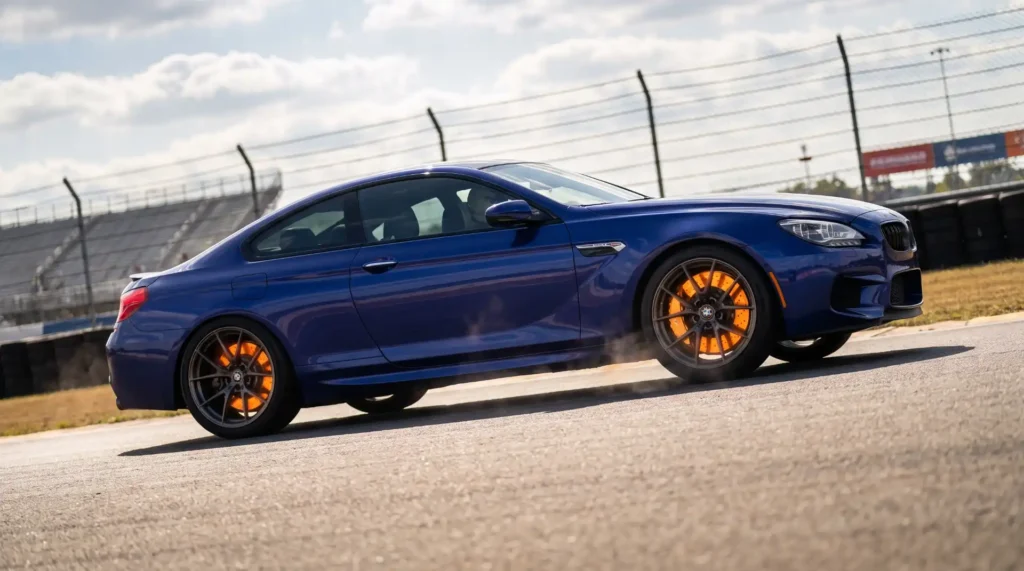 Heat Management Is the Real Reason Big Brakes Matter
The major advantage of a well-designed BBK is its ability to manage heat more effectively.
When brakes slow a moving vehicle, much of the vehicle’s kinetic energy is converted into thermal energy. The rotor absorbs a large portion of that heat before releasing it into the surrounding air.
A larger rotor can provide additional thermal capacity. Depending on its design, improved internal ventilation may also help air move through the rotor more effectively.
This can help keep the brake system inside a more stable operating range during repeated use.
That does not mean a larger rotor can never overheat. Any brake system has limits. Track speed, vehicle weight, ambient temperature, braking technique, pad compound, brake ducts, tire grip, and session length all influence thermal load.
The advantage is additional headroom.
A properly matched big brake kit gives a demanding driver more capacity before the system reaches those limits.
Multi-Piston Calipers: More Than Just Appearance
Large multi-piston calipers are often the most recognizable part of a BBK. Their appearance behind open-spoke wheels is one reason brake kits have become popular on show cars as well as track cars.
However, the engineering matters far more than piston count alone.
A properly designed multi-piston fixed caliper can distribute clamping pressure across a larger brake pad and provide a rigid structure that contributes to consistent pedal feel. Different piston sizes may also be used to help manage pressure distribution across the pad.
But more pistons do not automatically equal better braking.
Piston area, rotor diameter, master cylinder characteristics, front-to-rear brake balance, ABS calibration, pad compound, tire grip, and other variables all work together.
This is why installing a kit engineered for the exact vehicle is important. A collection of individually impressive parts does not guarantee a balanced braking system.
Street Driving Changes the Decision
Many performance modifications are designed around racetrack conditions, but most modified cars in the United States spend the majority of their lives on public roads.
Street driving places very different demands on brakes.
A commuter might make hundreds of light brake applications without ever approaching the temperature range that justifies a huge rotor and multi-piston caliper. The vehicle must also stop predictably after sitting overnight in cold weather, during rain, in traffic, and during low-speed driving.
Noise also matters much more on the street.
A race-oriented brake pad that squeals every time the car approaches a stoplight may be acceptable on a dedicated track vehicle but frustrating on a daily driver. Heavy dust can quickly coat wheels. Some aggressive friction compounds may also increase rotor wear.
The best street brake upgrade is therefore not the most extreme setup available. It is the combination that delivers the performance you need without creating unnecessary compromises.
Brake Pads vs. BBK for Canyon and Mountain Driving
Mountain roads create a middle ground between everyday commuting and circuit driving.
Long downhill sections can generate substantial brake heat, particularly if the driver remains on the brakes continuously rather than using appropriate gearing and controlled braking technique. A heavy vehicle makes the problem even more significant.
For occasional mountain driving, performance pads and fresh high-quality brake fluid may provide enough additional temperature capability.
Drivers who frequently push powerful vehicles through long mountain descents may eventually benefit from larger rotors and increased thermal capacity.
The decision should be based on actual symptoms. If properly matched pads and fluid remain consistent and the system is not overheating, there may be little reason to replace the entire brake assembly.
If the driver repeatedly exceeds the factory system’s thermal capacity, then a BBK becomes much easier to justify.
Track-Day Drivers Have Different Needs
For frequent road-course use, braking consistency becomes one of the most important performance considerations.
A driver may brake hard from triple-digit speeds several times every lap. Sessions can continue for 15, 20, or 30 minutes depending on the event. That is dramatically different from even aggressive street use.
In this environment, a big brake kit may provide several practical advantages. Larger rotors can increase heat capacity. Motorsport-oriented pad shapes may offer more compound choices. Some two-piece rotor systems make ring replacement easier once the friction surface reaches its wear limit.
A well-designed kit may also make maintenance easier for owners who regularly inspect and replace brake components between events.
Even then, a BBK should not be treated as a substitute for appropriate fluid, track-capable pads, proper cooling, and regular inspections.
Do Performance Brake Pads Shorten Rotor Life?
They can.
Friction compounds vary widely. Some performance pads are relatively gentle on rotors, while aggressive compounds designed to operate at high temperatures can increase rotor wear.
This is one of the compromises enthusiasts should understand before selecting a pad based entirely on marketing claims about friction or temperature range.
A street car usually benefits from a balanced compound that provides useful cold response, manageable noise, reasonable rotor wear, and enough temperature capability for its intended use.
A dedicated track vehicle can justify a different balance because maximum consistency at high temperatures may be more important than dust, noise, or long rotor life.
Brake Fluid Is Often the Forgotten Upgrade
Before purchasing expensive calipers, it is worth evaluating the brake fluid.
Brake fluid can absorb moisture over time, and its condition affects how it performs under heat. Under demanding braking, fluid temperature can rise significantly. If fluid reaches its boiling point, vapor may form within the hydraulic system and the pedal can become soft or travel farther than expected.
For enthusiasts who drive aggressively or attend track events, using appropriate fresh fluid and maintaining it according to the vehicle and fluid manufacturer’s recommendations can be extremely important.
In many cases, a street-performance braking package consisting of good pads, healthy rotors, suitable fluid, and quality tires provides a large improvement without requiring a full BBK.
What About Stainless Steel Brake Lines?
Braided stainless steel brake lines are another common supporting modification.
They do not inherently create more tire grip or magically shorten stopping distances. Their main appeal is usually pedal feel and resistance to expansion compared with aging or more compliant rubber hoses.
On some vehicles, they can contribute to a firmer, more direct pedal sensation.
However, installation quality is critical. Brake hoses are safety-related components. They must be routed correctly, secured properly, and kept away from tires, suspension parts, heat sources, and anything else that could damage them.
Drivers should also verify that aftermarket components are appropriate for street use and comply with applicable U.S. requirements.
Federal Brake Rules and Aftermarket Components
Brake modifications deserve more care than purely cosmetic upgrades because braking systems are safety-critical.
The National Highway Traffic Safety Administration’s guidance on aftermarket brake pads explains that there is not a single federal motor vehicle safety standard that applies specifically to replacement brake pads themselves. Instead, federal standards regulate complete braking systems for various vehicle classes, while aftermarket brake pads remain motor-vehicle equipment subject to safety-defect and recall provisions.
State requirements can also affect vehicle modifications and repair practices, so owners should check the rules that apply where their vehicle is registered and operated.
This is another reason to avoid selecting brake components purely on appearance or price.
Wheel Clearance Can Determine Whether a BBK Is Practical
One of the most overlooked big-brake-kit issues is wheel clearance.
Larger rotors require the caliper to sit farther outward from the hub. Larger multi-piston calipers can also extend farther toward the wheel spokes.
As a result, a wheel with the correct diameter may still fail to clear the caliper because of its spoke design, offset, or inner barrel dimensions.
Some brake manufacturers provide printable templates that allow owners to check wheel clearance before ordering a kit. This step should not be skipped.
Installing different wheels simply to accommodate a BBK can significantly increase the total project cost.
The combination also needs to maintain appropriate tire clearance, suspension clearance, load rating, offset, and overall fitment.
Unsprung and Rotating Weight Matter Too
Bigger brakes can add weight, although premium kits sometimes use lightweight multi-piece rotors and aluminum calipers to control mass.
Weight added at the wheel is particularly important because brake assemblies contribute to unsprung mass, and rotors also contribute to rotating mass.
A poorly chosen oversized setup could add unnecessary weight to a street car that never uses the additional thermal capacity.
This illustrates an important principle of performance modification: bigger is not automatically better.
The ideal brake system is large enough for the thermal demands of the vehicle without adding unnecessary mass, cost, or complexity.
Brake Balance Should Not Be Ignored
The front and rear brakes of a vehicle work as a coordinated system.
During deceleration, weight transfers toward the front axle, which is why front brakes generally handle a significant portion of the braking load. However, changing rotor diameter, caliper piston area, pad friction, or other characteristics can affect how braking force is distributed.
Modern vehicles also integrate anti-lock braking, electronic stability control, brake-based torque management, and other electronic systems.
For this reason, enthusiasts should use brake kits specifically engineered for their make, model, and intended application rather than assembling unrelated components simply because they physically fit.
Cost: Performance Pads vs. Big Brake Kits
Cost is one of the clearest differences between the two upgrade paths.
Performance pads can often be installed while retaining the vehicle’s stock calipers. Depending on rotor condition and driving goals, the rest of the system may require little additional hardware beyond routine maintenance items.
A complete big brake kit can cost several times more. Premium kits for high-performance vehicles may reach thousands of dollars before installation, replacement fluid, wheel changes, or supporting modifications are considered.
Replacement consumables may also cost more. Larger rotors and specialized pad shapes can be more expensive than factory-size components.
That does not make a BBK poor value. If the driver needs the additional heat capacity, the investment can make sense. But paying for unused capability rarely improves a daily driver.
Which Upgrade Is Better for a Daily Driver?
For most daily-driven performance cars, quality pads should usually be considered before a full big brake kit.
A well-chosen street-performance compound can sharpen response and provide additional temperature capability while preserving factory fitment, wheel clearance, and much of the original comfort.
Combine the pads with properly functioning rotors, fresh brake fluid, healthy tires, and a complete inspection of the brake system.
This approach is less expensive and often delivers exactly what the street driver wanted.
A BBK becomes more attractive when the vehicle repeatedly overheats its brakes, carries significantly more performance than stock, regularly tackles demanding mountain roads, or sees frequent track use.
Which Upgrade Is Better for a Track Car?
A track-focused car presents a much stronger case for a big brake kit.
The goal on track is not simply achieving one short stop. The system must provide predictable braking lap after lap while handling sustained heat.
Performance pads are still essential. In fact, a big brake kit with an unsuitable pad compound can still perform poorly.
But increased rotor capacity, rigid multi-piston calipers, appropriate cooling, and track-oriented consumables can create a much more robust package for repeated high-energy braking.
Drivers who regularly participate in track days should evaluate the brake system as a whole rather than asking whether pads or calipers alone are the answer.
Which Upgrade Is Better for a High-Horsepower Street Build?
Horsepower by itself does not automatically require larger brakes.
A 600-horsepower car driven gently to work every day may put less thermal stress on its brakes than a lower-powered car driven hard around a road course.
However, high-powered builds often reach higher speeds more quickly. If the driver regularly uses that performance, the brakes have to dissipate more energy when slowing the car back down.
This is especially relevant if engine upgrades are combined with sticky performance tires. Greater tire grip can allow the brake system to generate higher deceleration forces without reaching the traction limit as quickly.
At that point, better pads may be the first step, followed by additional thermal capacity if real-world driving reveals that the factory hardware is becoming the limiting factor.
Do Not Upgrade Before Inspecting the Existing System
Modification should never be used to hide a maintenance problem.
Before installing performance components, inspect the condition of the existing brake system. Uneven pad wear, seized guide pins, damaged hoses, worn rotors, old fluid, leaking components, or malfunctioning calipers should be repaired first.
NHTSA-hosted brake maintenance materials emphasize regular inspection of pads, rotors, clearances, hoses, calipers, and related components.
A healthy factory braking system provides the baseline from which meaningful upgrades can be evaluated.
How to Choose Between Pads and a BBK
Instead of asking which option is objectively better, consider what problem you are trying to solve.
If you want improved pedal response and greater confidence during spirited street driving, start with quality performance pads and appropriate fluid.
If you experience brake fade during repeated high-speed braking, larger rotors and greater thermal capacity may be warranted.
If you attend a few autocross events each year, factory-size brakes with appropriate pads may be completely adequate.
If you attend road-course events regularly, a properly engineered BBK may provide the consistency and serviceability you need.
If appearance is the main goal, recognize that a BBK can look impressive but may provide little usable benefit if the car never approaches the limits of its factory braking system.
The Best Upgrade Often Happens in Stages
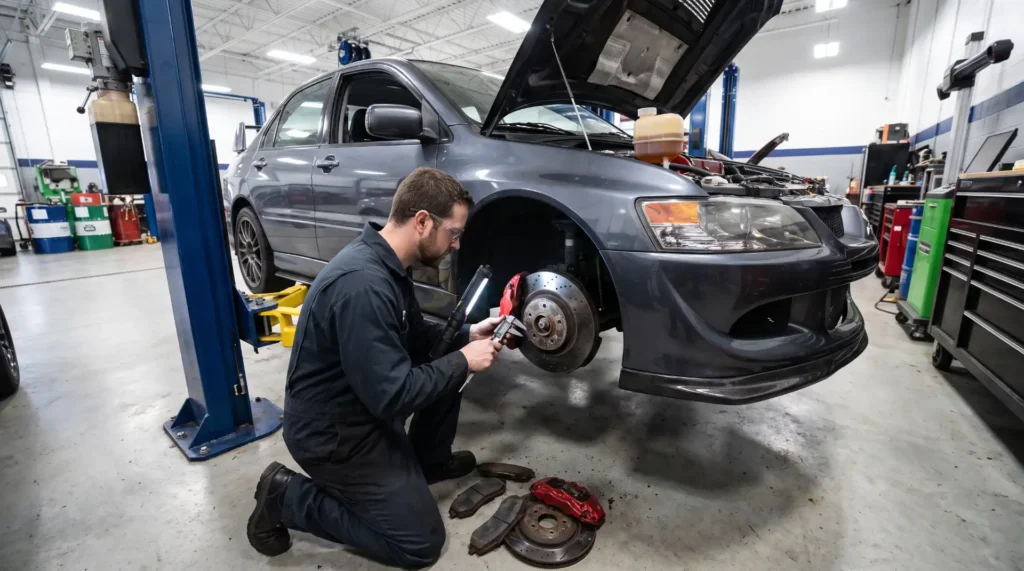 The Best Upgrade Often Happens in Stages
For many enthusiasts, the smartest approach is incremental.
Begin with maintenance. Make sure the stock system is healthy.
Next, install a street-performance pad that matches your driving style. Add fresh, appropriate brake fluid and evaluate how the car responds.
Then address tires if the vehicle does not already have adequate grip.
If repeated hard driving still causes fade or excessive heat, you now have evidence that the stock system is reaching its thermal limits. At that point, the cost of a BBK is easier to justify because you know what problem it needs to solve.
This approach avoids buying expensive hardware simply because it appears on a popular build list.
Big Brake Kits vs. Performance Brake Pads: Final Verdict
The choice between big brake kits vs performance brake pads ultimately depends on how much heat your braking system must manage and how the vehicle is actually used.
For most U.S. street-performance cars, quality brake pads are the logical first upgrade. They can improve bite, consistency, and high-temperature behavior while keeping cost and complexity under control.
A big brake kit becomes a stronger investment when repeated high-energy braking exposes the limits of factory-size rotors and calipers. Frequent track days, heavy vehicles, long mountain descents, highly modified performance builds, and sustained aggressive driving can all create conditions where extra thermal capacity becomes valuable.
Neither option works in isolation. Tire grip, brake fluid, rotor condition, wheel fitment, suspension setup, vehicle weight, and driver technique all influence the result.
The smartest performance build is not the one with the largest components. It is the one where every component is matched to the vehicle’s real purpose.
If your car is primarily a daily driver with occasional spirited use, start with pads, fluid, and a complete brake inspection. If you consistently exceed what that setup can handle, then a properly engineered big brake kit may be the next logical step.
For more ways to build a balanced performance car, explore Auto Sport Performance’s guides to choosing performance tires, coilovers vs. lowering springs, and affordable performance upgrades under $1,000.