
Older performance cars offer something that many enthusiasts still value: mechanical character, distinctive styling, engaging driving experiences, and a strong connection between the driver and the machine. Whether you own a classic American muscle car, a Japanese sports coupe from the 1990s, an older European performance sedan, or a modified weekend car, keeping it dependable requires more than occasional oil changes and replacement tires.
As vehicles age, electrical connections deteriorate, sensors become less reliable, rubber components harden, and certain original parts become increasingly difficult to find. Even a well-maintained engine can become frustrating to own when a discontinued electronic module or an obscure sensor prevents the car from running properly.
The good news is that modern diagnostic equipment, better parts research, improved replacement components, and preventive maintenance strategies can help extend the useful life of an older performance vehicle.
Learning how to future-proof an older performance car means preparing it for the next several years of ownership rather than waiting for the next breakdown. The objective is not to modernize every component or remove the character that makes the car special. Instead, it is to improve reliability, simplify repairs, protect valuable mechanical systems, and make future maintenance more predictable.
For U.S. car enthusiasts, this approach is especially useful when dealing with discontinued parts, regional climate differences, emissions requirements, and the challenges of maintaining modified vehicles. A thoughtful plan can help you enjoy your car longer without spending money on unnecessary upgrades.
Why Future-Proofing an Older Performance Car Matters
A performance car can remain mechanically impressive long after its supporting components begin to deteriorate. An engine might still produce strong power, but an aging wiring harness, weak alternator, failing coolant sensor, or deteriorating fuel hose can undermine the entire driving experience.
These problems often develop gradually. The engine may start normally in the morning but struggle after a hot restart. A temperature gauge might behave inconsistently, or the car may hesitate during acceleration without displaying an obvious warning light. In other cases, an electrical problem can appear only when the headlights, cooling fans, and other accessories are operating simultaneously.
Replacing parts without identifying the cause can quickly become expensive. Future-proofing encourages a more systematic approach that combines diagnostics, maintenance records, compatibility research, and careful component selection.
Parts availability is another reason to plan ahead. Common maintenance items may remain easy to obtain, while specialized control modules, trim-specific sensors, discontinued switches, and components from limited-production models may require considerably more research.
An owner who discovers these limitations before a failure has more options. It becomes possible to identify reputable suppliers, investigate professional rebuilding services, and determine which components deserve attention first.
Future-proofing also helps protect the value of the vehicle. Documented maintenance, properly installed modifications, and a clear record of replacement parts make a car easier to service and can provide reassurance to a future buyer. This is particularly important for enthusiast vehicles where originality, mechanical condition, and the quality of previous modifications influence long-term desirability.
1. Start With a Complete Mechanical and Electrical Inspection
Before purchasing new diagnostic equipment or ordering performance parts, establish the car’s current condition. This step creates a baseline that helps distinguish existing problems from issues introduced by later modifications.
Begin with a visual inspection of the engine compartment, underbody, suspension, brakes, and electrical connections. Look for fluid leaks, cracked hoses, deteriorated insulation, loose grounds, damaged connectors, corrosion, and evidence of previous repairs. Pay attention to areas where moisture can collect, including battery trays, trunk compartments, floor panels, and locations around windshield seals.
Rust deserves particular attention on older vehicles. Surface corrosion on a replaceable bracket is different from structural corrosion affecting frame rails, suspension mounting points, or unibody sections. If structural damage is suspected, have the car evaluated by a qualified professional before investing in major performance upgrades.
Next, review the available service history. Look for records of timing belt replacement, spark plug changes, coolant service, transmission maintenance, brake fluid replacement, and previous engine repairs. If documentation is missing, avoid assuming that important maintenance was completed simply because the vehicle appears clean.
Modified cars require additional scrutiny. Previous owners may have installed larger injectors, aftermarket engine management, replacement sensors, electric cooling fans, or nonstandard wiring. These modifications are not necessarily problematic, but they should be documented and checked for proper installation.
Create a prioritized list of findings. Safety-related issues should come first, followed by reliability concerns and then optional performance improvements. This prevents an expensive upgrade from being undermined by a neglected charging system, damaged fuel line, or worn suspension component.
For a vehicle with an unknown history, a professional inspection can be a worthwhile investment. A mechanic familiar with the particular platform may recognize common weaknesses and identify components that are difficult to diagnose without specialized tools.
2. Choose Modern Diagnostic Tools That Match Your Vehicle
Modern diagnostics can make troubleshooting an older performance car more precise, but the right equipment depends on the vehicle’s age and electronic systems.
Most light-duty vehicles sold in the United States from the 1996 model year onward use standardized OBD-II diagnostic systems. These systems provide access to emissions-related fault codes and other supported information through a diagnostic connector. However, older cars may use manufacturer-specific systems, proprietary connectors, limited electronic monitoring, or no onboard diagnostic computer capable of reporting modern fault codes.
Before purchasing a scanner, confirm that it supports your vehicle’s model year, engine management system, communication protocol, and required functions.
A basic OBD-II reader may be sufficient for checking common fault codes. More capable tools can display live sensor data, freeze-frame information, readiness monitors, and additional manufacturer-specific parameters when supported.
Older performance cars may require a dedicated diagnostic interface, compatible software, factory service information, or help from a specialist. Enthusiast communities can sometimes identify compatible tools, but always confirm recommendations against reliable technical documentation.
Avoid selecting a scanner based solely on claims that it works with every vehicle. Some tools provide only generic engine codes, while advanced functions may require additional adapters, subscriptions, or software licenses.
Understand What Diagnostic Trouble Codes Actually Mean
A diagnostic trouble code identifies a detected condition, not necessarily the component that has failed. A code associated with an oxygen sensor, for example, may result from a defective sensor, damaged wiring, an exhaust leak, a fuel-delivery problem, or another issue affecting the measured signal.
Replacing the sensor immediately may not solve the underlying problem.
Record the code and any available freeze-frame data before clearing it. Note the engine temperature, vehicle speed, engine load, and circumstances surrounding the fault. Then follow the relevant diagnostic procedure to test the circuit or component.
This approach preserves useful information and reduces unnecessary parts replacement. It is particularly valuable when an older vehicle has intermittent problems that are difficult to reproduce during a short workshop visit.
For more information about how emerging technology can support vehicle troubleshooting, read Auto Sport Performance’s guide to AI-powered car performance tuning and diagnostics. The same principle applies whether the technician uses advanced software or traditional diagnostic instruments: measurements should guide the repair.
3. Learn to Use Live Data and Traditional Testing Together
A scanner becomes more useful when you understand the information it provides. Depending on the vehicle, live data may include coolant temperature, intake-air temperature, engine speed, fuel trims, throttle position, oxygen sensor activity, and other operating parameters.
Consider a modified performance car that hesitates under acceleration. A single fault code may not explain the problem, but a combination of sensor readings, fuel trims, and operating conditions may help narrow the possibilities.
Temperature information is especially useful for vehicles that have received engine modifications. A larger turbocharger, higher boost pressure, or more aggressive calibration can increase thermal demands. Monitoring available data helps determine whether temperatures remain stable during the conditions in which the car is driven.
Establish a baseline by recording normal readings during a cold start, warm idle, highway cruise, and other appropriate operating conditions. Compare future readings under similar circumstances rather than assuming that every change indicates a failure.
Not every older car provides extensive electronic data. Traditional testing remains essential when sensor information is unavailable or unreliable.
A digital multimeter can help evaluate electrical circuits. A compression tester can provide information about engine cylinder condition. A fuel-pressure gauge may help identify fuel-delivery problems, while cooling-system pressure testing can reveal leaks that are not obvious during a visual inspection.
The strongest diagnostic process combines electronic information with physical testing. If the readings do not make sense, verify the sensor, wiring, and test conditions before replacing parts.
 4. Modernize the Electrical System Without Creating New Problems
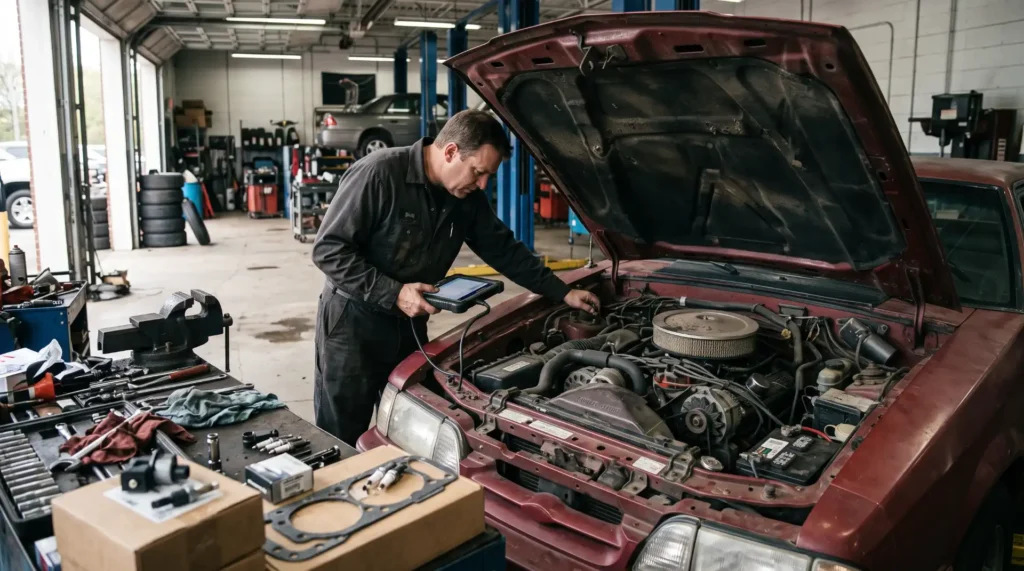 4. Modernize the Electrical System Without Creating New Problems
Electrical reliability is one of the most important elements of long-term performance-car ownership. Over time, insulation can become brittle, connectors can corrode, grounds can loosen, and previous owners may add accessories without adequately protecting the wiring.
These weaknesses become more significant when installing upgraded lighting, electric cooling fans, aftermarket fuel pumps, additional gauges, or an audio system. Each accessory adds electrical loads and connections that must be designed correctly.
Check the Battery, Alternator, and Ground Connections
Start with the basics. Inspect the battery, terminals, charging cables, alternator connections, and engine-to-chassis grounds. A weak ground can produce symptoms that appear unrelated, including inconsistent gauges, intermittent sensor signals, and starting difficulties.
Voltage-drop testing under the appropriate electrical load can help identify resistance in cables and connections. This is often more informative than checking continuity with the system switched off.
If the car experiences repeated charging problems, test the complete circuit instead of automatically replacing the alternator. A weak battery, damaged cable, poor connection, or excessive accessory load may be responsible.
Older cars that have received multiple electrical modifications deserve special attention. Inspect added wiring for appropriate wire gauge, secure connections, proper routing, and correctly sized circuit protection.
Repair Wiring With Automotive-Grade Materials
Electrical repairs should use materials suited to the vehicle’s environment. Choose automotive-grade wire of the appropriate gauge, suitable terminals, correct crimping tools, and protection appropriate to the location and temperature.
Fuses must be selected to protect the wiring and circuit. Installing a fuse with an unnecessarily high rating can allow a damaged wire to overheat before the circuit opens.
Keep modifications documented. Label added circuits, record fuse ratings, and maintain a diagram showing power sources, grounds, and wiring routes. Preserving the original harness where practical makes future diagnosis easier.
For complex engine management, immobilizer systems, or recurring electrical faults, professional assistance may be the safest option. Poorly executed wiring modifications can introduce difficult-to-trace problems and, in severe cases, create a fire risk.
5. Build a Replacement-Parts Strategy Before Components Fail
One of the biggest challenges in maintaining an older performance car is identifying which components remain readily available and which could leave the vehicle unusable if they fail.
Routine items such as filters, spark plugs, belts, and certain brake components may still be widely stocked. Specialized electronic modules, model-specific sensors, discontinued switches, and limited-production components can be considerably harder to obtain.
Start by dividing potential replacements into three groups: routine maintenance parts, components with known reliability concerns, and hard-to-find parts that could cause extended downtime.
This simple system helps prioritize research without encouraging unnecessary stockpiling.
Prioritize Parts That Are Difficult to Replace
Consider which components could prevent the car from starting, running safely, or passing required inspections. A specialized control module or discontinued transmission sensor may deserve more attention than an easily available air filter.
Research the actual availability of parts for your specific model, engine, transmission, and production year. Do not assume that all components become scarce at the same rate.
If a critical component remains available from a reputable supplier, purchasing a replacement in advance may make sense when the part has a documented failure history or a long lead time. However, storage conditions matter. Rubber seals, batteries, fluids, and certain electronic components can deteriorate even when unused.
For discontinued electronics, investigate whether a specialist offers testing, rebuilding, or repair. A properly refurbished original module may sometimes be preferable to an inexpensive replacement with uncertain compatibility.
Keep part numbers, supplier details, warranty information, and installation notes in a dedicated record. This information is especially useful when different versions of a component exist for different production dates or engine configurations.
Choose OEM, Aftermarket, or Refurbished Components Carefully
Original equipment manufacturer parts can offer strong fitment confidence, but availability and pricing vary. Quality aftermarket parts can be practical alternatives when a supplier has a good reputation and provides accurate compatibility information.
Refurbished components may be useful when new parts are discontinued. Their value depends on the rebuilder’s testing procedures, replacement materials, technical support, and warranty.
Be cautious with marketplace listings that use broad compatibility claims or generic photographs. A component may physically fit while having a different connector, calibration, resistance value, or operating range.
Before ordering, verify the part number against the vehicle identification number (VIN), engine code, production date, and applicable service information. For expensive electronic components, ask the supplier to confirm compatibility before purchasing.
Auto Sport Performance’s article on OEM versus aftermarket gas caps provides a related example of why replacement-part fit and quality matter. Although a gas cap is a relatively small component, incorrect fitment can affect the evaporative-emissions system and trigger a warning light.
6. Protect the Cooling and Lubrication Systems
Cooling and lubrication maintenance should be a priority for any older performance car. Aging radiators, water pumps, thermostats, hoses, seals, oil coolers, and fittings can gradually reduce reliability.
A cooling system should be evaluated as a complete system. Installing a larger radiator will not solve every overheating problem if the water pump is weak, the thermostat is incorrect, the radiator is obstructed, or airflow through the cooling package is inadequate.
Inspect hoses for cracking, soft spots, swelling, abrasion, and contact with moving or hot components. Check for dried coolant residue around joints and inspect the expansion tank and radiator cap according to the manufacturer’s procedures. A cooling-system pressure test can reveal leaks that are not obvious when the engine is cold.
Pay attention to the conditions under which overheating occurs. A car that overheats in traffic but remains cool at highway speeds may have a fan or airflow problem. Rising temperatures under sustained high load may indicate a different limitation. These observations help determine which tests are necessary.
Lubrication deserves equal attention. Use oil that meets the engine’s required specifications and viscosity recommendations for the intended climate and operating conditions. Modified engines may require advice specific to their design, but thicker oil should not automatically be treated as a cure for wear.
Inspect for leaks, monitor oil consumption, and follow an appropriate service schedule. Track use, repeated high-RPM operation, extreme temperatures, and long periods of storage may require different maintenance considerations from ordinary commuting.
Auto Sport Performance’s guide to coolant and thermal upgrades provides additional information about radiator performance, cooling fans, hoses, and heat management. These systems become especially important when an older car receives modifications that increase engine output.
7. Replace Aging Rubber, Plastic, and Fuel-System Components
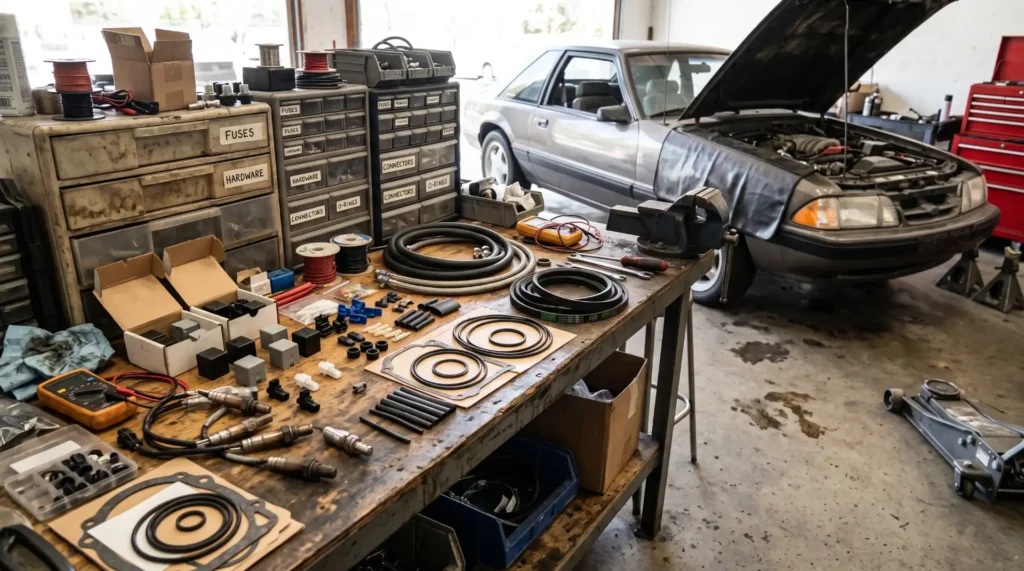 7. Replace Aging Rubber, Plastic, and Fuel-System Components
Metal components often receive the most attention during a performance build, but aging rubber and plastic parts can have an equally significant effect on reliability.
Vacuum hoses may crack and create air leaks. Fuel hoses can deteriorate internally or become unsuitable for the fuel being used. Coolant hoses can soften, while suspension bushings may develop excessive movement that changes handling and alignment.
Inspect fuel-system components particularly carefully. Replacement hoses, seals, and fittings must be rated for their location, operating pressure, temperature, and fuel type. A hose intended for a low-pressure carbureted application may not be suitable for a modern high-pressure fuel-injection system.
Do not assume that a component is safe simply because it looks intact. Some materials deteriorate internally, while heat, oil, road salt, and ultraviolet exposure can accelerate aging.
Suspension bushings also deserve a measured approach. Fresh bushings can improve steering precision and reduce unwanted movement, but their material and stiffness affect ride quality, vibration, and noise. A daily-driven car may benefit from a different setup than a dedicated track vehicle.
Replace components according to their condition, service requirements, and known platform weaknesses. When several connected parts are worn, addressing them together may be more efficient, provided the work is planned carefully and the correct adjustment procedures are followed.
8. Keep Engine Management Compatible With Future Repairs
Many enthusiasts modify older performance cars with upgraded injectors, intake systems, ignition components, camshafts, or forced induction. Such changes can be worthwhile, but they must work with the vehicle’s engine management system.
A replacement sensor may have different electrical characteristics from the original. An injector may require different calibration. A modified intake can change airflow measurements, while an exhaust change may affect sensor readings and emissions performance.
Before purchasing an upgrade, confirm that it is compatible with the existing control strategy. Determine whether the original computer can accommodate the change, whether calibration is necessary, and whether the supplier provides technical support for your specific vehicle.
Avoid stacking modifications without understanding their combined effect. Several individually reasonable changes can produce poor drivability when their requirements conflict. Keep records of installed parts, calibration files, relevant settings, and the date of each modification.
For road-going vehicles in the United States, emissions compliance must remain part of the decision. Federal law restricts tampering with required emissions controls and the use of aftermarket defeat devices. Some states also impose additional inspection or emissions requirements.
Before installing an engine-management product, verify that it is appropriate for the vehicle’s intended use and complies with applicable federal and state requirements. When a modification may affect emissions compliance, consult the relevant government guidance and a qualified professional before proceeding.
9. Protect Braking, Steering, and Suspension Reliability
An older performance car should remain predictable and controllable as well as powerful. Braking, steering, and suspension components deserve the same long-term attention as the engine.
Inspect brake hoses, hard lines, calipers, rotors, pads, wheel bearings, and brake fluid. Corrosion can be especially concerning in regions where winter road salt is common. A car that has spent years in a dry climate may have very different underbody conditions from one driven through harsh northeastern winters.
Brake upgrades should be selected for the intended application. Larger brakes may offer benefits under repeated heavy braking, but the complete system must be considered, including wheel clearance, master-cylinder compatibility, pad selection, fluid requirements, and front-to-rear balance.
For street-driven cars, a properly maintained factory-style braking system may be entirely appropriate. Track use introduces different temperatures and loads, so dedicated track preparation may require additional inspection and maintenance.
Steering and suspension parts also influence safety and tire wear. Worn ball joints, tie-rod ends, control-arm bushings, and dampers can compromise handling. After relevant repairs or modifications, obtain an alignment using specifications suitable for the vehicle and its intended use.
Do not overlook tires. Check their manufacturing dates, condition, load and speed ratings, and suitability for the car’s power and suspension setup. A high-performance tire that has aged significantly or been damaged during storage may not provide the grip its appearance suggests.
10. Use VIN Research and Technical Documentation
A vehicle identification number can help distinguish one configuration from another, particularly when a model was produced with multiple engines, transmissions, brake packages, or electronic systems.
Use the VIN alongside the production date and engine code when researching replacement parts. VIN-based catalogs can be helpful, but older vehicles, midyear production changes, and previous modifications can create exceptions. Verify critical components against the actual car and reliable service information.
The National Highway Traffic Safety Administration provides an official AI-powered car performance tuning and diagnostics that allows owners to check for certain unrepaired safety recalls. This is an important step when evaluating an older vehicle, although the recall lookup does not replace a mechanical inspection or a complete review of service history.
Build a digital folder containing the owner’s manual, factory service manual where legally obtained, wiring diagrams, torque specifications, parts catalogs, and receipts. Include photographs of original connectors, hose routing, and assemblies before disassembly. These records can save time when repairs take place months or years apart.
Enthusiast forums and owner groups can help identify recurring problems and discontinued components. Treat community advice as a starting point rather than unquestionable authority. Confirm safety-critical information against factory documentation or a qualified specialist.
11. Make Preventive Maintenance Measurable
A future-proofing plan works best when maintenance is documented rather than based on memory. Create a log that records mileage, dates, parts installed, fluids used, diagnostic codes, and unresolved concerns.
For a weekend car that travels only a few thousand miles annually, calendar-based maintenance may matter as much as mileage-based service. Brake fluid, coolant, tires, and certain rubber components can age even when the vehicle is rarely driven.
Record changes in behavior as well. Note difficult cold starts, longer cranking times, unusual noises, new vibrations, temperature fluctuations, and changes in fuel consumption. Small observations can help identify developing faults before they cause a breakdown.
Where practical, establish a baseline for battery voltage, charging performance, engine temperatures, fluid levels, and other relevant measurements. Comparing future readings with the baseline can make gradual deterioration easier to recognize.
Preventive maintenance does not mean replacing everything early. Unnecessary repairs introduce costs and can create new faults, especially when replacement-part quality varies. The goal is to use evidence, service requirements, and known failure patterns to decide what deserves attention.
12. Store Spare Parts and Protect Them Properly
Keeping selected spare parts can be sensible when a car depends on components that are difficult to source. However, indiscriminate stockpiling can waste money and leave parts deteriorating on a shelf.
Choose spares according to the vehicle’s weaknesses, expected usage, replacement lead times, and the consequences of failure. Small electrical components, model-specific sensors, relays, and certain service parts may be easier to store than large assemblies.
Keep parts in their original packaging when possible, label them clearly, and store them in a dry environment with stable temperatures. Follow manufacturer storage guidance for batteries, seals, fluids, and other products with limited shelf life. Periodically review the inventory so that obsolete or degraded parts are not mistaken for usable replacements.
When a part is difficult to find, research more than one supply route. Options may include specialist performance suppliers, marque-specific dismantlers, reputable rebuilders, manufacturer parts departments, and established enthusiast networks.
Before purchasing used electronic components, investigate whether they require programming, immobilizer pairing, coding, or compatibility checks. A cheap used module may become an expensive mistake if it cannot be installed without additional specialist work.
13. Decide Which Modern Upgrades Are Worthwhile
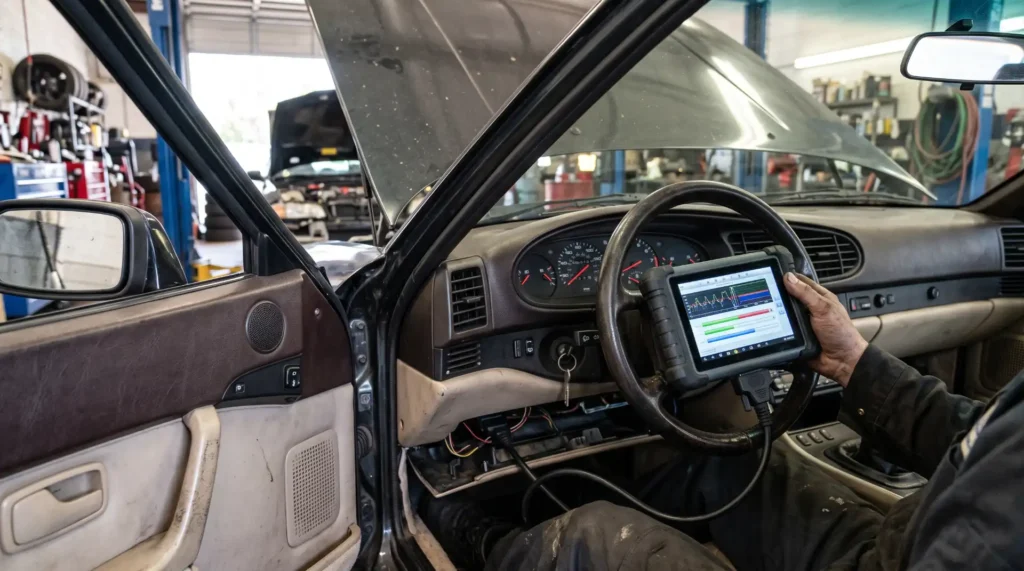 13. Decide Which Modern Upgrades Are Worthwhile
Not every older performance car benefits from extensive modernization. The best upgrades address a real weakness without introducing disproportionate complexity.
A quality battery, reliable charging system, improved lighting where legally compliant, accurate temperature monitoring, dependable cooling components, and sound electrical connections can often provide more everyday value than a collection of cosmetic modifications.
For some vehicles, replacing a failing original component with a well-engineered updated design can improve reliability. For others, retaining a proven factory component is preferable to installing a poorly supported aftermarket alternative.
Consider reversibility when making changes. Keeping original parts, avoiding unnecessary cutting of the wiring harness, and documenting modifications can help preserve future repair options. Reversible changes may also appeal to collectors or owners who want to return the car to its original specification later.
Evaluate each upgrade against four questions. Does it solve a demonstrated problem? Is it compatible with the existing vehicle? Can it be serviced in the future? Does it preserve safety and applicable legal compliance?
A modification that cannot be maintained or diagnosed easily may create more long-term inconvenience than benefit. Reliability should be part of the performance plan from the beginning.
14. Build a Practical Five-Year Ownership Plan
A five-year plan does not need to predict every failure. Its purpose is to organize maintenance, identify risks, and spread costs over a reasonable period.
During the first year, establish the vehicle’s condition, correct safety issues, test the electrical and cooling systems, and assemble service documentation. Replace overdue maintenance items based on inspection and reliable service guidance.
During the second year, address identified weak points and improve the availability of critical parts. This might involve rebuilding a hard-to-find module, replacing deteriorated hoses, or finding a reputable supplier for a specialized sensor.
In the third year, review the car’s performance and reliability records. If recurring problems appear, investigate the underlying causes rather than repeatedly replacing individual components. Reassess previous modifications to determine whether they remain appropriate for the car’s intended use.
In the fourth year, evaluate major age-related systems such as suspension components, fuel delivery, cooling equipment, and electrical connections. Prioritize work according to condition and expected service life rather than following an arbitrary replacement schedule.
By the fifth year, review the maintenance record, update the spare-parts inventory, and revise the plan based on what has changed. Parts that were readily available several years earlier may have become scarce, while improved replacement solutions may have emerged.
The schedule should always follow the vehicle’s actual needs. A frequently tracked car, a daily-driven sports coupe, and a collector vehicle that spends most of its time stored will require different approaches.
15. Know When to Call a Specialist
DIY maintenance is an important part of enthusiast ownership, but some problems warrant professional support. Complex intermittent electrical faults, internal engine damage, fuel leaks, advanced control-module issues, and safety-critical structural repairs can require specialized equipment and experience.
A specialist familiar with the particular make or platform may have access to diagnostic procedures, known-good test components, rebuilt modules, and technical information that general repair shops do not routinely use.
Before authorizing work, explain the symptoms, provide previous diagnostic results, and share the maintenance history. Ask whether the shop will diagnose the fault before replacing parts and whether it can explain the evidence supporting its recommendation.
Request an itemized estimate when appropriate, and keep the resulting documentation with the vehicle’s records. A well-documented repair history improves future troubleshooting and helps another technician understand what has already been tested.
Professional help should not be seen as a failure of DIY ownership. The objective is to maintain a reliable performance car while avoiding unnecessary costs and unsafe repairs.
16. Prepare the Car for Long-Term Storage and Seasonal Driving
Many American enthusiasts store performance cars during winter, particularly in regions with snow, road salt, and freezing temperatures. Others use their vehicles only on weekends or during warmer months. Storage introduces its own maintenance requirements.
Before storing the vehicle, follow the manufacturer’s guidance for fluid service, battery maintenance, tire care, and fuel-system preparation. Keep the car in a secure, dry location when possible, and address existing leaks or mechanical issues before leaving it unused for an extended period.
Battery maintainers can be useful when approved for the battery type and connected according to the manufacturer’s instructions. Check that the storage environment is suitable and that charging equipment is used safely.
Tires can develop flat spots or lose pressure during prolonged storage. Follow the tire manufacturer’s recommendations and check pressures before returning the vehicle to the road. Inspect for signs of rodent damage, especially around wiring, hoses, and air-intake components.
When bringing a stored car back into service, do not simply start the engine and immediately drive aggressively. Check fluid levels, inspect the tires and brakes, verify that no leaks have developed, and confirm that the battery and charging system are functioning correctly. If the vehicle has been stored for a long time, a more comprehensive inspection may be appropriate.
Seasonal planning also matters for cars driven year-round. Coolant must provide appropriate protection for the local climate, while tires and battery performance can be affected by temperature extremes. Planning for the conditions in which the vehicle will actually operate helps prevent avoidable failures.
17. Balance Originality With Reliability
One of the most important decisions in maintaining an older performance car is deciding how much to modernize it. Some owners want a vehicle that remains close to factory specification, while others prioritize improved drivability, safety, and convenience.
Neither approach is automatically correct. The right balance depends on the vehicle’s condition, intended use, budget, and long-term ownership goals.
For a collectible car, retaining original components where practical may help preserve its character and value. If a component is unreliable or no longer serviceable, a reversible upgrade may be a reasonable compromise. Keep the original part when feasible and document why the change was made.
For a frequently driven car, reliability improvements may take priority over strict originality. Better-supported replacement components, carefully engineered electrical improvements, and modern diagnostic access can make routine use easier without changing the fundamental driving experience.
Avoid modifying a system simply because a newer alternative exists. A modern component may introduce additional electronics, compatibility requirements, or specialized service needs. Evaluate the benefits and long-term support before making the change.
The best future-proofing decisions are deliberate. They improve the vehicle’s weaknesses while preserving the qualities that made it worth owning in the first place.
Conclusion: Keep Your Older Performance Car Ready for the Future
Future-proofing an older performance car is a long-term process built around informed maintenance, reliable diagnostics, and sensible parts sourcing. The most valuable improvements are often not the most dramatic. A sound electrical system, accurate fault diagnosis, healthy cooling components, compatible replacement parts, and complete service records can make an aging vehicle substantially easier to own.
Start by understanding the car’s condition, then prioritize safety and reliability before adding performance modifications. Select diagnostic tools that match the vehicle’s systems, verify parts compatibility, and document every repair and upgrade. Research safety recalls and applicable emissions requirements as part of responsible ownership.
Avoid replacing components without a clear reason. An older performance car does not need to become a modern vehicle to remain enjoyable. With a thoughtful maintenance strategy and access to the right parts and technical information, it can retain its distinctive character while becoming more dependable and easier to service for years to come.
The most effective strategy is to plan before something fails. Know which components are difficult to source, keep reliable service records, learn how your vehicle’s diagnostic systems work, and build relationships with reputable suppliers and specialists. These steps can reduce downtime, improve repair decisions, and help control the cost of ownership.
Ultimately, future-proofing is about preserving the driving experience. Whether your car is a classic V8, an older Japanese tuner, or a European sports coupe, a well-maintained and carefully documented vehicle gives you more opportunities to enjoy the road and fewer reasons to leave it in the garage.