
Aftermarket performance parts have become an important part of American automotive culture, giving vehicle owners more opportunities to improve horsepower, handling, braking, acceleration, and overall driving enjoyment. Whether someone drives a Ford Mustang, Chevrolet Camaro, Dodge Challenger, Subaru WRX, BMW M3, Honda Civic Type R, or another performance-oriented vehicle, there is an enormous selection of aftermarket products designed to change how the vehicle looks, sounds, and performs. Some modifications offer measurable improvements in specific driving conditions, while others primarily provide cosmetic changes or a more aggressive exhaust note. The challenge for buyers is determining which products deliver genuine value and which ones create additional expenses without producing meaningful results.
In 2027, choosing aftermarket components requires more consideration than simply comparing horsepower claims or selecting the most popular product in an online automotive store. Modern vehicles rely on sophisticated engine management systems, electronic transmissions, emissions controls, sensors, and integrated safety technologies. A modification that appears straightforward may affect several connected systems, especially when it involves engine calibration, turbocharger operation, suspension geometry, or electronic controls. A poorly matched component can create warning lights, drivability problems, increased maintenance requirements, or unexpected repair expenses.
The financial side of performance modifications also deserves attention. A $500 intake system may seem affordable, but installation, calibration, supporting hardware, and additional maintenance can increase the actual investment. A more expensive suspension or brake upgrade might provide greater everyday benefits because it improves how the vehicle responds during cornering and braking rather than simply increasing peak engine output. The best modification is therefore not necessarily the one that produces the biggest advertised number. It is the component that provides a meaningful improvement while maintaining reasonable reliability, safety, and operating costs.
For American performance enthusiasts, aftermarket performance parts can absolutely be worth the investment when they are selected carefully. Understanding the differences between OEM and aftermarket products, evaluating real-world gains, calculating total ownership costs, and checking compatibility before installation can help drivers make better purchasing decisions. This guide examines the most common performance upgrades, their advantages and disadvantages, and how to determine whether they are genuinely worthwhile for a particular vehicle.
1. What Are Aftermarket Performance Parts?
Aftermarket performance parts are components manufactured by companies other than the original vehicle manufacturer and designed to replace, modify, or improve existing vehicle systems. Unlike ordinary replacement parts that simply restore factory operation, performance-oriented aftermarket components are often developed to provide specific improvements in airflow, engine output, braking capacity, suspension response, cooling efficiency, weight, or durability. Their purpose can range from making a daily driver more responsive to transforming a factory sports car into a dedicated track vehicle.
The aftermarket industry includes a wide variety of products. Engine-related upgrades include cold air intakes, exhaust systems, turbochargers, superchargers, intercoolers, fuel injectors, ignition components, and engine management software. Chassis upgrades include performance springs, adjustable coilovers, sway bars, control arms, lightweight wheels, and upgraded bushings. Braking products include high-performance pads, larger rotors, multi-piston calipers, stainless-steel brake lines, and specialized brake fluids. Each category serves a different purpose, and the benefits depend on the vehicle’s original configuration and the conditions under which it is driven.
It is also important to recognize that aftermarket does not automatically mean performance-enhancing. Some aftermarket components are designed primarily as less expensive replacements for damaged factory parts, while others are cosmetic accessories that change the appearance of a vehicle without improving its mechanical capabilities. A decorative engine cover, for example, may make an engine bay look more attractive, but it does not necessarily increase horsepower or improve reliability. Buyers should distinguish between appearance upgrades, replacement components, and genuine performance modifications before deciding how to spend their money.
OEM Parts Versus Aftermarket Performance Parts
Original equipment manufacturer parts are produced by the vehicle manufacturer or an approved supplier and are designed to meet the specifications of a particular vehicle. They are generally a dependable choice when an owner wants to preserve the original driving characteristics, factory compatibility, and intended operating conditions. OEM components can be particularly attractive for vehicles that remain under warranty or are expected to retain their original configuration.
Aftermarket performance components offer a different approach because they allow owners to select parts designed around specific performance objectives. A manufacturer might develop a stronger clutch for an engine producing additional torque, a larger intercooler for a turbocharged vehicle, or adjustable suspension components for drivers who want greater control over handling characteristics. Some aftermarket products can offer improvements beyond the original factory specifications, although their suitability depends on engineering quality and proper application.
Neither category is automatically superior. A high-quality aftermarket component may outperform a standard factory part in a specific application, but an inexpensive aftermarket replacement can also be less durable or less accurately manufactured than the original component. Owners should compare materials, manufacturing standards, fitment, technical support, warranty coverage, and independent testing instead of assuming that a particular label guarantees quality.
 2. How Much Do Aftermarket Performance Parts Cost in 2027?
 2. How Much Do Aftermarket Performance Parts Cost in 2027?
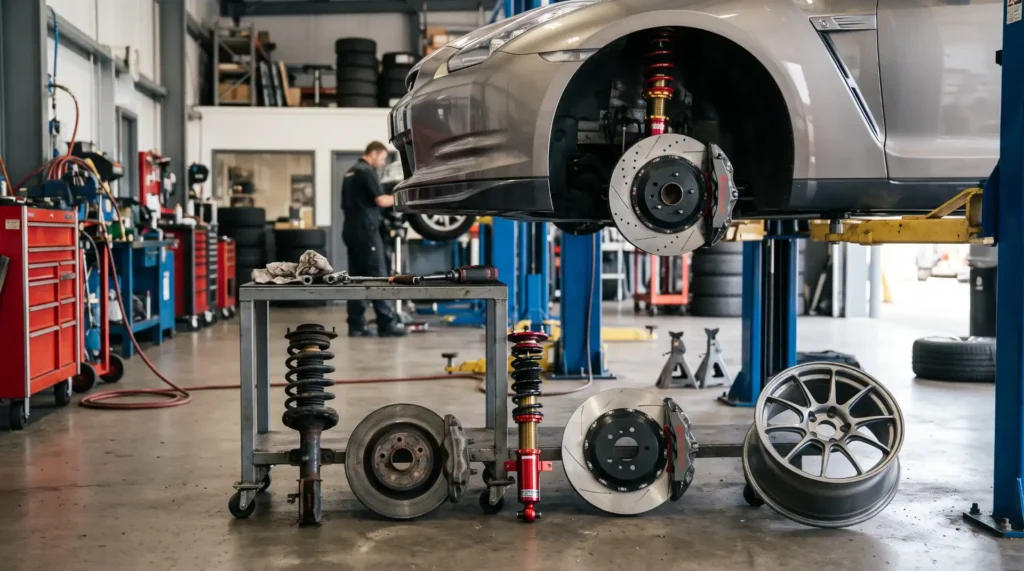
Cost is one of the most important factors when evaluating whether aftermarket performance parts are worth buying. The initial purchase price can vary significantly depending on the vehicle, manufacturer, materials, design complexity, and expected performance improvement. A basic intake system may cost several hundred dollars, while a complete forced-induction conversion can require several thousand dollars before installation and supporting modifications are included. European performance vehicles may also involve higher labor costs because of specialized tools, complicated packaging, and manufacturer-specific electronic systems.
The following figures are broad planning estimates in U.S. dollars, not guaranteed market prices or installation quotes. Actual expenses depend on the vehicle and the products selected.
| Upgrade | Approximate parts cost |
|---|---|
| Performance air intake | $150–$700 |
| Cat-back exhaust system | $500–$2,000+ |
| ECU tuning | $400–$1,000+ |
| Performance suspension | $700–$3,000+ |
| Brake upgrade components | $500–$2,500+ |
| Lightweight wheel set | $900–$3,000+ |
| Upgraded intercooler | $400–$1,500+ |
| Turbocharger upgrade | $1,200–$5,000+ |
| Supercharger system | $4,500–$9,000+ |
These ranges illustrate why comparing only the price displayed on a product page can be misleading. A turbocharger advertised for $2,000 may require additional injectors, fuel pump capacity, intercooling, oil lines, custom plumbing, calibration, and installation labor. A suspension kit may require new mounts, alignment, replacement hardware, and additional adjustments before the vehicle can be driven properly. The final cost can therefore be substantially higher than the price of the main component.
Understanding Installation and Supporting Costs
Installation expenses should be included in the original budget rather than treated as an unexpected addition. Simple bolt-on products may be suitable for experienced owners with appropriate tools, but modifications involving fuel systems, engine management, braking, and suspension often require professional installation. Labor costs also vary considerably across the United States, with specialized performance shops in major metropolitan areas potentially charging more than general repair facilities in smaller communities.
Supporting modifications can be even more important than labor. An engine producing additional horsepower may need more fuel, improved cooling, stronger drivetrain components, or revised engine calibration. Installing a larger turbocharger without considering the fuel system can create an engine that cannot receive the fuel required under higher load. Similarly, increasing engine torque without evaluating the clutch or transmission can accelerate wear and lead to expensive failures.
A practical example is a driver planning to upgrade a turbocharged sports sedan. The owner may initially budget $2,500 for a turbocharger and installation, but a proper supporting package could increase the total investment substantially. If the fuel system, intercooler, exhaust configuration, and transmission are not compatible with the new power target, the owner may eventually spend more correcting problems than would have been necessary to plan the build properly.
Calculate the Total Cost of Ownership
A useful purchasing decision should consider the complete financial impact of a modification over the time the vehicle will be owned. This includes the initial component price, installation, calibration, replacement parts, additional maintenance, and possible effects on fuel consumption. Some aggressive performance components also wear faster than standard street-oriented equipment, meaning owners may need to replace them more frequently.
For example, a track-focused brake pad may offer excellent performance at high temperatures but produce more dust, noise, and wear during daily commuting. A stiff racing suspension may improve response on a smooth circuit but make ordinary American roads uncomfortable. If the owner spends most of the week driving through traffic or navigating potholes, the practical value of that equipment may be limited.
The best financial approach is to compare the expected improvement with the complete ownership expense. A relatively affordable tire upgrade that improves grip and braking may offer greater everyday value than a costly engine modification that provides only a small increase in peak horsepower.
3. Do Aftermarket Performance Parts Really Increase Horsepower?
Horsepower claims are among the most persuasive marketing tools in the aftermarket industry, but not every modification produces a substantial increase in engine output. The actual results depend on the original engine design, the condition of the vehicle, the quality of the component, and whether the rest of the powertrain can support the change. Some upgrades produce measurable gains, while others primarily affect sound, appearance, or throttle response.
A naturally aspirated engine generally has different power-upgrade opportunities from a turbocharged engine. A turbocharged platform may have additional potential through boost control and improved intercooling, while a naturally aspirated engine may require several carefully matched airflow and engine-management changes to achieve a noticeable increase. Even within the same vehicle model, different engines and model years can respond differently to identical modifications.
Cold Air Intakes and Performance Air Filters
Cold air intake systems are popular because they are relatively accessible and can change the sound of an engine. A properly designed intake may reduce restrictions in the original airflow path and provide a more direct route for incoming air. Depending on the engine and original equipment, this can contribute to a modest performance improvement, particularly when combined with other compatible modifications and suitable calibration.
However, replacing a factory airbox does not automatically increase horsepower. Modern factory intake systems are engineered to balance filtration, airflow, noise, emissions, and temperature management. An aftermarket intake that draws hot air from the engine compartment may actually reduce performance when under-hood temperatures increase. Filtration quality is equally important because allowing excessive dust and contaminants into the engine can accelerate internal wear.
Before purchasing an intake system, owners should check whether it has been designed for the exact vehicle and whether it retains appropriate heat protection and sensor compatibility. Our guide to Optimizing Intake and Exhaust Flow: Data-Driven Upgrades explains why airflow modifications should be evaluated using measurements rather than assumptions. This is particularly important for modern engines that depend on accurate airflow readings to control fuel delivery and ignition timing.
Performance Exhaust Systems
An aftermarket exhaust system can change engine sound, reduce weight, and potentially improve exhaust flow. Cat-back systems generally replace components located behind the catalytic converter, while more extensive systems may involve additional sections closer to the engine. The actual performance improvement depends on whether the original system creates a meaningful restriction at the engine’s intended operating level.
Exhaust diameter, pipe routing, bends, muffler construction, and catalytic converter design all influence performance. Installing extremely large piping without considering engine displacement and exhaust-flow characteristics may not provide the expected benefits. In some applications, an incorrectly matched system can reduce low-speed response or create excessive cabin noise without producing meaningful acceleration improvements.
Owners should also distinguish between sound improvements and measurable power gains. A louder exhaust may make the vehicle feel faster because acceleration becomes more dramatic, but sound alone does not establish that the engine produces additional horsepower. Independent dyno testing under comparable conditions provides a more useful way to evaluate whether an exhaust modification delivers measurable results.
ECU Tuning and Engine Calibration
ECU tuning can be one of the most effective modifications for compatible modern performance vehicles because the engine control unit manages several parameters that influence output. These include ignition timing, fuel delivery, throttle response, boost pressure, and other operating strategies. A professionally developed calibration can help the engine operate more effectively with compatible aftermarket hardware and the correct fuel.
Turbocharged vehicles often provide greater opportunities for tuning-related power increases because boost control can be adjusted within the limits of the engine, fuel system, and supporting components. Nevertheless, aggressive calibration can increase cylinder pressure, heat, and mechanical stress. A tune designed for high-octane premium gasoline should not be used with lower-octane fuel unless the calibration specifically supports it.
A responsible tuning process should include a mechanical inspection, baseline measurements, appropriate data logging, and validation after changes are made. Owners should avoid selecting a tune simply because an advertisement promises the highest horsepower number. Consistent performance, safe operating parameters, and acceptable drivability are more important than an impressive figure that cannot be maintained reliably.
Turbocharger and Supercharger Upgrades
Forced-induction modifications can produce substantial increases in power potential, but they also require more supporting work than many basic bolt-on upgrades. A larger turbocharger may move more air into an engine, while a supercharger uses mechanical drive power to compress incoming air. Both systems can increase engine output when the fuel supply, ignition calibration, cooling, and internal mechanical components are suitable.
The additional power creates higher demands on pistons, connecting rods, bearings, head gaskets, transmissions, clutches, and differentials. A factory drivetrain designed for one torque level may not tolerate a significant increase without additional attention. Cooling is another major consideration because increased airflow and fuel consumption generally create additional thermal demands under sustained high-load operation.
For this reason, forced-induction upgrades should be treated as complete engineering projects rather than individual product purchases. Owners should evaluate the engine’s condition, determine a realistic power target, and identify every supporting modification before beginning installation.
4. Are Aftermarket Performance Parts Reliable Enough for Daily Driving?
Reliability is often more important than peak performance for owners who depend on their vehicles every day. A modification that produces impressive acceleration but causes warning lights, difficult cold starts, excessive vibration, or frequent repairs may not be a worthwhile investment. The best aftermarket parts are designed to operate consistently within the intended conditions of the vehicle rather than delivering a short-lived improvement.
Product quality is one of the biggest factors influencing reliability. Established manufacturers generally provide more detailed specifications, application information, installation instructions, and technical support than companies selling generic components with limited documentation. Depending on the product, useful indicators include material quality, manufacturing consistency, engineering validation, testing procedures, and warranty terms.
Installation quality is equally important. Incorrect torque settings, damaged seals, poorly routed hoses, unsuitable fasteners, and improper electrical connections can cause problems even when the component itself is well manufactured. Some modifications also require alignment, calibration, or adjustment after installation. A high-quality suspension kit, for example, may perform poorly if the ride height and damping settings are incorrect or the vehicle is not aligned afterward.
Reliability Depends on Driving Conditions
A vehicle used primarily for commuting experiences different stresses from a car that regularly participates in track events. A moderate suspension upgrade may provide dependable service during normal street driving, but the same equipment may experience much greater loads during repeated high-speed cornering. Engine modifications also need to be evaluated according to the amount of time the vehicle spends operating at elevated boost, temperature, or RPM.
Daily drivers should generally prioritize compatible components that preserve predictable behavior, reasonable comfort, and manageable maintenance requirements. Track-focused parts may offer advantages under competition conditions but can be inconvenient when used for ordinary transportation. Before purchasing a product, owners should confirm whether it is designed for street use, occasional performance driving, or dedicated competition.
The Importance of Preventive Maintenance
Aftermarket upgrades do not eliminate the need for regular servicing. In some cases, modifications create additional maintenance responsibilities. A high-output turbocharged engine may require closer monitoring of oil condition and temperature, while an aggressive brake package may need more frequent inspection of pads, rotors, and fluid. Adjustable suspension components may also require periodic checks to confirm that fasteners and settings remain correct.
Drivers should keep detailed service records, including installation dates, product information, calibration changes, and maintenance performed. These records make it easier to identify recurring issues and determine whether a problem is connected to a modification. They are also useful when the vehicle is sold because future buyers can evaluate the quality and history of the upgrades.
5. Which Aftermarket Upgrades Provide the Best Real-World Value?
 5. Which Aftermarket Upgrades Provide the Best Real-World Value?
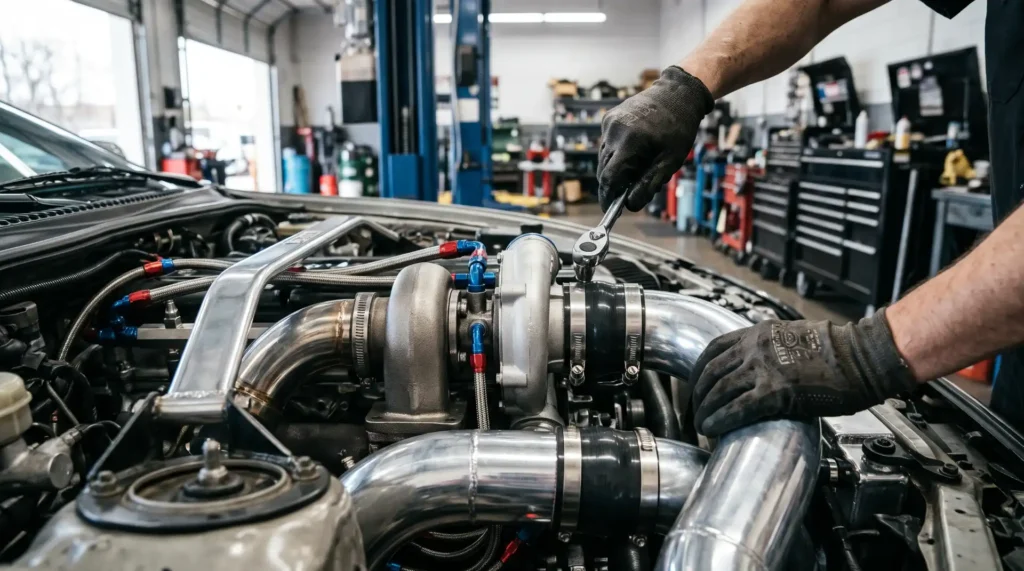
The most valuable performance upgrade depends on what the owner wants to improve. Someone who wants quicker acceleration may prioritize engine modifications, while a driver who enjoys mountain roads may benefit more from tires, suspension, and braking improvements. A daily commuter may value comfort, predictable handling, and reliability more than maximum engine output.
| Upgrade | Main benefit | Important trade-off |
|---|---|---|
| Performance tires | Improved grip and traction | Faster wear or reduced wet-weather suitability depending on tire |
| Suspension upgrades | Better handling and control | Ride comfort and alignment requirements |
| Brake upgrades | More consistent braking under demanding use | Cost, noise, dust, and temperature compatibility |
| ECU tuning | Improved power and throttle response | Fuel requirements and mechanical stress |
| Intercooler upgrades | Better intake-temperature control | Fitment, airflow, and installation cost |
| Exhaust upgrades | Sound and potential airflow improvement | Noise and emissions compliance |
| Lightweight wheels | Potential reduction in unsprung mass | Strength, fitment, and replacement cost |
| Turbocharger upgrades | Higher engine power potential | Supporting hardware and reliability demands |
For many street-driven vehicles, tires and brakes provide some of the most noticeable improvements because they influence how the vehicle accelerates, changes direction, and stops. A powerful engine cannot deliver its full potential if the tires struggle to maintain traction, and additional horsepower does not compensate for worn brake components. A balanced vehicle should therefore be evaluated as a complete package.
Performance Tires and Lightweight Wheels
Tires are among the most important components on any performance vehicle because they provide the contact between the car and the road. A quality tire with suitable grip characteristics can improve acceleration, cornering, and braking without requiring changes to the engine. However, tire selection should reflect local climate, road conditions, vehicle weight, and intended driving use. A very aggressive summer tire may provide excellent dry-road performance but become unsuitable in cold temperatures or heavy winter conditions.
Lightweight wheels can also provide benefits when they reduce unsprung mass and rotational inertia without compromising strength or fitment. However, buyers should consider the complete wheel-and-tire package rather than looking only at the wheel’s advertised weight. A larger wheel may require a heavier tire, and incorrect offset or width can create clearance problems. Load ratings, brake clearance, fastener specifications, and compatibility with the vehicle’s suspension should all be checked before installation.
Suspension Upgrades
Performance suspension components can improve steering response, body control, and stability when selected for the vehicle’s weight and intended use. Adjustable coilovers, performance dampers, springs, sway bars, and upgraded bushings all influence different aspects of handling. The right combination can make a vehicle feel more controlled without requiring any additional engine horsepower.
However, lowering a vehicle too much can reduce suspension travel, create alignment problems, and increase the likelihood of tire contact with bodywork. Extremely stiff suspension may also reduce comfort on uneven American roads and make the vehicle less predictable over potholes or rough pavement. A balanced street setup is usually more useful for daily drivers than equipment designed exclusively for a smooth racing circuit.
Brake Upgrades
Brake modifications should be selected according to vehicle weight, tire grip, operating temperatures, and driving conditions. Upgraded pads, rotors, calipers, and brake fluid may improve braking consistency during repeated hard stops, especially on a track. However, a larger brake kit is not automatically necessary for every street vehicle.
Some competition-oriented brake pads perform poorly when cold and may produce more noise and dust than ordinary street pads. A driver who mainly commutes may be better served by high-quality street-oriented pads, fresh fluid, and properly maintained calipers. The most useful brake upgrade is one that provides predictable stopping performance under the conditions in which the vehicle is actually used.
6. Cooling Upgrades: An Important Investment for Modified Engines
Cooling is frequently overlooked when enthusiasts plan performance modifications, even though it becomes increasingly important as engine output rises. Higher boost, increased engine speed, and repeated acceleration can create additional thermal demands. A vehicle that operates normally during ordinary commuting may experience elevated temperatures during track sessions, mountain driving, or repeated high-load acceleration.
Depending on the vehicle, useful upgrades may include an improved radiator, more effective intercooler, suitable oil cooler, transmission cooler, or better airflow management. These components should not be installed simply because a larger product is available. The existing system should be inspected first to identify whether the actual limitation involves airflow, coolant circulation, heat-exchanger capacity, or another problem.
A larger radiator cannot correct a failing water pump, and an upgraded intercooler will not solve excessive engine oil temperature. Cooling systems must be evaluated as interconnected systems, with attention to coolant flow, radiator airflow, fan operation, oil temperature, and heat transfer. Our article on Performance Cooling Systems: How to Keep a Modified Engine Safe Under Heavy Load explains why thermal management deserves the same attention as horsepower upgrades.
For drivers in hot-weather states such as Arizona, Texas, Nevada, and California, cooling performance can be particularly important during summer traffic and extended high-temperature driving. A properly maintained cooling system can help prevent heat-related performance problems and protect expensive engine components. Owners should remember, however, that preventive maintenance and correct diagnosis should come before purchasing larger cooling hardware.
7. Can Aftermarket Parts Affect Your Factory Vehicle Warranty?
Warranty concerns are a common reason owners hesitate before modifying newer vehicles. There is a widespread misconception that installing any aftermarket part automatically voids the entire factory warranty. In the United States, that is not how warranty coverage generally works. The use of aftermarket parts does not automatically eliminate coverage for unrelated defects, although problems caused by a defective component or improper installation may create a legitimate reason to deny coverage for the affected repair.
The Federal Trade Commission explains that vehicle manufacturers and dealers cannot simply cancel warranty protection because an owner uses aftermarket or recycled parts. However, if a defective aftermarket component or incorrect installation damages a covered vehicle component, the manufacturer may deny coverage for that resulting damage when it establishes the required connection. Drivers can review the official FTC guidance in Auto Warranties and Auto Service Contracts.
Owners should review the actual warranty documents before modifying a relatively new vehicle. They should also retain receipts, installation records, maintenance documentation, and product warranty information. If a dealer claims that a modification has affected coverage, ask for an explanation identifying the specific failure and the relationship between the modification and the damage. Clear documentation can be valuable if a disagreement develops.
An aftermarket manufacturer’s warranty should also be examined carefully. Some companies cover manufacturing defects but exclude installation labor, damage to other components, or failures resulting from competition use. Understanding these limitations before purchasing a product can prevent unpleasant surprises if a component fails.
8. Emissions Compliance and Performance Parts in the United States
Emissions regulations are an essential consideration when modifying street-driven vehicles. Some aftermarket products can affect how an engine controls fuel, manages exhaust gases, or communicates with onboard diagnostic systems. A component that appears to improve airflow or increase horsepower may also alter an emissions-controlled system, potentially creating registration or inspection problems.
Federal requirements restrict tampering with required emissions-control equipment and the installation or use of defeat devices. Owners should not assume that removing a catalytic converter, disabling emissions monitoring, or installing emissions-related software changes is acceptable simply because a product is sold online. A modification intended for competition use may have different restrictions from equipment approved for a street-driven vehicle.
Understanding California CARB Requirements
California has additional emissions requirements that performance enthusiasts should understand before purchasing certain aftermarket components. The California Air Resources Board evaluates qualifying aftermarket emissions-related products and may issue an Executive Order, commonly called a CARB EO, for specific approved applications. This approval is not automatically transferable to every vehicle or engine configuration.
For example, an intake system approved for one model year may not be approved for a different engine or vehicle configuration. Exhaust components, supercharger systems, and other modifications may also have application-specific requirements. Owners should verify the exact part number and approval documentation rather than relying on a general claim that a product is California legal.
The same principle applies to drivers in other states. Emissions inspection programs, equipment rules, and local requirements can differ, so a product that is acceptable in one location may not be suitable in another. Before purchasing an emissions-related upgrade, owners should review the relevant rules and manufacturer documentation. Our guide to California Performance Car Modifications: Emissions Rules, CARB Compliance, and Legal Upgrades provides additional information about checking product approvals and avoiding costly compliance mistakes.
9. How to Avoid Cheap, Poorly Manufactured, and Counterfeit Performance Parts
The large aftermarket market gives consumers access to products from established manufacturers as well as unfamiliar sellers offering inexpensive alternatives. Unfortunately, a low purchase price does not guarantee good value. Poorly manufactured components may have inconsistent dimensions, unsuitable materials, weak fasteners, inadequate filtration, or limited durability. These problems can affect performance and, in safety-critical applications, create serious risks.
Buyers should look for manufacturers that provide clear technical specifications, vehicle fitment information, installation instructions, and accessible customer support. A company that explains the materials used, testing performed, and intended operating conditions gives customers more useful information than a seller relying only on broad horsepower claims. For complex engine and suspension components, product-specific documentation is especially important.
Unrealistic advertising should also be treated cautiously. If an inexpensive intake system claims an unusually large horsepower increase without supporting modifications or independent testing, owners should ask how the results were measured. Dyno figures should identify the vehicle configuration, fuel type, testing conditions, and whether the measurements represent wheel horsepower or estimated crankshaft horsepower. Results from different dynos cannot always be compared directly because equipment and correction methods vary.
Counterfeit products are another concern when buying expensive components online. Packaging that imitates a recognized brand does not establish that the product is genuine. Purchase through reputable retailers or authorized distributors when possible, and verify product serial numbers or authenticity information when manufacturers provide those services. This is particularly important for brake components, suspension hardware, fuel-system products, and other parts whose failure could affect vehicle safety.
10. Do Aftermarket Performance Parts Improve Fuel Economy?
 10. Do Aftermarket Performance Parts Improve Fuel Economy?
Fuel economy is not always the primary reason people modify performance vehicles, but it remains important for owners who use their cars as daily transportation. Some modifications may improve efficiency under certain operating conditions, while others increase fuel consumption. The result depends on how the component affects airflow, engine calibration, vehicle weight, and driving behavior.
An intake or exhaust modification does not automatically improve miles per gallon. Modern engine management systems adjust fuel delivery according to airflow measurements, engine load, temperature, and other operating conditions. If an aftermarket component causes inaccurate sensor readings or requires an unsuitable calibration, fuel consumption and drivability may become worse rather than better.
ECU tuning can also produce different results depending on its objectives. A conservative calibration designed for a particular fuel and operating range may behave differently from an aggressive tune intended to increase boost and engine output. Even when a modification offers an opportunity for improved efficiency, drivers who frequently use the additional horsepower may consume more fuel than before. Real-world fuel economy should therefore be measured over comparable routes and driving conditions rather than accepted from advertising claims.
Wheel and tire changes can influence fuel consumption as well. Heavier wheels increase the amount of mass that must be accelerated, while tire width, construction, and compound can affect rolling resistance. Owners interested in maintaining reasonable fuel economy should consider the complete wheel-and-tire package, select appropriate tire sizes, and maintain correct inflation pressure.
11. Do Aftermarket Modifications Increase Resale Value?
The effect of performance modifications on resale value depends heavily on the vehicle and the type of buyer. Some enthusiasts actively search for cars equipped with reputable aftermarket suspension, wheels, exhaust systems, or engine upgrades. Other buyers prefer factory-original vehicles because they are easier to evaluate, insure, maintain, and return to original specifications.
A professionally modified vehicle with complete service records may appeal to a specific enthusiast audience. Quality components, documented installation, and evidence of responsible maintenance can help demonstrate that the modifications were selected carefully. However, a higher purchase price for aftermarket parts does not mean the vehicle will sell for an equivalent amount above its standard market value.
Excessive modifications can actually reduce buyer interest. Aggressive tuning, poor wiring, extremely low suspension settings, loud exhaust systems, and unexplained mechanical changes may create concerns about reliability and previous driving habits. Buyers may also worry about emissions compliance or whether the original components can be restored.
Owners who expect to sell their cars later should consider reversible upgrades whenever practical. Keeping the original wheels, intake, exhaust components, and suspension hardware can provide more flexibility when returning the vehicle to factory configuration. Detailed documentation of modifications and maintenance is also useful because it allows potential buyers to understand exactly what has been changed.
12. Which Aftermarket Parts Make Sense for Popular American Performance Cars?
Different vehicles have different engineering characteristics, so a modification that works well on one platform may be unsuitable for another. Owners should evaluate the exact engine, transmission, model year, and existing equipment rather than assuming that recommendations for a similar vehicle automatically apply.
Ford Mustang
The Ford Mustang has an extensive aftermarket industry covering V8 and EcoBoost models, including intake systems, exhaust components, suspension kits, brakes, wheels, and forced-induction upgrades. Drivers who want a more capable street car may benefit from quality tires, appropriate suspension components, and carefully selected brake improvements. Owners seeking additional engine output should evaluate fuel delivery, cooling capacity, drivetrain condition, and engine calibration before increasing power.
Chevrolet Camaro
The Chevrolet Camaro is popular among enthusiasts who value a combination of straight-line acceleration and handling capability. Intake and exhaust upgrades may appeal to owners looking for changes in engine response and sound, while tires, suspension, and brakes can improve performance on winding roads or track circuits. Because vehicle weight and tire grip influence braking demands, owners should select brake components according to the vehicle’s actual use rather than automatically purchasing the largest available kit.
Dodge Charger and Challenger
Dodge Charger and Challenger models offer a broad range of performance configurations and aftermarket opportunities. Owners may consider exhaust systems, intake upgrades, engine calibration, suspension improvements, and wheel packages. However, increasing torque can place additional stress on transmissions, clutches, differentials, and tires. A balanced build should consider the entire drivetrain rather than concentrating exclusively on engine output.
Subaru WRX
The Subaru WRX is a popular platform for turbocharger, intercooler, intake, exhaust, and ECU modifications. Because turbocharged engines depend on appropriate fueling and temperature control, supporting components should be evaluated before pursuing more aggressive power targets. Owners should also pay attention to transmission condition, drivetrain maintenance, and calibration compatibility. A poorly planned combination of parts can create drivability problems even when each component is advertised as a performance upgrade.
BMW M Models
BMW M vehicles use sophisticated engine management, electronic suspension systems, and integrated drivetrain controls. Aftermarket modifications can improve performance, but compatibility and installation quality are especially important. Owners should consider how engine, exhaust, and suspension changes may affect sensors, electronic control systems, cooling, and service requirements. Working with a specialist familiar with the specific BMW platform can help reduce installation and diagnostic problems.
13. Why Professional Installation and Dyno Testing Are Worth Considering
Professional installation is particularly valuable when modifications affect engine management, fuel delivery, braking, steering, or suspension geometry. A component may physically fit a vehicle but still require electronic programming, sensor adaptation, calibration, or additional supporting hardware. Technicians familiar with the platform can identify these requirements before they become expensive problems.
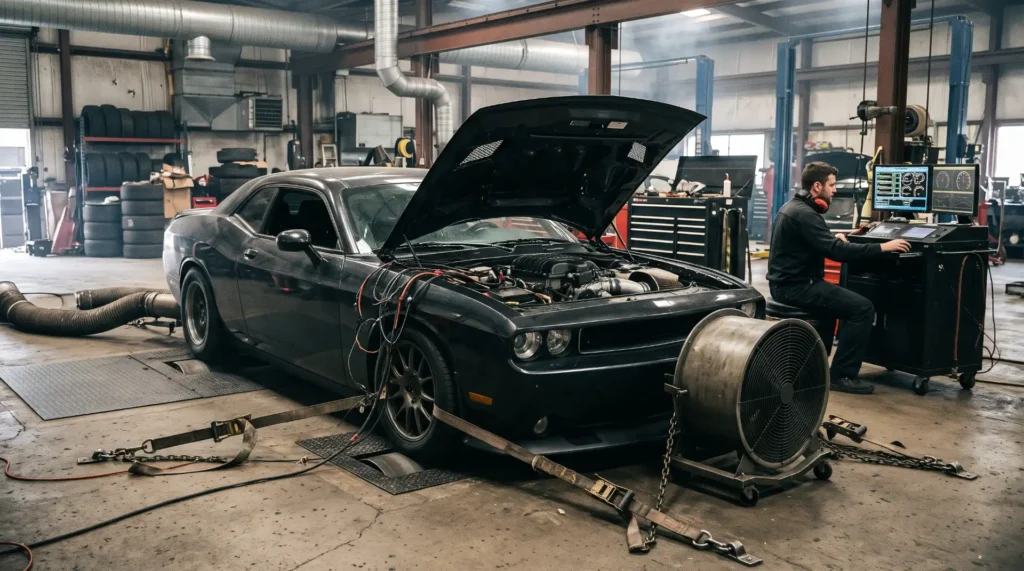
A chassis dynamometer can help measure the power delivered through a vehicle’s driven wheels under controlled conditions. It can also provide information about torque delivery and help technicians evaluate changes after a modification. However, dyno results should be interpreted carefully because different machines, temperatures, correction methods, tire conditions, and testing procedures can produce different readings.
A higher peak horsepower number does not necessarily mean that a vehicle performs better in every real-world situation. A useful comparison should consider the shape of the power curve, throttle response, repeatability, temperature management, and drivability. For a street vehicle, smooth power delivery and consistent operation may be more valuable than a large peak figure that appears only under ideal testing conditions.
After installation, owners should monitor the vehicle for warning lights, leaks, unusual noises, vibrations, and changes in operating temperature. Some components may require additional inspection or adjustment after initial use. Suspension modifications may need alignment checks, while engine upgrades may require calibration verification and data logging. Treating installation as the beginning of an evaluation process rather than the end helps protect the investment.
14. Common Mistakes That Make Aftermarket Performance Parts a Poor Investment
One of the most expensive mistakes is buying parts before identifying the vehicle’s actual performance limitations. An owner may purchase a larger turbocharger when the existing engine is already struggling with cooling, fuel delivery, or mechanical wear. Increasing power without addressing those problems can make the vehicle less reliable and increase repair expenses.
Another common mistake is choosing parts based entirely on online popularity. A component that performs well on a particular model may not be suitable for another vehicle with a different engine, transmission, or electronic configuration. Owners should verify fitment and compatibility using manufacturer documentation rather than relying only on photographs, forum discussions, or general product descriptions.
Ignoring supporting systems can also undermine a modification. A powerful engine still needs appropriate brakes, tires, suspension, cooling, and drivetrain components. Increasing horsepower without ensuring that the rest of the vehicle can manage the additional performance may create an unbalanced and potentially unsafe build.
Finally, owners sometimes underestimate maintenance requirements. Competition-oriented brake pads, aggressive tires, adjustable suspension, and high-output engine components may need more frequent inspection or replacement than standard street equipment. A modification that appears inexpensive at purchase can become costly if its operating expenses are not understood in advance.
15. How to Plan a Smart Performance Upgrade Budget
A successful performance build should begin with a clear objective and a realistic budget. Instead of purchasing several unrelated products at once, owners should identify the improvements that matter most and prioritize them according to vehicle condition, safety, and available funds. This approach makes it easier to evaluate each modification and avoid spending money on components that do not address the original goal.
Start with a baseline inspection covering the engine, transmission, cooling system, brakes, tires, suspension, steering, and electrical systems. Resolve existing mechanical problems before installing performance components. A vehicle with worn tires, leaking coolant, or deteriorating suspension mounts should not receive expensive power upgrades before those issues are addressed.
Next, define the desired outcome. A driver who wants improved cornering should investigate tires, alignment, and suspension geometry. Someone seeking more consistent track performance may need better brake cooling, suitable brake pads, and thermal management. A turbocharged vehicle owner pursuing additional horsepower should evaluate the fuel system, intercooler, transmission capacity, and engine calibration together.
Finally, compare complete packages rather than individual product prices. Include installation labor, alignment, calibration, supporting hardware, maintenance, and warranty considerations. Make changes gradually when possible, documenting how each modification affects the vehicle. This method provides a clearer understanding of the results and makes it easier to identify the source of an unexpected problem.
Conclusion: Are Aftermarket Performance Parts Worth It in 2027?
Aftermarket performance parts can be an excellent investment in 2027 when they are selected according to the vehicle’s engineering, the owner’s driving goals, and the conditions in which the car will be used. Quality intake and exhaust systems, properly developed ECU calibrations, suitable suspension components, improved brakes, and well-designed cooling upgrades can make a vehicle more capable and enjoyable. However, their value depends on actual performance improvements rather than advertising claims or the popularity of a particular product.
The most important consideration is balance. Additional horsepower is not particularly useful if the tires cannot maintain traction, the brakes cannot manage repeated hard stops, or the cooling system cannot control temperatures under sustained load. A well-planned performance build considers the engine, transmission, suspension, brakes, tires, and electronic systems as connected parts of one vehicle rather than treating every upgrade as an isolated purchase.
Cost and reliability also deserve equal attention. Buyers should calculate the complete installation expense, investigate supporting modifications, verify product quality, and understand ongoing maintenance requirements. Drivers with newer vehicles should review warranty documentation, while owners of street-driven cars must check applicable federal and state emissions regulations before purchasing emissions-related parts.
Ultimately, aftermarket performance parts are worth the money when they solve a real problem or deliver a measurable improvement that matches the owner’s priorities. The smartest enthusiasts do not simply purchase the most expensive components or chase the largest horsepower numbers. They research their options, work with qualified specialists when necessary, and invest in compatible upgrades that improve the entire driving experience. With that approach, aftermarket modifications can provide lasting value without turning an enjoyable performance car into an unreliable and unnecessarily expensive project.