
A New Era of American Road Trips
Road trips have always been an important part of American automotive culture. From families traveling across the country on historic highways to driving enthusiasts exploring scenic mountain roads, the automobile has long represented freedom, independence, and the opportunity to discover places beyond familiar surroundings. However, a growing number of American travelers are beginning to approach road trips differently. Instead of concentrating exclusively on paved highways, hotels, restaurants, and traditional tourist destinations, they are choosing vehicles and travel experiences that allow them to explore remote landscapes, camp outside developed recreation areas, and spend extended periods away from crowded destinations.
This style of travel is commonly known as overlanding, an adventure-oriented approach that combines self-reliant vehicle travel, outdoor exploration, camping, and carefully planned journeys. Overlanding is not simply driving a four-wheel-drive vehicle through mud or climbing difficult trails. It involves traveling through different environments while carrying the equipment, supplies, and practical resources needed to remain independent along the way. A successful overlanding journey may include paved highways, gravel roads, forest routes, desert trails, mountain passes, and overnight camping in locations far removed from conventional accommodations.
Across the United States, overlanding has become increasingly visible in automotive communities, outdoor recreation circles, vehicle customization shops, and social media. Pickup trucks, SUVs, crossovers, purpose-built 4×4 vehicles, and even some vans are being transformed into mobile adventure platforms. Owners install all-terrain tires, upgraded suspension systems, roof racks, auxiliary lighting, portable power stations, recovery equipment, water storage, and rooftop tents to make their vehicles more suitable for extended outdoor travel.
What makes this movement particularly interesting is that it connects several industries and interests that were once treated separately. Automotive performance enthusiasts are discovering outdoor adventure. Camping enthusiasts are becoming interested in vehicle engineering. Travelers are spending more time researching vehicle capability, equipment compatibility, navigation technology, and responsible recreation. Meanwhile, manufacturers are developing products specifically for people who want a vehicle that can function as comfortable daily transportation during the week and a dependable adventure platform on weekends.
Overlanding is changing how Americans think about road trips because it shifts the emphasis from reaching a destination quickly to experiencing the journey itself. The vehicle becomes more than transportation. It becomes a mobile base camp, storage system, sleeping area, and essential tool for exploring unfamiliar environments.
Understanding this growing movement requires looking beyond popular vehicle accessories. The rise of overlanding involves changes in travel preferences, automotive customization, outdoor recreation, vehicle technology, and the way Americans interact with public lands.
What Is Overlanding and How Is It Different From Traditional Off-Roading?
Overlanding is often confused with conventional off-roading, but the two activities are not exactly the same. Off-roading generally focuses on driving vehicles over unpaved terrain, navigating obstacles, exploring designated trails, or participating in recreational driving activities. Some off-road trips last only a few hours, while others involve organized trail events or competitive challenges.
Overlanding places greater emphasis on the complete journey. A traveler may spend several days or weeks moving between destinations, camping along the route, and carrying enough supplies to remain self-sufficient. The objective is not necessarily to conquer the most difficult trail. Instead, it is to explore unfamiliar places while maintaining the ability to travel, sleep, prepare meals, manage equipment, and respond to unexpected situations.
For example, an off-road enthusiast might take a modified Jeep to a designated trail system for an afternoon of technical driving. An overlanding enthusiast might use a similar vehicle to travel through several states, explore forest roads, camp in permitted areas, and continue toward another destination without relying on hotels every evening.
The difference also influences vehicle preparation. A dedicated rock-crawling vehicle may prioritize extreme suspension articulation, large tires, heavy-duty axles, and specialized recovery equipment. An overlanding vehicle needs a broader combination of capabilities. It must carry camping equipment, additional fuel or energy supplies when appropriate, food, water, tools, navigation devices, and personal belongings without exceeding safe weight limits.
Comfort and reliability are particularly important because an overlanding vehicle may spend considerably more time traveling than a recreational off-road vehicle. Excessively aggressive modifications can make long-distance driving uncomfortable, increase maintenance requirements, or reduce fuel efficiency.
Overlanding Is About Self-Reliance Rather Than Extreme Driving
One of the most important principles of overlanding is preparation. Travelers must understand the limitations of their vehicles, identify suitable routes, check weather conditions, and carry the supplies necessary for their intended journey.
A route through the Arizona desert, for example, creates different requirements from a trip through the forests of Washington or the mountainous terrain of Colorado. Desert travelers may need additional water storage, sun protection, tire repair equipment, and careful fuel planning. Mountain travelers may need cold-weather sleeping equipment, appropriate tires, traction devices, and knowledge of seasonal road closures.
This practical approach separates overlanding from the idea that an adventure vehicle must look extremely modified. A moderately equipped SUV with reliable maintenance, suitable tires, effective navigation, and organized camping supplies can be more useful than a heavily customized truck that is poorly prepared for its actual route.
The most capable overlanding vehicles are not necessarily the most expensive. They are the vehicles whose equipment, mechanical condition, and carrying capacity match the journey.
 Why Overlanding Is Becoming Popular Across the United States
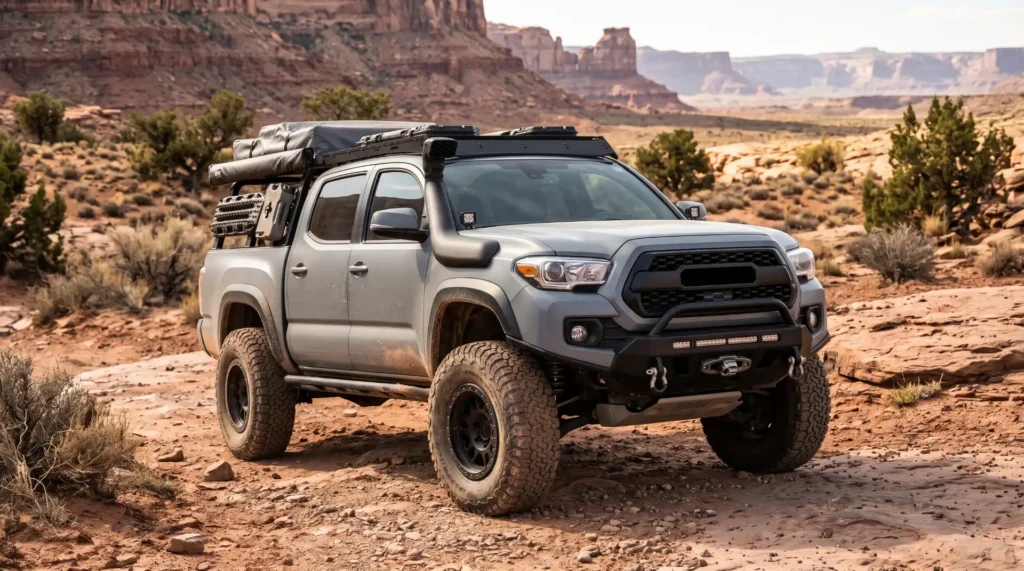 Why Overlanding Is Becoming Popular Across the United States
Several lifestyle and automotive trends have contributed to the increasing visibility of overlanding in America. Outdoor recreation has become an important part of how many people spend vacations and weekends, while vehicle manufacturers have expanded their offerings of trucks and SUVs designed for recreational use.
Another important factor is the desire for flexible travel. Traditional vacations frequently involve fixed schedules, hotel reservations, crowded attractions, and predetermined routes. Overlanding offers a different experience by allowing travelers to adjust their itineraries, spend more time in locations they enjoy, and discover destinations that are less accessible through conventional tourism.
A Growing Interest in Outdoor Experiences
Many American travelers are interested in activities that combine driving, camping, hiking, photography, fishing, and wildlife observation. Overlanding connects these interests through a single vehicle-based travel experience.
A couple traveling through Utah, for example, might spend one night near a designated camping area, explore scenic routes during the day, and continue toward another region the following morning. A family traveling through Montana might use an adventure-ready SUV to reach established campgrounds, visit national forest recreation areas, and explore nearby hiking destinations.
The vehicle makes it easier to transport outdoor equipment while maintaining flexibility throughout the trip.
However, access to public land should never be confused with permission to drive anywhere. Many national parks, national forests, and Bureau of Land Management areas have specific restrictions governing vehicle access, camping locations, road use, and overnight stays. Responsible travelers must understand those requirements before beginning a journey.
Social Media and the Visibility of Adventure Vehicles
Social media has also helped introduce overlanding to a much larger audience. Photographs and videos showing customized trucks parked beneath mountain ranges, rooftop tents overlooking desert landscapes, and vehicles traveling through forest roads have made the activity more visible.
These images often emphasize the freedom and independence associated with outdoor travel. They also expose viewers to equipment they may not have previously considered, including vehicle-mounted awnings, compact kitchens, recovery boards, portable refrigerators, auxiliary batteries, and modular storage systems.
Online communities allow owners to exchange information about vehicle platforms, camping equipment, route planning, maintenance, and modifications. Experienced travelers can explain what worked during a particular trip, while beginners can learn from equipment failures and practical lessons shared by others.
Nevertheless, social media can create unrealistic expectations. A beautifully photographed campsite does not reveal the preparation, driving time, weather conditions, vehicle maintenance, or safety decisions behind the journey. New travelers should treat online content as inspiration rather than a substitute for practical research.
More Adventure-Oriented Vehicle Options
The American automotive market offers several types of vehicles suitable for overlanding. Manufacturers have introduced off-road-oriented versions of popular pickups and SUVs, while aftermarket companies produce accessories designed to improve storage, protection, suspension performance, and camping convenience.
Vehicles such as the Ford Bronco, Jeep Wrangler, Toyota 4Runner, Toyota Tacoma, Chevrolet Colorado ZR2, Ford Ranger, and full-size pickup trucks have become recognizable platforms in the adventure vehicle community.
These vehicles differ significantly in size, payload capacity, drivetrain configuration, ground clearance, towing capability, and interior space. Buyers therefore have more opportunities to select a vehicle that matches their budget and travel requirements instead of assuming that every overlanding project needs the same platform.
Choosing the Right Overlanding Vehicle
Selecting the right vehicle is one of the most important decisions for anyone planning to enter the overlanding community. A vehicle needs to match the terrain, travel distance, passenger requirements, equipment load, and available budget. It is easy to become attracted to a large pickup with an impressive suspension lift or a heavily customized SUV, but those features do not automatically make a vehicle suitable for every adventure.
A successful vehicle choice begins with understanding how the owner intends to travel. Someone planning weekend camping trips along established forest roads may not need the same equipment as someone preparing for several weeks of remote desert exploration.
Pickup Trucks: Flexible Platforms for Long-Distance Adventures
Pickup trucks are among the most popular overlanding platforms in the United States because they combine passenger transportation with substantial cargo-carrying flexibility. Their open beds provide space for storage systems, camping equipment, water containers, recovery tools, and auxiliary power equipment.
Models such as the Ford F-150, Toyota Tacoma, Chevrolet Colorado, GMC Canyon, Ford Ranger, and full-size heavy-duty pickups offer different combinations of capability and practicality.
One major advantage of a pickup truck is its ability to separate passenger space from camping equipment. Owners can install bed racks, lockable storage boxes, drawers, and camper shells without filling the cabin with loose supplies. Some builds use removable camping modules that allow the truck to return to ordinary transportation duties when adventure equipment is not needed.
However, pickup owners must pay close attention to payload capacity. Every accessory, passenger, piece of luggage, water container, and aftermarket component contributes to the vehicle’s total weight. A suspension lift does not automatically increase the manufacturer’s approved payload rating.
Overloading a truck can negatively affect braking, steering, suspension operation, tire performance, and overall safety. Before installing a heavy camper, rooftop tent, drawer system, or additional equipment, owners should review the manufacturer’s weight ratings and the vehicle’s actual available payload.
SUVs: A Practical Combination of Comfort and Capability
SUVs are another major part of the American overlanding movement. They provide enclosed storage, comfortable passenger seating, and the ability to carry camping equipment without exposing it directly to weather.
Vehicles such as the Toyota 4Runner, Jeep Wrangler, Ford Bronco, Chevrolet Tahoe, and Lexus GX are frequently considered by adventure travelers because they offer different combinations of ground clearance, drivetrain capability, interior flexibility, and aftermarket support.
An SUV can be particularly useful for families because passengers can travel with camping equipment, clothing, food, and personal belongings in one enclosed space. Rear seats can also be folded to create additional cargo room or, in some vehicles, a basic sleeping platform.
The main disadvantage is that interior space must be divided between passengers and equipment. A family of four carrying camping supplies may find that storage becomes limited quickly. Roof racks and external storage systems can help, but they introduce additional weight and aerodynamic resistance.
For longer journeys, a well-organized SUV can offer an excellent balance between everyday driving and outdoor recreation.
Vans and Overland Camper Conversions
Adventure vans represent another interesting part of the market. They provide more enclosed living space than conventional SUVs and can be equipped with sleeping platforms, kitchen systems, refrigerators, water storage, and electrical installations.
Some travelers choose four-wheel-drive or all-wheel-drive vans to improve access to unpaved roads and remote camping destinations. Others use conventional rear-wheel-drive vans for journeys that primarily involve highways, maintained gravel roads, and established campsites.
Vans are particularly appealing to people who want a more comfortable mobile living environment. A carefully designed interior can provide space for cooking, sleeping, changing clothes, and storing outdoor equipment.
However, a van conversion can become expensive and complicated. Electrical installations, ventilation, water systems, insulation, heating, and additional batteries require careful planning.
The vehicle’s height and width must also be considered. Large vans may struggle with narrow forest roads, low branches, tight switchbacks, and certain off-road obstacles.
For many travelers, the best van conversion is one designed around realistic travel requirements rather than maximum equipment installation.
Can a Crossover Be Used for Overlanding?
Not every overlanding journey requires a traditional body-on-frame 4×4 truck or SUV. Some travelers use crossovers and all-wheel-drive vehicles for lighter adventure travel.
Vehicles such as the Subaru Outback and other adventure-oriented crossovers can be suitable for maintained gravel roads, established campsites, and moderate unpaved routes when equipped appropriately.
These vehicles generally prioritize comfort, fuel efficiency, and everyday usability. They can be attractive options for travelers who want to combine ordinary transportation with occasional outdoor exploration.
However, all-wheel drive should not be confused with the capability of a dedicated low-range four-wheel-drive system. Ground clearance, underbody protection, tire construction, drivetrain design, and cooling capacity all influence how a vehicle handles difficult terrain.
Owners should understand the manufacturer’s limitations and avoid taking a vehicle onto trails that exceed its capabilities.
Essential Vehicle Modifications for Overlanding
Vehicle customization is one of the most visible aspects of overlanding. Adventure vehicles often feature distinctive tires, suspension systems, protective equipment, roof racks, lighting installations, and exterior storage.
However, effective customization should begin with a practical objective. Every modification should solve a particular problem, improve capability, or make the journey more comfortable.
Adding accessories simply because they look impressive can create unnecessary weight, increase costs, and introduce additional maintenance requirements.
All-Terrain Tires and Tire Selection
Tires are among the most important components of an overlanding vehicle. They determine how effectively the vehicle maintains traction on different surfaces, including gravel, dirt, sand, mud, rocks, and pavement.
All-terrain tires are popular because they offer a compromise between road comfort and off-road capability. Their tread patterns generally provide more traction on loose surfaces than conventional highway tires while remaining suitable for extended highway driving.
Mud-terrain tires use more aggressive tread designs and can provide additional traction in certain muddy or rocky conditions. However, they often generate more road noise, may reduce fuel economy, and can produce less predictable handling on wet pavement depending on their design.
For most beginning overlanders, a quality all-terrain tire is a sensible starting point.
Load rating is another important consideration. Pickup trucks and SUVs carrying camping equipment may require tires capable of supporting higher loads. The correct size and pressure should follow the vehicle manufacturer’s recommendations and applicable tire specifications.
Tire pressure also affects performance. Lower pressures can increase the tire’s contact patch and help it conform to certain off-road surfaces, but reducing pressure too much can damage the tire or cause it to separate from the wheel.
Pressure adjustments should be made according to tire manufacturer guidance, vehicle weight, wheel design, speed, and terrain. Travelers should also carry a reliable inflation system so tires can be returned to appropriate road pressures before highway driving.
Suspension Upgrades and Ground Clearance
Suspension modifications are frequently included in overlanding builds because they can help a vehicle accommodate additional weight and improve performance over rough terrain.
Common upgrades include replacement springs, heavy-duty shock absorbers, adjustable coilovers, upgraded control arms, and supporting suspension components.
A properly designed suspension system can improve vehicle control when carrying camping equipment. It may also provide more suitable damping characteristics for uneven roads and repeated impacts.
However, lifting a vehicle is not automatically beneficial.
A large suspension lift can raise the center of gravity, alter suspension geometry, affect steering behavior, and create additional stress on drivetrain components. It may also require changes to brake lines, alignment settings, and other supporting systems.
Owners should distinguish between a suspension system designed to support additional weight and one designed primarily to increase ride height.
For example, a pickup that carries a heavy camper shell, water storage, and camping drawers may need springs and dampers selected for its loaded weight. A simple lift kit may not provide the correct solution.
The objective should be controlled suspension movement, sufficient clearance, and predictable handling rather than maximum ride height.
Skid Plates and Underbody Protection
Overlanding routes can expose vehicles to rocks, branches, uneven surfaces, and unexpected obstacles. Underbody protection can help reduce the risk of damage to vulnerable components.
Skid plates are designed to protect areas such as the engine, transmission, transfer case, fuel tank, and other exposed mechanical components, depending on the vehicle and product.
This protection becomes particularly valuable when traveling on rocky trails or uneven forest roads.
However, not every vehicle needs a complete collection of heavy metal plates. Protection systems add weight and can influence ground clearance, airflow, cooling, and maintenance access.
A thoughtful approach prioritizes the components most exposed to damage along the intended route.
For a vehicle that mainly travels on maintained gravel roads, basic protection may be sufficient. A vehicle regularly navigating rocky terrain may benefit from a more comprehensive system.
Roof Racks and External Storage
Roof racks are among the most recognizable overlanding accessories. They provide additional mounting space for camping equipment, recovery gear, awnings, rooftop tents, and other supplies.
A properly designed rack can help keep the cabin organized and free up valuable interior storage space.
However, roof-mounted equipment raises the vehicle’s center of gravity. It can also increase aerodynamic drag, wind noise, and fuel consumption.
Roof loads must remain within the manufacturer’s specified limits. These limits may distinguish between static loads, such as a parked vehicle supporting a rooftop tent, and dynamic loads while driving.
This distinction is important because a rack that supports a tent and occupants while stationary may have a much lower permitted load while the vehicle is moving.
Owners should check the limits of the roof, rack, mounting hardware, and tent rather than relying on the capacity of a single component.
Recovery Equipment for Unexpected Situations
Recovery equipment is an important part of responsible overlanding preparation. Even experienced drivers can encounter situations involving loose sand, deep mud, slippery surfaces, or unexpected mechanical problems.
Common equipment includes rated recovery points, recovery boards, suitable straps, shackles, gloves, a tire repair kit, and a portable air compressor.
A vehicle equipped with a winch may also benefit from carrying appropriate accessories and understanding how to use them safely.
Recovery equipment should always be matched to the vehicle and the specific recovery method. Improperly rated straps, unsuitable attachment points, or incorrect recovery techniques can create serious hazards.
New travelers should learn basic recovery procedures before attempting difficult trails. Training from qualified off-road instructors can help drivers understand vehicle positioning, traction, safe attachment points, and the risks associated with recovery operations.
Equipment alone does not replace knowledge.
Turning a Vehicle Into a Mobile Campsite
One of the most interesting developments in overlanding is the transformation of ordinary vehicles into mobile camping environments.
Instead of transporting camping equipment separately or relying on traditional tents, travelers are integrating sleeping systems, cooking equipment, storage solutions, and power supplies directly into their vehicles.
The result can be a compact and organized outdoor living space that is easier to transport between destinations.
Rooftop Tents and Vehicle-Mounted Sleeping Systems
Rooftop tents have become particularly recognizable within the overlanding community. They attach to vehicle roof racks and create an elevated sleeping area when the vehicle is parked.
Their popularity comes from convenience and the ability to keep sleeping equipment away from some ground-level conditions.
Many designs fold into compact packages during transportation and expand into sleeping spaces after arrival. Some include integrated mattresses, windows, ventilation openings, and protective covers.
Hard-shell rooftop tents can offer quicker setup, while soft-shell models may provide larger sleeping areas at different price points.
However, rooftop tents are not ideal for every traveler.
They increase roof weight, require suitable mounting systems, and can affect fuel economy. Climbing into and out of a rooftop tent may also be inconvenient for families with small children or people with limited mobility.
Traditional ground tents remain a practical and often less expensive alternative.
The right sleeping arrangement depends on available space, travel frequency, weather, passenger requirements, and budget.
Vehicle Storage and Modular Drawer Systems
Storage organization can make a significant difference during extended trips.
Overlanding vehicles frequently carry tools, cooking equipment, food, clothing, recovery supplies, water containers, and personal belongings. Without an organized layout, equipment can become difficult to access.
Modular drawer systems help separate different categories of supplies.
For example, one drawer may hold vehicle tools and recovery equipment, while another contains cooking accessories and camping supplies. Additional containers can be reserved for food, emergency equipment, and personal belongings.
Pickup owners sometimes install full bed drawer systems beneath a sleeping platform or camper shell.
SUV owners may use removable storage boxes or custom platforms that fit behind folded rear seats.
The best system makes frequently used equipment accessible without requiring travelers to unpack the entire vehicle.
Weight distribution also matters. Heavy equipment should be secured and positioned appropriately to avoid creating an unstable load.
Portable Power Stations and Solar Panels
Modern overlanding has become increasingly dependent on portable electrical equipment.
Travelers may want to operate refrigerators, charge phones, power cameras, run lights, and maintain communication devices without continuously running the vehicle’s engine.
Portable power stations provide a convenient way to store electrical energy and operate selected appliances.
Many systems use lithium-based batteries and provide different combinations of AC outlets, USB ports, and DC connections.
Solar panels can help recharge these systems during extended camping trips, although charging performance depends on sunlight, panel placement, temperature, shading, and system specifications.
A portable refrigerator, for example, may consume a different amount of electricity depending on its size, insulation, ambient temperature, and operating settings.
Travelers should estimate their daily power requirements before purchasing equipment.
A small power station may be sufficient for phones, cameras, and lighting. A larger installation may be necessary for refrigerators and multiple electrical accessories.
Vehicle-mounted electrical systems also require proper fusing, wiring protection, battery compatibility, and professional installation when necessary.
Cooking Equipment and Outdoor Kitchens
Cooking is another area where overlanding equipment has evolved.
Some travelers use compact portable stoves and basic cookware, while others install slide-out kitchen systems, integrated water containers, food storage, and vehicle-mounted preparation surfaces.
A well-organized cooking setup makes it easier to prepare meals without unpacking numerous containers.
Portable propane stoves are popular because they are relatively simple to operate and can provide consistent cooking performance. Other travelers use approved liquid-fuel or electric cooking equipment.
Cooking equipment should always be used according to manufacturer instructions and applicable fire safety requirements.
Never operate fuel-burning appliances inside an enclosed vehicle or tent unless the equipment is specifically designed and approved for that environment. Carbon monoxide is an invisible, potentially fatal hazard.
Outdoor kitchens should also be located away from dry vegetation and other combustible materials.
The convenience of a vehicle-mounted kitchen should never come at the expense of basic campsite safety.
How Technology Is Changing Modern Overlanding
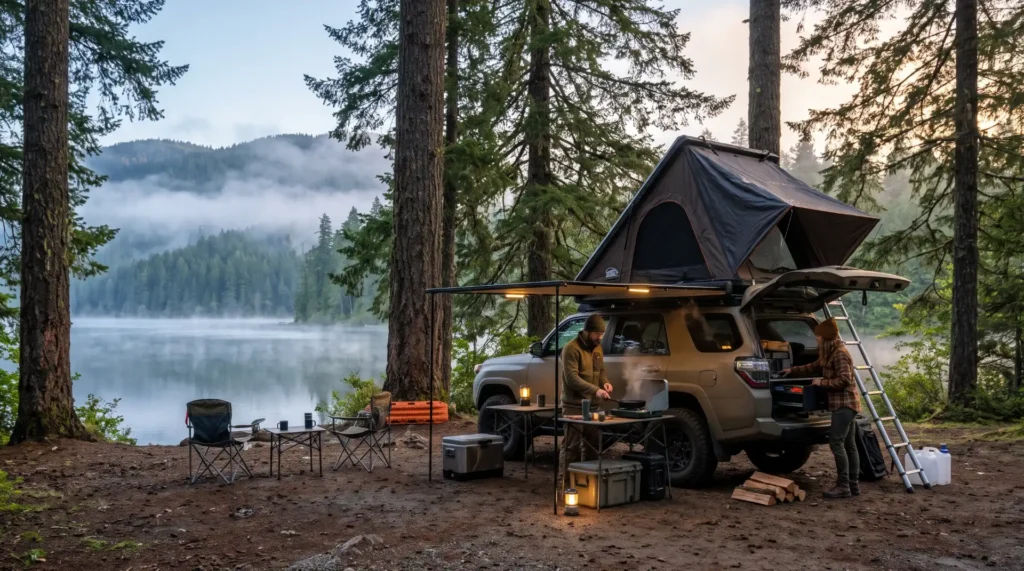 How Technology Is Changing Modern Overlanding
Technology has transformed how Americans plan and experience overlanding trips. Modern adventure vehicles can combine traditional mechanical capability with digital navigation, communication systems, vehicle monitoring, and portable electrical equipment.
These technologies can make remote travel easier, but they should support good preparation rather than replace it.
GPS Navigation and Offline Mapping
Navigation is one of the most important parts of an overlanding journey.
Many travelers use dedicated GPS devices, smartphone applications, vehicle navigation systems, and downloadable maps to identify roads and plan routes.
Digital mapping tools can display topography, elevation changes, road classifications, and nearby recreation areas.
However, cellular service may be unavailable in remote regions. Travelers should download maps before entering areas where internet access cannot be relied upon.
Offline navigation also helps reduce dependence on cellular data and can provide a useful backup when traveling through mountains, deserts, and remote forests.
A paper map and compass remain valuable backup tools, especially for longer journeys.
Before departing, travelers should confirm that the selected route is open, legally accessible, and appropriate for their vehicle.
Satellite Communication and Emergency Connectivity
Communication can become a serious challenge when traveling beyond cellular coverage.
Satellite communication devices provide an additional way to contact emergency services or communicate with family members in certain remote environments.
Some devices support two-way messaging, location sharing, and emergency notification services.
Satellite messengers are particularly useful for travelers who regularly explore areas with limited cellular coverage.
However, equipment selection should consider regional coverage, subscription requirements, battery life, weather exposure, and the device’s actual emergency capabilities.
Travelers should also share their itinerary with someone who is not participating in the trip.
That person should know the planned route, expected return time, and appropriate steps to take if the travelers do not check in.
Vehicle Diagnostics and Preventive Monitoring
Modern vehicles contain sophisticated electronic systems that monitor engine performance, transmission operation, tire pressure, temperature, and other operating conditions.
These systems can help drivers identify problems before they become serious.
For overlanding, this information is particularly useful because a mechanical problem in a remote location may be more difficult and expensive to address than a similar problem near a major city.
Basic diagnostic scanners can help identify stored trouble codes, although interpreting those codes requires technical understanding.
A warning code does not always identify the exact failed component.
Drivers should also pay attention to unusual noises, fluid leaks, temperature changes, vibrations, warning lights, and changes in handling.
Owners interested in vehicle monitoring can explore Auto Sport Performance’s article about how AI is changing automotive performance tuning and diagnostics, which discusses how modern diagnostic systems analyze vehicle information and identify unusual operating patterns.
The broader lesson is that electronic monitoring can support preventive maintenance, but it cannot replace physical inspections and appropriate mechanical servicing.
Digital Planning and Route Research
Trip-planning applications have made it easier to compare routes, locate campgrounds, identify fuel stations, and share travel information.
Some platforms include user-generated campsite information, trail descriptions, weather information, and reviews from other travelers.
However, online route information can become outdated. A road that was accessible several years ago may now be closed because of fire damage, construction, erosion, seasonal restrictions, or land-management decisions.
Always verify important route details through the responsible land-management agency.
A downloaded map should not be treated as proof that a road is legally open.
Where Americans Are Going Overlanding
The United States offers an extraordinary variety of landscapes for vehicle-based adventure travel. From desert plateaus to forest roads and mountain passes, different regions provide distinct experiences.
Choosing a destination requires understanding seasonal weather, road conditions, vehicle capability, and local access regulations.
The American Southwest: Desert Landscapes and Open Terrain
Arizona, Utah, Nevada, and parts of New Mexico are especially recognizable within the overlanding community.
The region offers dramatic desert scenery, rocky landscapes, wide-open terrain, and numerous public-land recreation opportunities.
Travelers may encounter high temperatures, long distances between services, loose sand, rocky trails, and limited water availability.
Desert trips require careful planning because dehydration and vehicle overheating can become serious problems.
Travelers should carry sufficient water, inspect tires, maintain cooling systems, and avoid attempting difficult routes without suitable equipment and experience.
Many scenic areas are also environmentally sensitive. Driving across vegetation or creating unauthorized tracks can damage fragile desert ecosystems.
Colorado and the Rocky Mountains
Colorado is another popular destination because of its mountain scenery, forest roads, and extensive outdoor recreation opportunities.
Some routes travel through high elevations and provide access to remote camping locations.
However, mountain travel introduces challenges that do not always appear in lower-elevation environments.
Weather can change quickly, temperatures may fall significantly overnight, and some roads become difficult or inaccessible during winter.
High-altitude travel can also affect engine performance, particularly in naturally aspirated vehicles.
Drivers should research seasonal closures and understand the limitations of their vehicles before attempting steep or narrow mountain routes.
California: Forests, Mountains, and Desert Adventures
California offers a particularly diverse range of overlanding environments.
Travelers can explore designated forest roads, mountain recreation areas, desert landscapes, and established off-road recreation destinations.
Northern California provides access to extensive forest environments, while the eastern part of the state offers dramatic mountain scenery.
Southern California is known for desert recreation opportunities, although seasonal heat can make some journeys dangerous without careful preparation.
California travelers should pay particular attention to fire restrictions, vehicle registration requirements, land-management rules, and seasonal road closures.
The fact that a road appears on a digital map does not necessarily mean that motorized recreation is permitted.
The Pacific Northwest
Washington and Oregon provide a different kind of overlanding experience.
Dense forests, mountain scenery, rivers, lakes, and coastal landscapes create opportunities for scenic travel and camping.
Rainfall and muddy conditions can affect road surfaces, while winter weather may create snow and ice at higher elevations.
Travelers should consider waterproof storage, appropriate tires, recovery equipment, and clothing suitable for changing temperatures.
Forest roads may also be narrow, with limited opportunities for passing larger vehicles.
A slower and more cautious driving approach is often appropriate.
The Southeast and Appalachian Region
The Appalachian region offers forest roads, rolling mountain terrain, scenic overlooks, and established recreation areas.
States such as Tennessee, North Carolina, Virginia, and West Virginia provide opportunities for adventure-oriented road trips.
Compared with the American Southwest, this region often involves more vegetation, moisture, and changing road conditions.
Heavy rainfall can create muddy surfaces and reduce traction.
Travelers should also be aware that not every attractive mountain road is an authorized off-road route. Private property boundaries and public access rules must be respected.
Responsible Overlanding and Public-Land Access
The growth of overlanding creates an important responsibility for vehicle owners. Public lands are shared resources, and increased recreational activity can place pressure on wildlife habitats, vegetation, waterways, and existing trail systems.
Responsible travel requires more than avoiding visible damage. It means understanding where vehicles are allowed, respecting other visitors, following camping rules, and leaving recreation areas in good condition.
Understanding Bureau of Land Management Rules
The Bureau of Land Management manages extensive public lands across the United States, particularly in western states.
These lands provide opportunities for camping, hiking, off-highway vehicle recreation, and other outdoor activities.
However, access is managed according to the specific area and its designated routes.
The BLM explains that drivers should remain on authorized roads and trails, follow posted signs, respect private property, and comply with applicable state and local requirements.
Before traveling, consult the official Bureau of Land Management off-highway vehicle resources to understand route access and recreation guidance.
Travelers should also contact the relevant field office when route conditions or local requirements are unclear.
National Forest Roads and Motor Vehicle Use Maps
National forests provide many opportunities for overlanding, but motorized access is regulated.
The U.S. Forest Service uses Motor Vehicle Use Maps, commonly called MVUMs, to identify roads and trails where different classes of motor vehicles are permitted.
These maps can help drivers determine whether a route is open to highway-legal vehicles, certain off-highway vehicles, or specific vehicle categories.
Some roads are subject to seasonal restrictions, while others may be closed to motorized use.
Dispersed camping access can also vary by forest and location.
Travelers should consult the official U.S. Forest Service recreation and motor vehicle information and obtain the relevant Motor Vehicle Use Map before starting a journey.
An ordinary road map or navigation application is not a substitute for an official access map.
Leave No Trace and Responsible Camping
The Leave No Trace approach encourages outdoor visitors to minimize their environmental impact.
For overlanders, this means staying on designated routes, avoiding sensitive vegetation, using existing campsites where appropriate, managing waste properly, and respecting wildlife.
Drivers should avoid creating new tracks simply to reach a preferred campsite.
Vehicles should not enter streams, wetlands, or other sensitive areas unless the route is specifically authorized.
Campers should also avoid leaving food or trash where wildlife can access it.
Human waste must be managed according to local rules and environmental conditions.
These practices are especially important in popular recreation areas where increasing visitor numbers can lead to damaged vegetation, soil erosion, litter, and conflicts between different user groups.
Responsible overlanding protects access for future travelers.
Planning an Overlanding Trip: What Beginners Should Know
Beginning an overlanding journey does not require purchasing an expensive vehicle or installing every accessory available in the aftermarket.
The best approach is to begin with realistic trips and gradually develop the equipment, experience, and confidence needed for more demanding journeys.
Start With a Route That Matches Your Experience
New overlanders should begin with accessible routes, established campgrounds, and relatively short trips.
A weekend journey along maintained forest roads can provide valuable experience without exposing beginners to difficult terrain or extended periods without services.
It also creates an opportunity to test equipment before relying on it during a longer trip.
Travelers should learn how their vehicles respond to gravel, uneven surfaces, inclines, and changes in traction.
Understanding turning radius, ground clearance, braking distance, and vehicle width is particularly important when navigating narrow roads.
Once comfortable with easier routes, travelers can gradually explore more demanding environments.
Build a Realistic Equipment Budget
Overlanding equipment can become expensive quickly.
A complete vehicle build may include suspension upgrades, tires, storage systems, rooftop tents, electrical equipment, recovery accessories, lighting, and camping supplies.
However, buying everything at once is rarely necessary.
A beginner should prioritize vehicle maintenance, suitable tires, reliable navigation, emergency supplies, basic camping equipment, and appropriate recovery preparation.
Cosmetic modifications can come later.
It is also important to reserve money for fuel, food, campground fees, vehicle repairs, replacement tires, and unexpected travel expenses.
A practical vehicle with a modest equipment budget can provide years of enjoyable travel.
Inspect the Vehicle Before Every Major Journey
Preventive maintenance becomes especially important before extended trips.
Owners should inspect tires, brakes, suspension components, fluid levels, belts, hoses, battery condition, lighting, and cooling systems.
Vehicles should be serviced according to manufacturer recommendations.
Any unusual noises, warning lights, leaks, or mechanical problems should be addressed before entering remote areas.
Travelers should also consider carrying vehicle-specific tools and basic replacement supplies.
The appropriate equipment depends on the vehicle, route, mechanical complexity, and availability of repair services.
A spare tire is especially important, but carrying one is not enough. Drivers should understand how to use the jack, identify safe lifting points, and operate the wheel-removal equipment.
Check Weather, Fuel, Water, and Road Conditions
A successful trip depends on more than choosing an attractive destination.
Weather conditions can change rapidly, particularly in mountain and desert environments.
Fuel planning is equally important. Remote routes may involve long distances between stations, and some areas have limited operating hours or seasonal closures.
Water requirements should be calculated according to passenger numbers, temperature, trip duration, and planned activities.
Travelers should carry additional supplies when conditions may prevent them from reaching their next destination on schedule.
Road conditions should also be verified close to departure.
Wildfires, floods, snow, construction, and maintenance operations can change access unexpectedly.
Prepare for Emergencies
Even carefully planned trips can encounter unexpected problems.
A flat tire, damaged suspension component, overheating engine, severe weather event, or navigation error can create difficulties far from assistance.
An emergency kit should include suitable first-aid supplies, flashlights, extra batteries, drinking water, basic repair tools, emergency food, and appropriate clothing.
Communication equipment should match the remoteness of the route.
A satellite messenger may be particularly valuable in areas without reliable cellular coverage.
Travelers should also provide their itinerary to a trusted contact and establish a check-in schedule.
The ability to contact help is one of the most important parts of responsible remote travel.
How Overlanding Is Influencing Automotive Customization
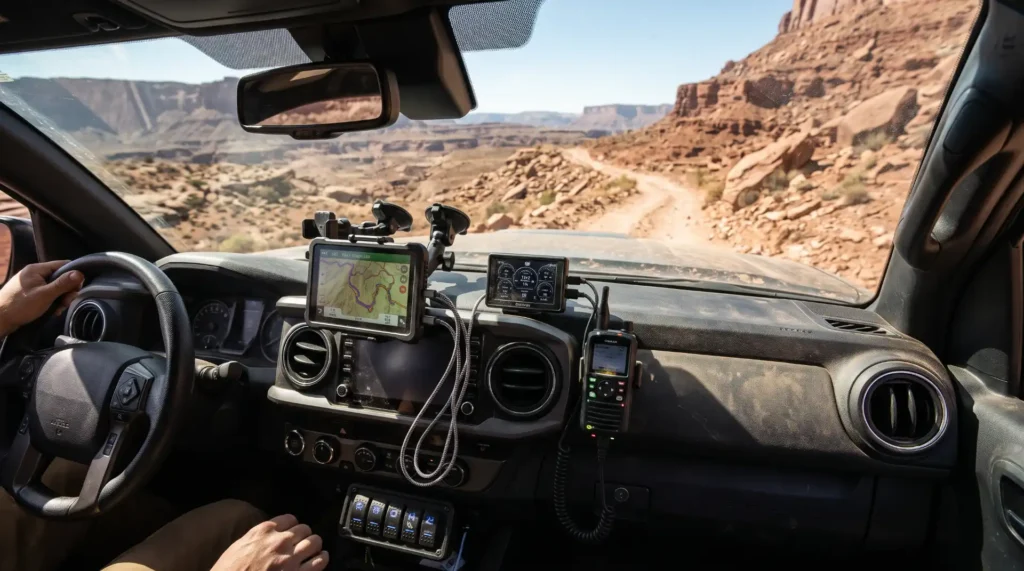 How Overlanding Is Influencing Automotive Customization
Overlanding has introduced a different philosophy to the aftermarket automotive industry.
Traditional performance customization frequently focuses on horsepower, acceleration, braking, handling, and appearance.
Overlanding expands that conversation by emphasizing carrying capacity, reliability, protection, storage, comfort, and practical capability.
This has created opportunities for manufacturers producing suspension components, tires, protective equipment, storage systems, electrical accessories, camping products, and vehicle-specific mounting hardware.
A Shift From Appearance to Practical Capability
Adventure vehicles often have a distinctive appearance, but the best modifications serve a purpose.
An upgraded suspension system should support the vehicle’s intended weight and operating conditions. A roof rack should provide secure mounting capacity. Lighting should improve visibility without creating excessive glare or violating applicable regulations.
Even exterior accessories should be evaluated according to their usefulness.
For example, a front bumper may provide additional protection and suitable recovery points, but it can also increase vehicle weight and affect approach angles or safety-system operation.
An accessory that looks impressive in photographs may not provide meaningful benefits for a particular traveler.
This shift toward functional customization is encouraging owners to research product specifications more carefully.
The Importance of Vehicle Compatibility
Modern vehicles are increasingly complex.
Electronic stability control, anti-lock braking systems, advanced driver assistance systems, cameras, radar sensors, and other technologies can be affected by certain modifications.
Suspension lifts, tire-size changes, bumper installations, and accessory mounting systems should be selected with vehicle compatibility in mind.
Owners should consider whether modifications affect sensor placement, calibration, cooling airflow, lighting, braking, or steering behavior.
A useful starting point is Auto Sport Performance’s article on performance upgrades for AWD cars and modern sport sedans, which explains why suspension, tires, drivetrain components, and vehicle systems must work together rather than being modified independently.
Although the article focuses on performance-oriented vehicles, the underlying principle applies equally to adventure builds: every component should complement the complete vehicle.
Balancing Everyday Driving With Adventure Capability
Many American overlanders use the same vehicle for commuting, family transportation, shopping, and weekend camping.
This creates a challenge because equipment designed for remote travel can make everyday driving less convenient.
Heavy steel bumpers, large tires, roof-mounted equipment, and aggressive suspension systems may affect ride quality, fuel economy, vehicle dimensions, and parking convenience.
A carefully planned build avoids unnecessary modifications.
Some owners prefer removable accessories, such as detachable storage modules, portable refrigerators, and temporary roof equipment. These products allow the vehicle to remain practical during ordinary use.
The most successful daily-driven overlanding builds are often those that balance capability with comfort.
Understanding Warranty and Modification Considerations
Vehicle modifications can raise questions about manufacturer warranties, particularly when changes involve suspension, drivetrain, electrical systems, or engine components.
Owners should review warranty documentation and understand the applicable laws before installing major aftermarket equipment.
In the United States, the presence of an aftermarket modification does not automatically mean that every vehicle warranty claim can be rejected. However, a manufacturer or warranty provider may dispute coverage for a failure connected to an improper modification or installation, depending on applicable law and warranty terms.
For additional background, readers can review Auto Sport Performance’s guide to modifying a car without voiding its warranty.
This is particularly relevant for owners who plan to install aftermarket suspension systems, electrical accessories, tires, and other equipment on newer trucks and SUVs.
The Economics of Overlanding: Is It an Affordable Way to Travel?
Overlanding is sometimes presented as a budget-friendly alternative to conventional vacations because travelers can reduce hotel expenses and prepare meals independently.
However, it is not automatically inexpensive.
Vehicle purchases, modifications, camping equipment, fuel, maintenance, insurance, and travel expenses can add up.
The actual cost depends on the vehicle, trip length, destination, equipment choices, and travel style.
Initial Vehicle and Equipment Costs
Someone who already owns a suitable SUV or pickup may be able to start overlanding with relatively little additional investment.
Basic camping equipment, navigation tools, vehicle maintenance, and appropriate tires may be sufficient for simple trips.
A more advanced build can involve thousands of dollars in suspension components, storage systems, roof racks, tents, power equipment, and recovery accessories.
New vehicles designed specifically for off-road recreation can also command higher purchase prices.
This is why prospective overlanders should establish a realistic budget before beginning major modifications.
Fuel Consumption and Vehicle Weight
Additional equipment increases vehicle weight.
Large tires, steel bumpers, rooftop tents, roof racks, camping drawers, and external storage can affect fuel consumption.
Aerodynamic drag is another important factor.
Roof-mounted equipment can create additional wind resistance, especially during highway driving.
A heavily modified vehicle may therefore require more fuel than its original configuration.
For long-distance travel, this additional operating cost should be included in the trip budget.
Owners can reduce unnecessary weight by selecting compact equipment, removing accessories when they are not needed, and organizing supplies efficiently.
Camping Fees and Public-Land Opportunities
Some public-land camping opportunities are available without traditional campground fees, although rules and restrictions vary by location.
Developed campgrounds may charge nightly fees, while certain recreation areas require reservations or permits.
Travelers should never assume that all public land allows free overnight camping.
Camping duration limits, fire restrictions, vehicle access rules, and designated-site requirements can vary significantly.
Researching these details before departure helps prevent unexpected expenses and avoidable violations.
Long-Term Maintenance Costs
Overlanding can place additional demands on vehicles.
Traveling over rough roads can accelerate wear on tires, suspension components, bushings, wheel bearings, and other parts.
Heavy equipment can also increase stress on brakes, cooling systems, and drivetrain components.
Regular inspections help identify problems before they become expensive repairs.
Owners should budget for more than routine oil changes.
Tire replacement, alignment, suspension maintenance, and occasional repairs should all be considered when evaluating the long-term cost of adventure travel.
The Future of Overlanding in America
Overlanding is likely to continue evolving as vehicle technology, outdoor recreation preferences, and aftermarket products develop.
The industry is already moving beyond basic mechanical modifications toward more integrated solutions involving electrical power, lightweight materials, advanced navigation, vehicle monitoring, and modular camping equipment.
Electrification and Electric Adventure Vehicles
Electric vehicles are beginning to create new possibilities for adventure travel.
Electric drivetrains offer immediate torque, quiet operation, and fewer traditional engine-related maintenance requirements.
These characteristics can be useful in certain off-road environments.
However, range management remains a major consideration.
Driving through difficult terrain, carrying heavy equipment, operating climate-control systems, and using large tires can affect energy consumption.
Charging infrastructure may also be limited in remote regions.
Electric overlanding therefore requires careful route planning and a realistic understanding of charging opportunities.
Hybrid vehicles may offer another approach by combining electric driving capabilities with conventional fuel infrastructure.
As battery technology and charging networks develop, more electrified vehicles may become practical for certain types of adventure travel.
Lightweight Materials and Modular Accessories
Weight management will remain an important part of future overlanding vehicle design.
Manufacturers are increasingly interested in producing strong but lightweight accessories that reduce the need for unnecessarily heavy equipment.
Aluminum storage systems, composite body accessories, modular sleeping platforms, and compact electrical installations can help reduce overall vehicle weight.
This is particularly important for smaller SUVs and midsize pickups with limited payload capacity.
The challenge is balancing weight reduction with durability.
Overlanding equipment must withstand vibration, changing temperatures, moisture, dust, and repeated use.
Products that combine reliable construction with practical weight savings are likely to remain attractive to adventure travelers.
More Integrated Vehicle Technology
Future adventure vehicles may incorporate more sophisticated navigation, vehicle monitoring, terrain management, and communication technology.
Drivers could benefit from better integration between vehicle systems and external travel-planning applications.
For example, navigation systems may increasingly provide information about road restrictions, elevation, weather, and vehicle suitability.
However, digital tools will still need accurate data.
Technology cannot guarantee that a road is open or that a particular vehicle can safely navigate it.
The driver’s understanding of the environment will remain essential.
A More Diverse Overlanding Community
Overlanding is also becoming more accessible to different types of travelers.
Families, couples, solo travelers, retirees, outdoor photographers, hikers, and automotive enthusiasts can all participate.
Not every traveler needs a heavily modified truck or advanced recovery equipment.
Some may prefer comfortable SUV camping, while others want remote multiweek journeys.
This diversity could encourage manufacturers to produce more affordable accessories and practical adventure vehicles.
It may also lead to greater demand for beginner-friendly training, responsible recreation education, and accessible travel information.
As the community grows, maintaining responsible land-use practices will become increasingly important.
Conclusion: Overlanding Is Redefining the American Road Trip
The rise of overlanding represents a meaningful change in how many Americans approach travel, vehicle ownership, and outdoor recreation. Instead of viewing a vehicle simply as transportation between destinations, overlanders are transforming trucks, SUVs, vans, and other adventure-ready vehicles into mobile platforms for exploration.
This movement combines automotive engineering with camping, navigation, vehicle customization, and outdoor independence. From all-terrain tires and suspension upgrades to rooftop tents, portable power stations, recovery equipment, and organized storage systems, modern overlanding vehicles demonstrate how practical modifications can expand the possibilities of road travel.
The appeal is not limited to expensive custom builds or extreme off-road adventures. A dependable SUV with suitable tires, organized camping equipment, and reliable navigation can provide an excellent introduction to the activity. More experienced travelers may eventually invest in advanced suspension systems, specialized recovery equipment, integrated electrical installations, and vehicle-specific camping conversions.
The United States offers an enormous range of destinations for this style of travel. Desert landscapes in Arizona and Utah, mountain roads in Colorado, forests in the Pacific Northwest, and recreational areas throughout California and the Appalachian region provide different opportunities for exploration.
However, successful overlanding requires more than a capable vehicle. Travelers must understand vehicle limitations, prepare for changing weather, maintain sufficient supplies, research legal access, and respect the natural environments they visit. Responsible recreation is essential to preserving public-land access and protecting the landscapes that make these journeys worthwhile.
For automotive enthusiasts, overlanding also represents an opportunity to explore vehicle customization from a different perspective. Rather than concentrating exclusively on horsepower and acceleration, owners can focus on reliability, durability, carrying capacity, comfort, and practical performance.
As vehicle technology continues to evolve, the relationship between automotive engineering and outdoor recreation will likely become even stronger. More efficient power systems, advanced navigation, improved materials, and innovative camping accessories will continue changing how adventure vehicles are designed and used.
Ultimately, the most important part of overlanding is not how much equipment a vehicle carries or how difficult a trail it can conquer. It is the freedom to explore new places, experience unfamiliar landscapes, and enjoy the journey without depending entirely on traditional travel arrangements.
For many Americans, that freedom is precisely what makes overlanding more than a passing automotive trend. It is becoming a different way to experience the road.